- Art Africa published its conversation with Marcia Harvey Isaksson and Katariina Timonen on 22 September.
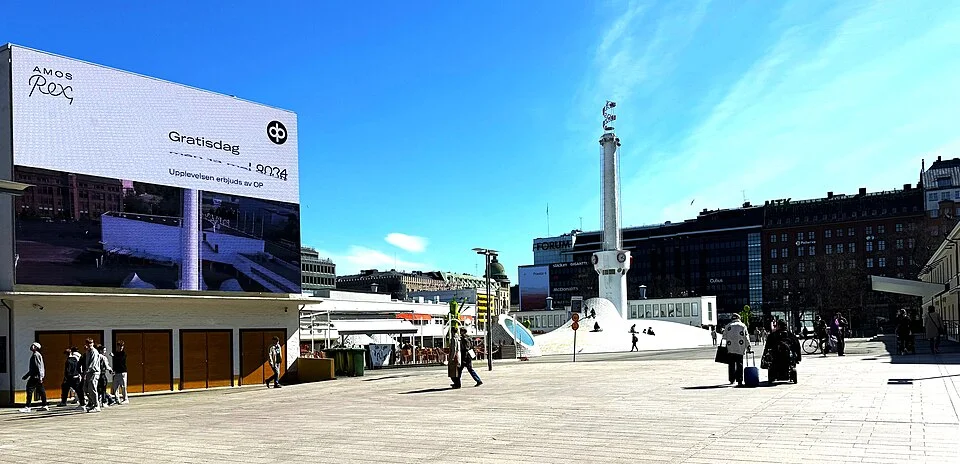
- The Other Side of the Mountain is scheduled at Amos Rex in Helsinki from 14 October to 21 March.
- Photography, installations and moving images give different accounts of how people use and remember a city.
Inside this story 2 perspectives
The shortest way home can make a mark a city planner never intended. Enough walkers cutting across a patch of ground leave a visible path. South African artist Igshaan Adams works with these informal routes, often called desire lines. In a conversation published by Art Africa on 22 September, two curators explain why such a path belongs in a Finnish museum exhibition about African and Afro-Nordic experiences of distance.
Marcia Harvey Isaksson and Katariina Timonen are bringing eleven artists together for The Other Side of the Mountain, the headline exhibition of Southnord Artfest. It is scheduled to open at Amos Rex in Helsinki on 14 October and run until 21 March. Underground rooms, where light and sight lines already have a particular character, will hold photographs, textiles, moving images, sculpture and installations. In the curators' account, deciding what a visitor might glimpse beside a work was part of deciding what the exhibition could say.
What a pavement remembers
Adams's use of informal crossings carries a particular history in South Africa. The curators discuss them in relation to planned districts that kept people apart. The pedestrian who chooses a shorter route makes a small practical decision. Seen alongside the decisions of others who take the same path, it becomes evidence of how people have negotiated a much larger arrangement of space.
Akinbode Akinbiyi reaches the city through another long practice, walking and photographing it. He works with an analogue Rolleiflex camera. His subjects include the gestures and meetings that pass without much notice on an ordinary street. Harvey Isaksson describes an artist who has returned to African cities over more than five decades. Looking again at a familiar place gives a photograph a different question to answer. Which little alterations would be invisible to someone who only stopped once?
Neighbours in the exhibition hall
Architectural studio NLÉ designed the exhibition with few dividing walls. That plan asks a visitor to do some of the joining up. A sight line between two works might bring the rules of a carefully organised residential area into conversation with the informal routes that residents make for themselves. Loulou Cherinet's work, for example, turns attention towards the planning of housing in Nordic settings and the assumptions about care and control embedded there.
Those connections can be made without sending every artist on the same journey. Harvey Isaksson speaks about her own experience of living on the African continent and in the Nordic diaspora. The position from which a person looks at a place can shift over a lifetime. A photograph, a path and a residential plan offer three ways to give that shift a physical presence. The rooms in Helsinki will leave space for a visitor to walk between them.