- The festival scheduled the closing film for 6 November at Landmark Cinemas.
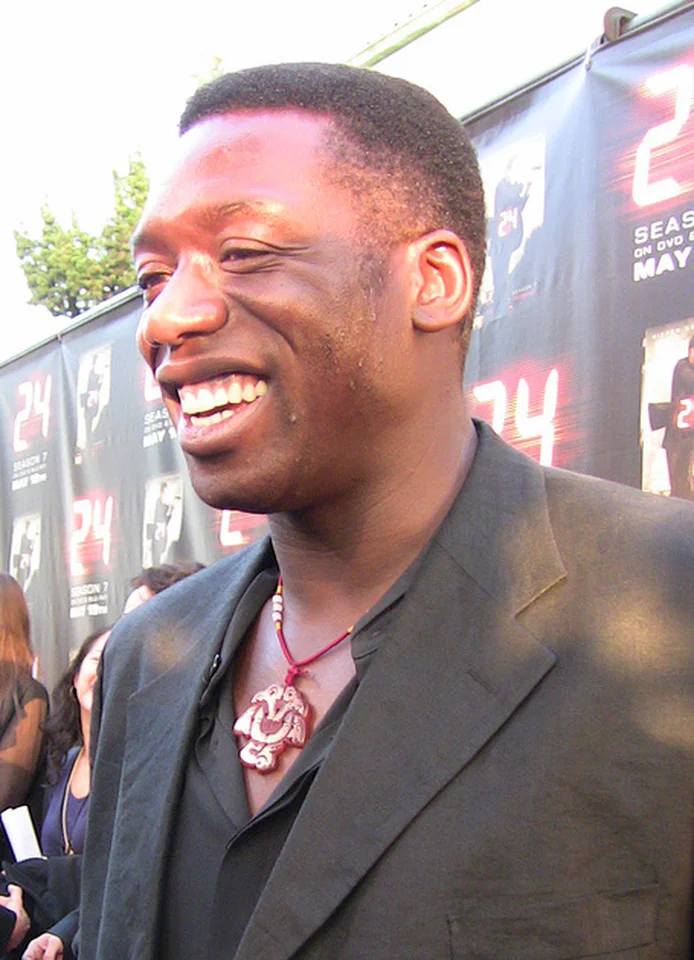
- It’s the Blackness is Hakeem Kae-Kazim’s feature directing debut.
- Dapo Oshiyemi wrote and produced the film, with Daniel Davids and Matthew James Morrison in the central roles.
Inside this story 1 perspectives
An employer declining to hire two graduates may seem an unlikely starting point for a festival’s closing-night film. It gives Hakeem Kae-Kazim’s It’s the Blackness an immediately recognisable question. What happens to the promise of an education when the people who have done the work still cannot find jobs? The Africa International Film Festival has scheduled the comedy-drama for an invitation-only screening at Lagos’s Landmark Cinemas on 6 November. The fifteenth festival continues through 7 November.
Kae-Kazim is familiar as an actor from productions including Hotel Rwanda and Black Sails. Here he directs his first feature, working from a screenplay by Dapo Oshiyemi, who also produced the film through Talking Drum Entertainment. The distinction is worth drawing at a festival that devotes time to the production business as well as to screenings. A first feature for a director can bring together a writer, producer and cast with quite different paths to the same project.
The neighbours of a job search
Daniel Davids plays Eniola Baba-Lola and Matthew James Morrison plays Jordan Dante. The two hold master’s degrees, while work, relationships and family expectations repeatedly complicate their lives. The filmmakers describe a British-Nigerian and Caribbean comedy-drama. The combination allows a story about employment to take place across more than the interview room. Graduates still have families to answer to and relationships to sustain when the outcomes they expected from their qualifications fail to materialise.
That is a richer dramatic premise than a simple contest between somebody with a qualification and somebody without one. Eniola and Jordan begin in a position that is usually presented as the solution to their problem. They have studied successfully. Their difficulty is the gap between personal achievement and access to opportunity. The comedy-drama form leaves space to consider that question without requiring every family exchange or romantic complication to carry a single message.
AFRIFF opened its screening programme with Olive Nwosu’s Lady. Its decision to close with Kae-Kazim places two first-time feature directors at the visible ends of a programme listing 119 films in nine categories. A closing slot does not constitute a jury award, and its guest arrangements differ from the public timetable. It does give a film a particular position in the discussion that audiences take away from a week in Lagos.
For a reader deciding what to follow after the festival, the most concrete introduction is still the pairing of its central characters. Two people with the qualifications meant to open the door find themselves on the outside together. The question facing the filmmaker is what they will say and do in one another’s company while they wait for the rest of the world to catch up.