- The monetary policy board voted five to two to raise the base rate by a quarter of a percentage point.
- The bank lifted its 2027 growth forecast to 4.1% from 2.9% in August.
- A quarter point on an unchanged 100 million won balance works out to 250,000 won a year if passed on in full.
Inside this story 2 perspectives
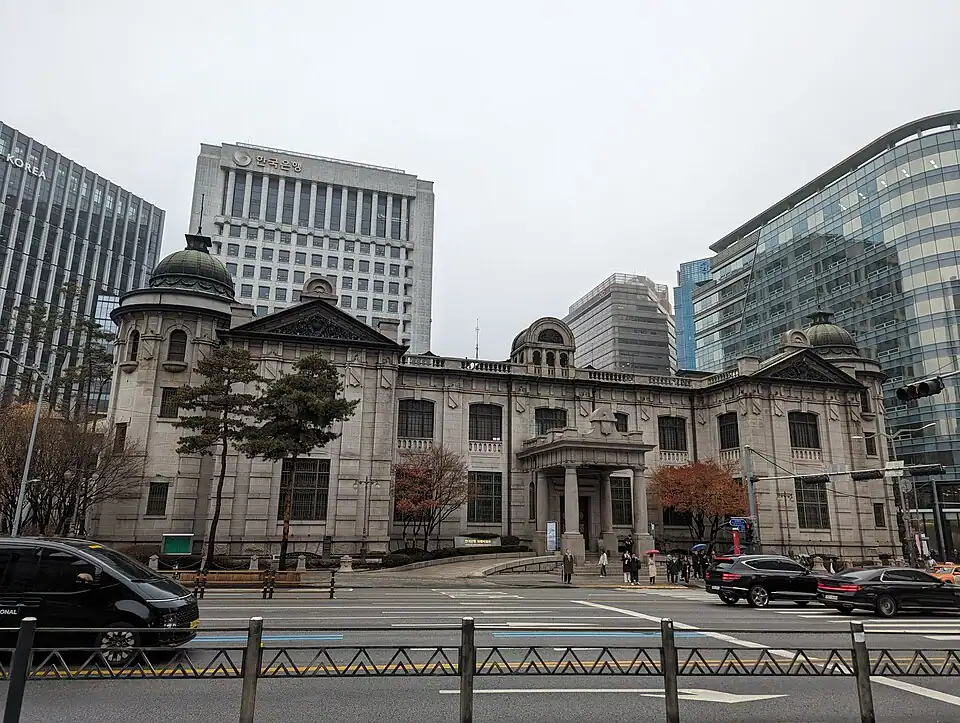
A Korean chip exporter and a Seoul homeowner woke up to the same interest rate decision on Thursday with very different reasons to care. The Bank of Korea raised its base rate from 3% to 3.25%, while lifting its estimate for economic growth next year to 4.1%. Semiconductor sales helped change the bank’s view of how fast the country can grow. For a household with a variable-rate loan, the immediate question is when the lender next resets the interest bill.
Five of the seven members of the monetary policy board voted for the rise. Two wanted to leave the rate where it was. The decision follows a pause in October and increases in July and August. A quarter-point rise was widely expected going into the meeting. Thirty-two of the 34 analysts in a Reuters poll had forecast it.
The chip boom reaches the forecast
South Korea’s new forecasts show an unusually large change in the space of three months. In August the central bank expected growth of 3.3% this year and 2.9% in 2027. It now expects 3.9% this year and 4.1% next year. The board identified strong semiconductor exports and related investment alongside a recovery in consumption. The jump in expected growth puts the national averages in perspective. It does not take an equally large improvement in every household’s finances for a powerful export industry to move the figures that much.
There is a reason domestic borrowers still feature in a decision dominated by exports. The board is monitoring apartment prices in Seoul as well as household lending. And the prices families pay for ordinary goods and services have continued to rise. Both headline and core inflation were 2.8% in October. The bank expects consumer prices to rise by 2.4% in 2027, up from its August estimate of 2.3% and above its 2% target.
What the quarter point buys or costs
On an unchanged loan balance of 100 million won, an additional quarter of a percentage point would add 250,000 won in interest over a full year if a lender passed it on in full. That is an illustration of the scale. A borrower’s actual rate depends on the contract, the benchmark the lender uses and the date it resets. Someone in a fixed-rate period can see no immediate change to an existing payment.
A saver considering a term deposit faces a related timing issue. A bank quotes its own deposit rate and decides how long the offer is available. Thursday’s central bank decision alone cannot tell a customer what that quote will be tomorrow. The divided vote gives borrowers a similar reason to distinguish between a decision already taken and a prediction about the next meeting. The new base rate is known. The pace at which it reaches individual accounts will differ.