- The 2 October Science Advances study re-examines a fossil-based maximum age used in molecular clocks.
- A younger Mongolian deposit lacks clear animals even though animals lived elsewhere by then.
- The new analysis places possible animal origins around 800 to 700 million years ago.
Inside this story 2 perspectives
Finding a recognisable animal in a rock of known age establishes something important. Animals existed by the time that rock formed. Looking just as carefully at another rock and finding no animal does not deliver the opposite conclusion with the same force. The animals might have been absent from that environment, rare, too small to recognise or unlikely to be preserved by the processes that formed the deposit.
A study published in Science Advances on 2 October asks how much that asymmetry matters to the age assigned to the animal family tree. Its answer could shift the estimated origin of animals back to around 800 to 700 million years ago, substantially earlier than the first unmistakable animal fossils. The researchers did not discover an 800-million-year-old animal. They tested an assumption that had helped keep estimates more recent.
What China and Mongolia can tell each other
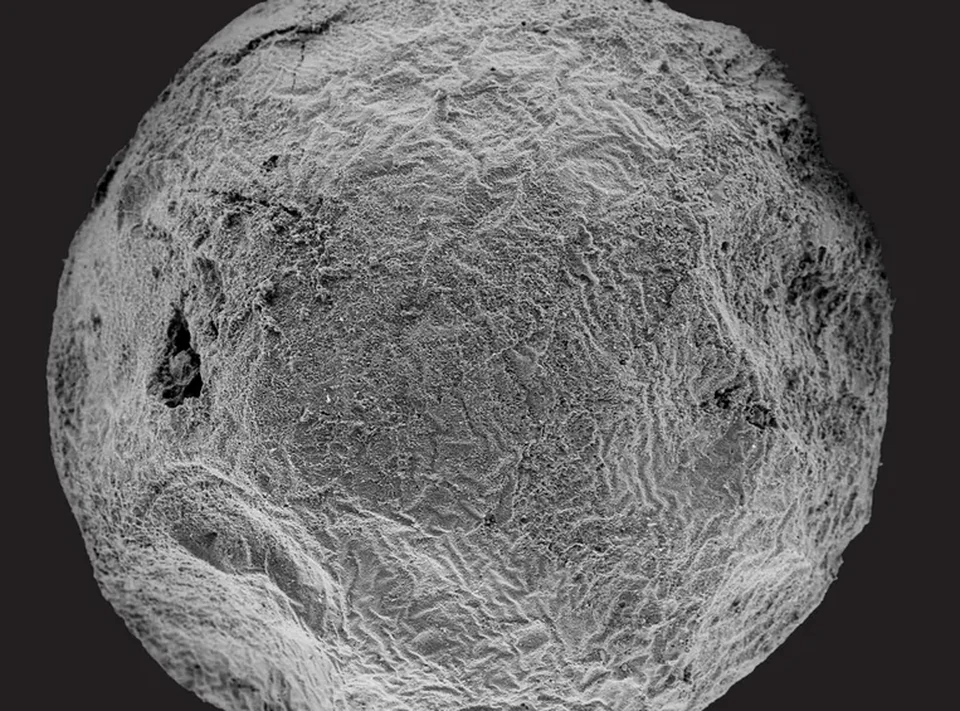
The Weng’an fossil deposit in China is about 590 million years old. It preserves microscopic organisms in extraordinary detail, yet it has yielded no universally accepted animal. Some researchers have treated that absence as evidence that animals had probably not yet evolved. It has consequently helped set an upper age limit when researchers use genetic differences to estimate when groups shared an ancestor.
The team examined microfossils from the Kheseen deposit in Mongolia. It is more than forty million years younger and preserves some of the same kinds of organisms. By the time it formed, other evidence shows animals existed. Yet researchers could not find definite animals there either. An exceptional deposit had failed to preserve clear animal evidence from a time when animals are known to have been present in the world.
The number at the end of a clock
A molecular clock uses patterns of genetic change to estimate the timing of evolutionary splits. Fossils help tie those estimates to the calendar. A reliable minimum age provides an anchor, but a maximum age based on an absence introduces a different kind of assumption. If the assumption is too strict, the model can make a much older origin look statistically implausible before it has properly considered the possibility.
Revisiting that limit produces an older range. It also raises the possibility that early animals lived before some of the severe global glaciations often called Snowball Earth episodes. The analysis cannot show exactly what those animals looked like, where they lived or how they might have survived such conditions.
What changed most in this research was the comparison. A younger deposit offered a test that the older deposit could never provide on its own. If an apparently excellent fossil record can omit animals known to exist, an empty place in a much older collection becomes a less reliable way of deciding when animal life began.