- Researchers compared eight armoured fish species from a reef about 385 million years old.
- Fossil biting surfaces were studied alongside computer models of loading.
- The proposed feeding behaviours are interpretations of anatomy and mechanics.
Inside this story 2 perspectives
Try to crack something smaller than your mouth and it is easy to imagine what a broad, flat biting surface can do. Make the object too large to swallow and a different task comes first. The animal has to get through the outside and break off a manageable piece. The difference between those two meals may explain why ancient fish living on the same Australian reef evolved strikingly different jaws.
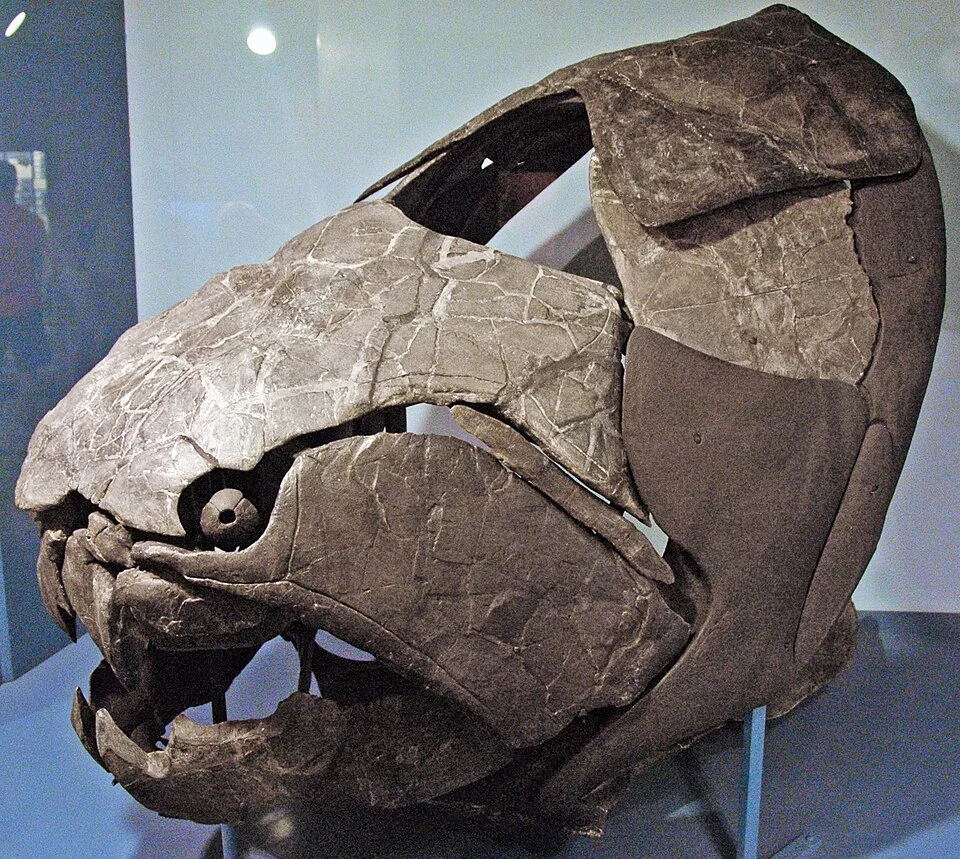
In a research account circulated on 14 September, scientists from Flinders University described their comparison of eight species of placoderms, armoured fishes that inhabited a reef some 385 million years ago in what is now northern Western Australia. The fossils preserve evidence of the surfaces on which these animals bit. Computer models helped the team ask how each structure might have coped with force, alongside the separate question of what shape its biting surface took.
Two clues in a fossil jaw
A jaw can be robust without having a broad, smooth surface. It can also carry prominent projections without being best suited to doing the entire job with one bite. The researchers compared measurements of the complexity of the biting surfaces with digital simulations of how the fossil jaw structures would bear a load. One line of evidence concerned shape, the other the mechanical consequences of that shape.
The smallest and largest species in the comparison both had jaws that performed well under hard biting loads. In the smallest fish the biting surfaces were broad and comparatively plain. The largest fish had more complex, raised structures. If the researchers had concentrated only on how much force a jaw could withstand, those two ways of handling a meal might have looked surprisingly similar. The surfaces gave them a reason to look again.
What gets inside the mouth?
The team’s proposed explanation turns on the relationship between the size of predator and prey. A small enough shelled animal could fit inside the mouth and be crushed between plates. An animal attempting to eat prey too large to enclose would need to breach its hard exterior and reduce it to pieces first. Elevated structures on a robust jaw could have helped with such a first bite.
A simulation can test how a reconstruction behaves under specified loads. It cannot run a film of a Devonian fish choosing its dinner. The proposed feeding strategies are consequently interpretations, grounded in the fossil structures and the mechanical comparisons. They make the old reef easier to imagine in a specific way. Two predators could share a taste for hard prey while looking for entirely different sizes of it, leaving the evidence of that difference on the surfaces that came into contact with the meal.