- UNESCO plans to present the exhibition at its Paris headquarters from 17 to 22 September.
- The General History of Africa project began in 1964, with predominantly African scientific leadership.
- Three volumes released in 2025 expanded the original eight, including a volume on African diasporas.
Inside this story 2 perspectives
A visitor who only has an hour cannot work through eleven volumes of history. But the arrangement of a room, the choice of a map or two and the relationship between a photograph and its caption can make the intellectual question behind those books visible. A new exhibition at UNESCO’s headquarters in Paris is taking on precisely that translation, with a public run planned from 17 to 22 September.
The starting point is the General History of Africa, an international project launched in 1964 as African countries gained independence. Its editors wanted African perspectives to shape the questions historians asked and the sources they treated as evidence. A predominantly African scientific committee guided the work. Eight volumes were followed in 2025 by three more, one of them devoted to the history of African diasporas.
What goes beside a written record
The early volumes used oral traditions together with documentary, archaeological and scientific evidence. That changes the way a researcher can approach a period for which written records are unevenly distributed. An account preserved in a community may pose a question the official paperwork of a trading company or colonial office never thought to ask. Archaeological evidence can require both kinds of account to be revisited.
Putting those sources alongside one another also gives readers more work. Each was made for a particular purpose and audience. Reading the history through African perspectives does not make a witness infallible or a physical object self-explanatory. It changes which people get heard and which bodies of evidence can be brought into the discussion.
Following one connection through the gallery
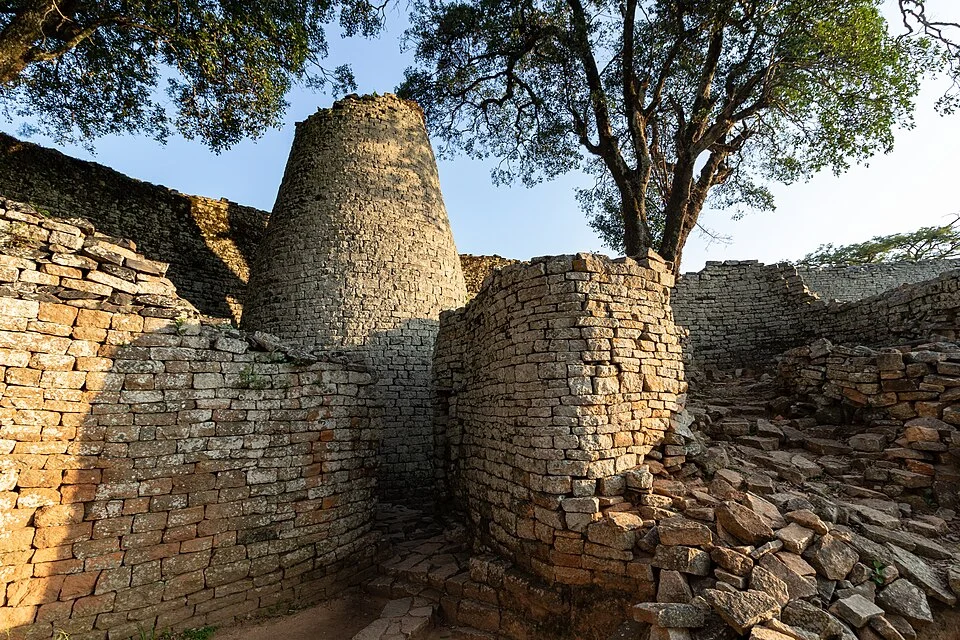
The exhibition plan ranges from the scientific traditions of Timbuktu and the civilisations of Aksum and Great Zimbabwe to the Haitian Revolution, independence movements and resistance to apartheid. Organisers say visitors will encounter maps, photographs, archival documents, publications and audiovisual material. The curator, historian Amzat Boukari-Yabara, contributed to the latest volume of the history.
One way into a selection this broad is to follow a question instead of trying to memorise a sequence of names and dates. Where did knowledge travel? Who preserved it? When does a map change the scale at which an event makes sense? The inclusion of Haiti in an exhibition drawing on African history is an invitation to ask where that history continues beyond the physical boundaries of a continent.
UNESCO’s 11 September announcement sets the opening for Thursday evening. The exhibition will last less than a week. Its underlying editorial project has already spanned six decades. A successful encounter with the material need not compress those decades into an hour. It might simply leave the visitor with a better question to take back to one of the books.