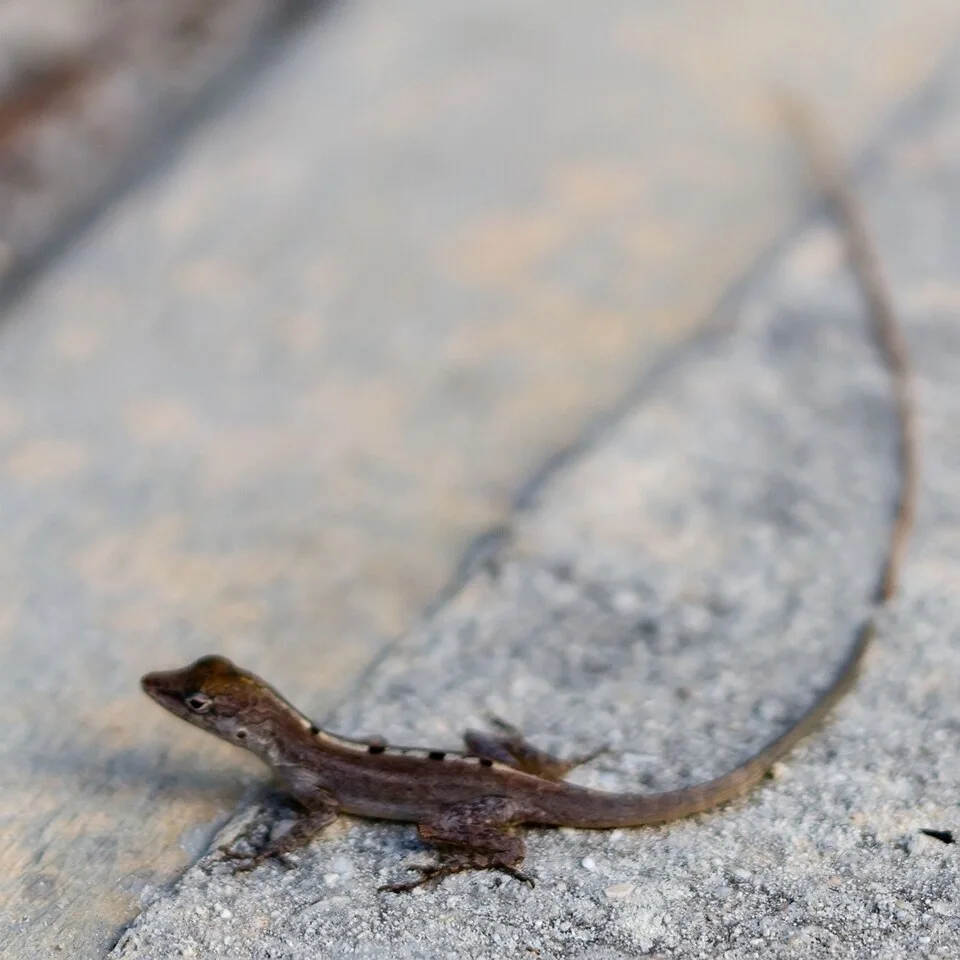
- Researchers studied silver key anoles from two islands in the Turks and Caicos struck by Irma and Maria in 2017.
- Shorter rear toes were associated with better clinging performance in simulated winds.
- Combining field records, physical measurements and genetic evidence strengthened the case for an evolutionary response.
Inside this story 2 perspectives
On a narrow branch in a gale, the important part of a lizard’s foot may be a toe a human observer could easily overlook. Researchers studying silver key anoles from two islands in the Turks and Caicos found that shorter rear toes were associated with a stronger performance in wind. A 4 September science broadcast explained how a rig with a fan helped connect that result to changes observed after hurricanes Irma and Maria struck in 2017.
The puzzle began with traits seen in the lizards on the islands following the storms. Differences in a population after a destructive event can have several explanations. Some individuals may have been sheltered by chance. Others may have had an advantage that mattered when winds rose. To argue that a physical trait helped its owner survive, researchers first need to show what that trait actually does.
Put the perch in the wind
A controlled test trims down the list of possible explanations. The lizards hold on to a perch while moving air pushes against them. Researchers can compare the time they remain attached with measurements of their feet. In the tests discussed on the broadcast, individuals with shorter fourth toes on their hind feet could hold on longer. A shorter toe can give a better mechanical advantage in gripping the surface.
That sounds counterintuitive if a longer toe calls to mind more material to wrap around a twig. But reach and leverage are different features. A structure can extend farther while having less favourable leverage under an external force. Measuring the time a lizard remains attached gives the argument something more substantial than an impression from looking at photographs.
More than a windy afternoon
The team also examined genetic differences across the island populations. Its Current Biology paper identifies several regions associated with the development or function of muscles and bones. One showed an especially strong association with the length of the longest rear toe. Together, the strands of evidence move from a change observed in the wild to a testable physical advantage and a possible inherited basis for it.
A laboratory fan reproduces a particular challenge. It leaves out rain, shelter, broken vegetation and many other features of a hurricane. A lizard that performs well on the test might still be unlucky when a real branch snaps. The research nevertheless addresses a striking question about the aftermath of a short, violent event. A storm can move through in a matter of hours. If the animals that remain attached differ in traits they pass to offspring, the event can leave a record in the population that persists long after the weather clears.