- International Dot Day began in a classroom in September 2009.
- Peter H. Reynolds’s picture book The Dot follows a child named Vashti.
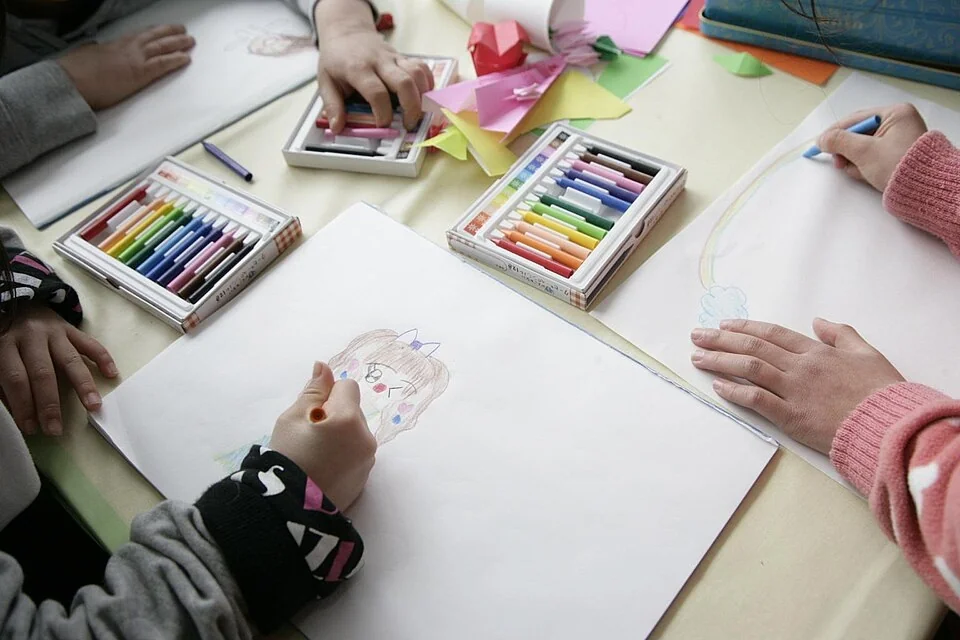
- Meadows Elementary pupils in Texas made Pac-Man-themed art on 15 September.
Inside this story 2 perspectives
At Meadows Elementary School in Texas, one pupil saw the possibility of a whole picture in a dot. Another pointed out that the world itself could look like one. Librarian Katrina Schoenrock had just read Peter H. Reynolds’s picture book The Dot to the class. A single shape on a page had given the children two entirely different things to say.
The Killeen school district described the exchange on 15 September, International Dot Day. Children at Meadows contributed to Pac-Man-themed artwork and some wore polka dots. At another Texas school, Sageland Elementary, staff joined pupils for readings. The idea goes back to September 2009, when teacher Terry Shay introduced Reynolds’s story to his class. Schools now mark the day in their own ways, with remarkably little agreement required about what a dot ought to become.
The moment before the drawing
Vashti, the child in Reynolds’s book, faces a blank sheet after art class. She believes she cannot draw and makes an angry mark when her teacher invites her to begin. It is an important detail that the first mark is reluctant. A child who has been told to be creative may see another expectation to disappoint. A single mark gives the child something concrete to look at before anyone asks for a finished idea.
For an adult sharing the book, the useful pause comes afterwards. What does the child notice about a dot? How might the same mark look very close up or from a great distance? At Meadows, the picture and the planet offered different answers to roughly that question. Neither required a teacher to decide in advance what a good drawing ought to look like.
Leave the second decision open
A parent adapting the idea at home might draw one small circle and pass the paper over. The child can add to it, place another one beside it or begin on a different sheet. Taking turns can turn the drawing into a conversation. It also gives the adult a chance to notice who is making the decisions. If every mark is followed by a suggestion about what to do next, there may be little room left for the child’s own idea.
A school celebration shows that a book can organise an afternoon of activity. It cannot prove that confidence grew in every pupil or that a child who dislikes drawing will feel differently tomorrow. The smaller observation from one class is interesting enough. After hearing the same story, two children connected the same shape to objects of dramatically different sizes. The exercise had room for both because the adult offered a starting point and let the children decide how far it could go.