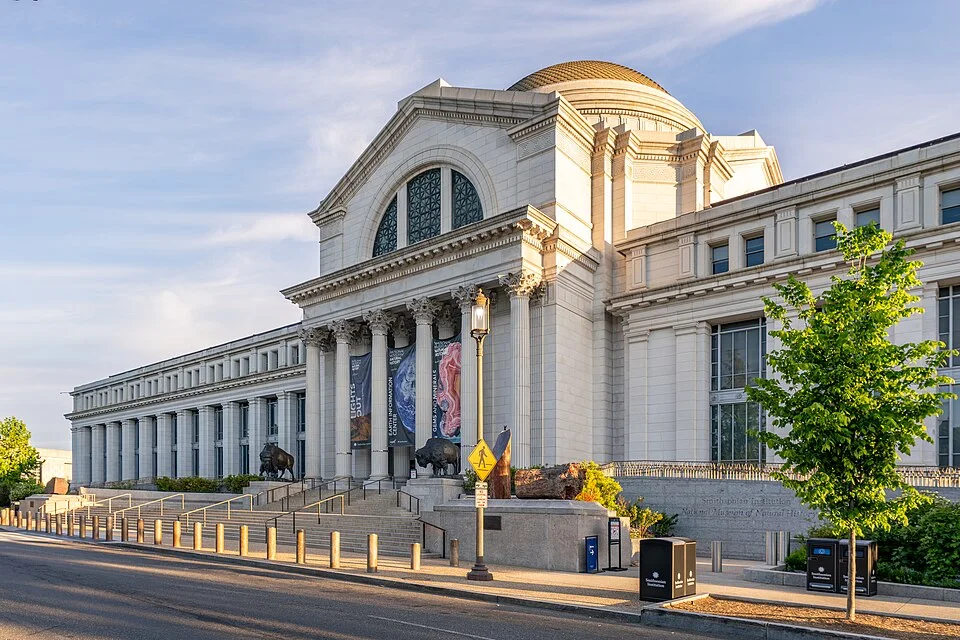
- The Smithsonian scheduled National Fossil Day activities for 14 October in its Deep Time hall.
- FossiLab prepares newly collected specimens and works on material already in the collection.
- The museum distinguishes original fossils from casts on its display labels.
Inside this story 2 perspectives
A museum can already own the fossil it is waiting to discover. The Smithsonian National Museum of Natural History says its collections include specimens that earlier preparators considered too difficult to work on. They were set aside in the hope that better tools or techniques might eventually make them accessible. Bringing one back out can be as consequential for a researcher as receiving a crate from a new field site.
The process is on public view at FossiLab, inside the museum’s Deep Time hall in Washington. For National Fossil Day on 14 October, the Smithsonian invited visitors to watch preparators at work, handle real fossils in designated activities and see the museum’s Tyrannosaurus rex. The National Park Service describes this year as the seventeenth celebration, with events across parks, museums and classrooms.
When rock is part of the problem
A fossil arrives with a physical history that influences how quickly it can be studied. Specimen size is only one consideration. The hardness of the surrounding rock, the complexity of the remains and the need to support fragile pieces can matter just as much. The Smithsonian estimates that a small leaf might be exposed in an hour or two. A complicated skeleton in tough rock can occupy preparators for years.
A visitor looking through the laboratory window might notice red grains used to support specimens. The lab identifies them as crushed garnet. A bed of loose grains can support an irregular shape while pieces are being glued or a fitted storage jacket is built. At that stage, keeping the object steady and protecting its shape are part of making it available for future investigation.
What a complete skeleton can conceal
The distinction between research material and a display becomes especially interesting in the hall outside. FossiLab says the specimens its preparators work on are genuine fossils. The surrounding exhibits include casts as well as original material, with replicas identified on the labels. What looks like one complete animal may incorporate several kinds of evidence.
The museum gives the example of an extinct North American rhinoceros, Teleoceras. On a mount formerly displayed near the laboratory, plaster filled gaps in fragmentary ribs. Museums also historically assembled skeletons using bones from several animals. Poor matches in size could affect the proportions or posture of the mount, creating a problem for anyone trying to read it as a single specimen.
The object behind glass and the animal shown standing beside it answer different questions. One preserves physical material for repeated study. The other helps visitors picture an animal whose remains may be incomplete. A few minutes with a preparator or a careful reading of a case label can reveal the choices that connect the two.