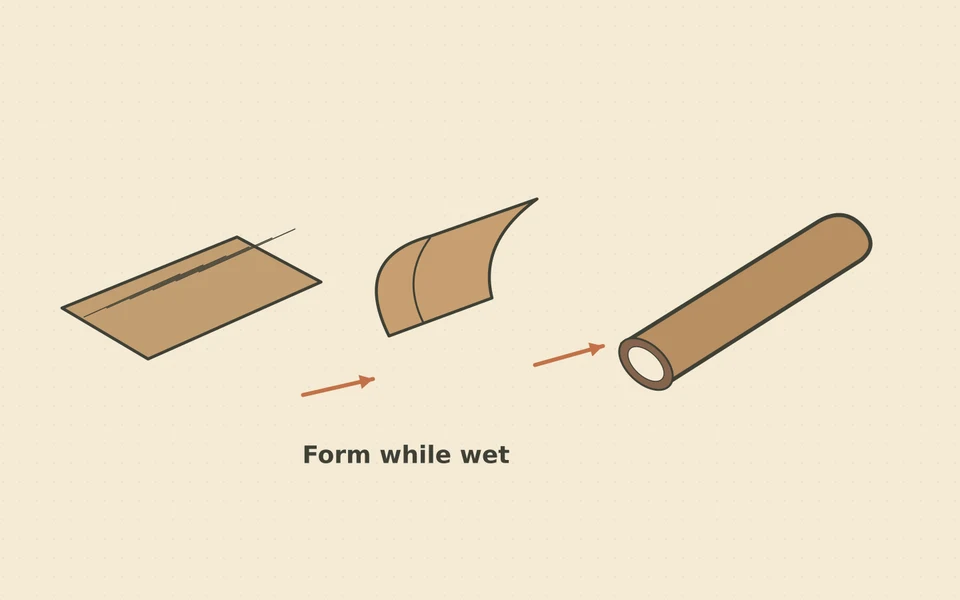
- The researchers used water to shape a partly treated wood structure before drying it.
- The material’s reported tensile strength was 405.5 megapascals dry and 86.7 megapascals wet.
- Tableware prototypes demonstrate shapes, while industrial scale and full life-cycle impacts require further evidence.
Inside this story 2 perspectives
There are two moments when water matters to a wooden drinking straw. First someone has to persuade a flat or solid piece of material to take the form of a tube. Later the tube must keep its shape in a drink. A materials study publicised on 11 October examined how wood might pass both tests. The researchers reported a treated material that could be formed while wet and grew much stronger as it dried.
The study, published in the Journal of Bioresources and Bioproducts, works with the architecture already present in wood. Cellulose gives the material much of its fibrous structure. Lignin helps support and bind that structure. The team removed some of the lignin, introduced additional cellulose into the spaces that treatment opened, and used water to make the material easier to shape. Drying then brought the structure closer together without conventional hot pressing.
Two strengths for the same material
The team reported dry tensile strength of 405.5 megapascals, about 5.9 times the result for the untreated comparison wood. In the wet condition, the figure was 86.7 megapascals. Tensile strength describes how much pulling stress a test specimen can withstand before failure. It is important to keep both the type of test and the moisture condition attached to those numbers. A single, unqualified claim about the strength of wooden cutlery would leave out much of what a manufacturer needs to know.
The researchers made forms including forks, knives, plates and straws. A demonstration fork proves the material can take a shape recognisable as a fork. It does not by itself establish how reliably a tine survives twisting, how a production line handles variation between trees or what every food-contact application would require. Those are worthwhile next questions precisely because the material has passed the earlier shaping test.
The thickness of the next piece
Getting the reinforcing cellulose into a thin section is easier than getting it uniformly through a thicker one. In discussing scale, the researchers identified treatment uniformity for sections thicker than about one centimetre as a challenge. That makes a thin-walled straw and a solid, load-bearing handle different manufacturing propositions even if the same basic chemistry can be applied to both.
The study also examined environmental performance, but the reported life-cycle comparison focused on manufacturing. Transport, actual use and end-of-life treatment could alter the comparison between products that serve the same purpose. The measured material properties stand on their own. Better decisions about which plastic objects the wood could replace will depend on putting those properties beside the thickness, moisture exposure and useful lifetime of a specific object.