- The South African Medical Research Council marked 16 October with a demonstration of adult hands-only CPR.
- If an adult is unresponsive and breathing abnormally or not at all, call emergency services and start CPR promptly.
- A second bystander can bring an automated external defibrillator and follow its spoken instructions.
Inside this story 2 perspectives
If an adult collapses and several people stop to help, the first few seconds can disappear into a discussion about who should call. The South African Medical Research Council used World Restart a Heart Day on 16 October to teach hands-only cardiopulmonary resuscitation, or CPR. Its demonstration by Professor Liesl Zühlke began with the safety of the person and the rescuer, calling for help and starting chest compressions.
If it is safe to approach, check whether the adult responds. An adult who is unresponsive and not breathing normally, including someone making occasional gasps, may be in cardiac arrest. Call local emergency services immediately and follow the call handler’s instructions. Put the phone on speaker if you are alone. If another person is present, ask them directly to make the call while you begin compressions. A further bystander can look for an automated external defibrillator, or AED.
What hands-only CPR does
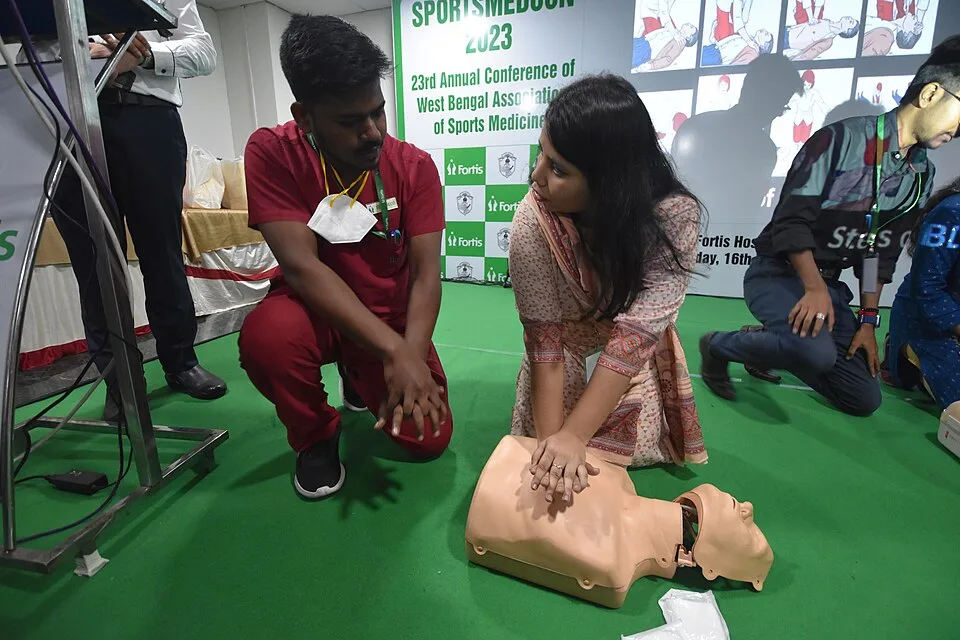
Chest compressions help keep blood moving to the brain and other organs while emergency help is on its way. Kneel beside the person. Place the heel of one hand in the centre of the chest and the other hand on top. With straight arms and shoulders over your hands, press hard and fast. Adult guidance advises a depth of about five to six centimetres and a rate of 100 to 120 compressions per minute. Let the chest come back up between presses.
For a bystander who cannot give rescue breaths, hands-only CPR provides an immediate action. Trained rescuers can follow the approach they have been taught and the emergency call handler’s instructions. Keep interruptions as short as possible. If another willing helper is there, they can take over compressions when fatigue makes it difficult to keep going. Describe what you are doing so the change can be quick.
Give the equipment a person
An AED can analyse a heart rhythm and give spoken instructions. Ask one person to bring it, switch it on and follow the prompts. Nobody should touch the patient while it analyses or delivers a shock. If it says a shock is unnecessary, follow its instructions and return promptly to compressions when directed. Continue until professional help takes over, the person shows clear signs of life and breathes normally, or it becomes unsafe or impossible to continue.
The campaign also has a purpose before any emergency. A team can find out where the nearest AED is kept, how people get to it when a building is open and which entrance an ambulance crew would use. Practising with a training device and a manikin gives people a chance to try the hand position and depth for themselves. The lesson from the demonstration is practical: a caller, a rescuer and someone fetching equipment can each act without waiting for the others to finish.