- Four spacecraft operating together provided wide-field observations.
- The timing result came from a retrospective test on a single eruption.
- Storm arrival and the magnitude of a geomagnetic disturbance are separate questions.
Inside this story 2 perspectives
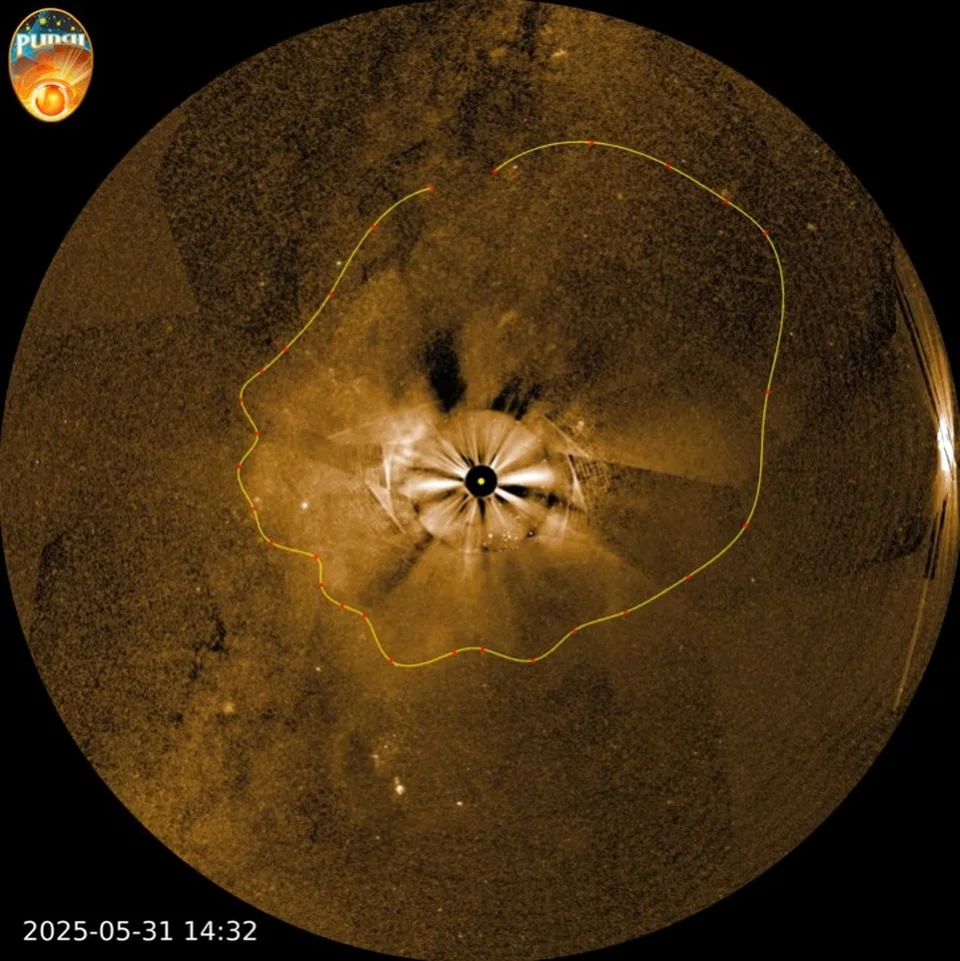
Eight hours before an approaching cloud of solar material reached Earth, a model using images from NASA’s PUNCH mission placed its arrival within 30 minutes of the time it actually arrived. There is an important detail in that sentence: scientists did the calculation afterwards, with images of an eruption that had already happened. They were testing what a forecaster could have known at the time.
The result, reported on 4 August by NASA and the Southwest Research Institute, addresses a frustrating problem in space weather. Instruments can pick up a coronal mass ejection as a cloud of magnetised plasma leaves the Sun. If the view ends early, forecasters must work out where the cloud is headed and when it will arrive using a relatively small part of a very long journey. An error in the early estimate has plenty of distance over which to grow.
What four spacecraft can see together
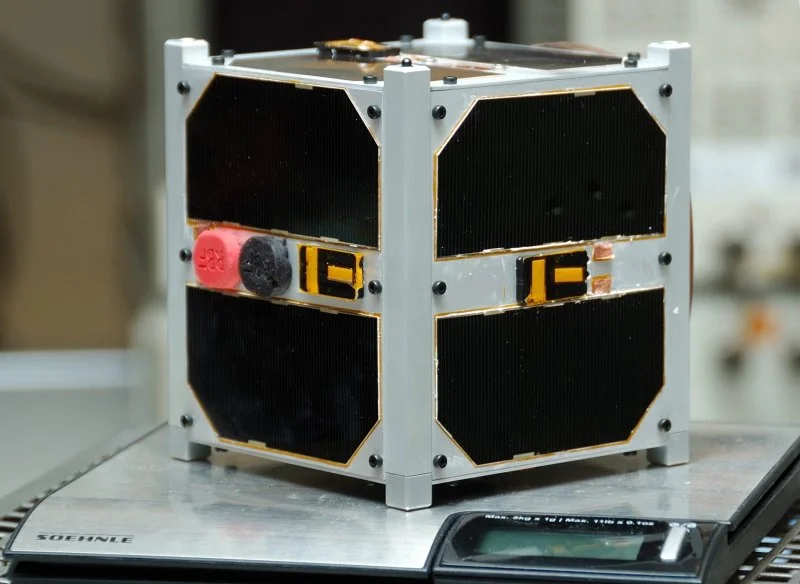
PUNCH uses four small spacecraft as a single observing system. The wide-field instruments can keep sight of a moving eruption after it leaves the area covered by more conventional solar images. For the event in this test, the mission team says it followed the ejection across roughly nine-tenths of the distance from the Sun to Earth.
Researchers traced the bright front of the cloud by hand and fitted a simple geometric model to successive views. Each additional observation helped constrain where the front could be and how fast it was moving. The striking feature of the experiment was that a fairly simple calculation could make good use of the extra observations. The result did not require the researchers to reconstruct every physical process inside the travelling cloud.
The time on the clock answers only one question
For an operator monitoring power infrastructure or satellites, a narrower arrival window could help determine when to pay particular attention. It would still leave another question open. How much will this particular cloud disturb Earth’s magnetic environment? NOAA explains that the orientation of the arriving magnetic field and the length of time conditions persist both influence the response. Two arrivals at the same speed can carry different implications.
The experiment leaves several tests for a practical service. A forecaster would need to repeat the work on other eruptions, including those with a less distinct edge. The analysis would need to run quickly enough while the images were arriving. And operators would need to know how much confidence to place in an individual estimate. NASA said the work was under journal review when it was presented. For now, one carefully reconstructed journey makes a case for collecting better observations all the way across the gap.