- Researchers compared historical ENSO forecasts from models developed in nine countries.
- Year-ahead forecasts starting during La Niña showed more skill than forecasts starting in neutral conditions.
- The work evaluates past forecast performance and does not announce a specific future event.
Inside this story 2 perspectives
A year-ahead climate forecast usually comes with a question about what will happen. A study published on 23 October asks another one first. Under what conditions has this kind of forecast actually worked before? Australian researchers compared more than 7,500 historical forecasts of the El Niño–Southern Oscillation, or ENSO. They found that the state of the tropical Pacific when a forecast starts offers a clue to how much confidence it deserves twelve months later.
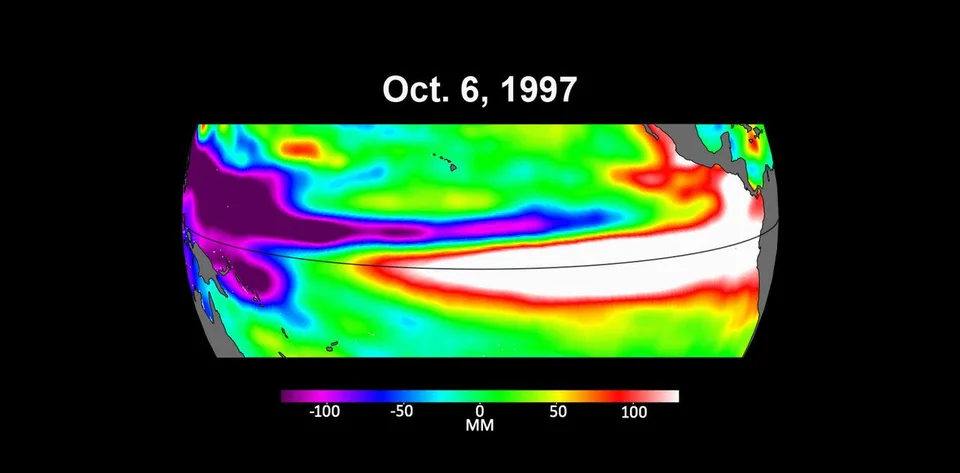
ENSO is the changing ocean and atmospheric pattern associated with El Niño, La Niña and neutral conditions. It can alter weather patterns well beyond the equatorial Pacific. Forecasting the phase months ahead can help people think about seasonal risks. Pushing the horizon to a year is harder, and averaging all past forecasts together can hide substantial differences in which ones succeeded.
Start the comparison one season earlier
The team examined forecasts from climate models developed in nine countries, separating them according to the state of the Pacific at the start. Across the models, year-ahead predictions starting during La Niña showed more skill. Those starting from neutral conditions were considerably less reliable. The distinction concerns the starting state. It does not mean every forecast for a future La Niña will be more accurate, or that a La Niña at the start guarantees another one a year later.
A simple analogy is a record of past journeys. An average arrival time may be useful, but it is more informative when separated by whether the departure took place in clear weather or fog. The destination might be identical. What changes is how much faith the traveller should place in the arrival time. Here the researchers had an archive of model runs and observations against which to test the comparable question.
A forecast of confidence
A water manager planning reservoir operations would need more than the name of a Pacific phase. Local conditions, rainfall forecasts, storage and the consequences of a decision all matter. Better information about when a long-range ENSO forecast deserves extra attention could nevertheless change how early managers begin considering scenarios. A lower-confidence starting point could justify keeping alternatives open longer.
The researchers did not announce a new operational warning system. They highlighted opportunities to test how forecasting agencies might use the findings and how different prediction methods perform under neutral conditions. The result gives forecasters a question they can answer with evidence from the past. Before asking what the model says about next year, ask what it has been able to say in earlier years that began with a similar ocean.