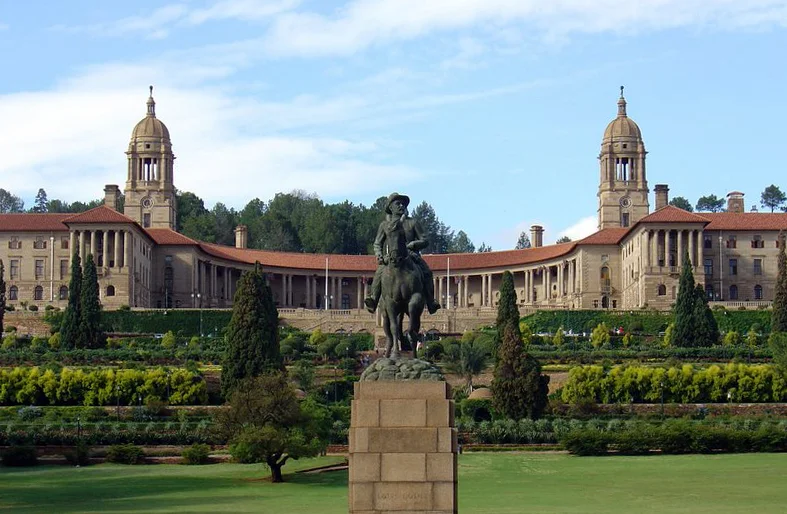
- Women from across South Africa mobilised against apartheid-era restrictions on movement in 1956.
- President Ramaphosa addressed the seventieth anniversary at the Union Buildings.
- He said government was opening procurement to women-owned firms. Contract awards and payments are where progress can be measured.
Inside this story 2 perspectives
In 1956, the women who carried bundles of signed petitions to the Union Buildings in Pretoria could not get the prime minister to receive them. Seventy years later, on the same grounds, one of the leaders of that march, Sophie Williams-de Bruyn, was among those greeted by South Africa’s president. The difference between the two occasions can be measured in who had to stand outside the door.
President Cyril Ramaphosa used the 9 August anniversary to raise a harder question about doors that remain difficult to open. Women hold some of the country’s highest public offices, he said, yet still possess an unequal share of its businesses, wealth and land. He identified state purchasing and the place of women-owned suppliers in major industries as two areas where government was working to change this.
A petition had to travel
The original protest was directed at efforts to extend urban pass laws to African women. Those controls reached into the ordinary geography of earning a living. A rule that can restrict movement can also decide whether a worker can reach an employer or live near her family. Opposition to a document was, in practice, opposition to the power the document gave the state over daily life.
Organisation preceded the famous picture of the crowd. South African History Online records how delegates were mobilised through local leaders and women travelled from places as far apart as Cape Town and Port Elizabeth. The march is commonly remembered as drawing about 20,000 women. When the prime minister and his senior staff did not appear, the leaders left the petitions outside his office. At Lilian Ngoyi’s suggestion the women stood in silence for half an hour.
What a contract records
A public purchase order has its own documentary trail. A buyer publishes a requirement, businesses decide whether to bid, an award is made and the successful supplier eventually submits an invoice. Each stage can tell a different story about participation. A company on a supplier list may have been invited to compete many times without once delivering an order.
Ramaphosa described the Women Economic Assembly as a means of drawing women-owned enterprises into major industries. A useful follow-up would trace a group of firms from introduction to first order, then to payment and a repeat customer. An announcement about the number of introductions would answer only the first part.
The marchers understood the political weight of a piece of paper because it could determine where a woman was allowed to go. Seventy years on, a purchase order and a paid invoice answer an equally practical question about an economic commitment. They identify the business that was actually paid to do the work.