- Khululekani is scheduled at the Wits Institute for Social and Economic Research from 8 September to 8 October.
- Muholi began Faces and Phases in Johannesburg in 2006.
- The selection includes participants whom Muholi has returned to photograph over time.
Inside this story 2 perspectives
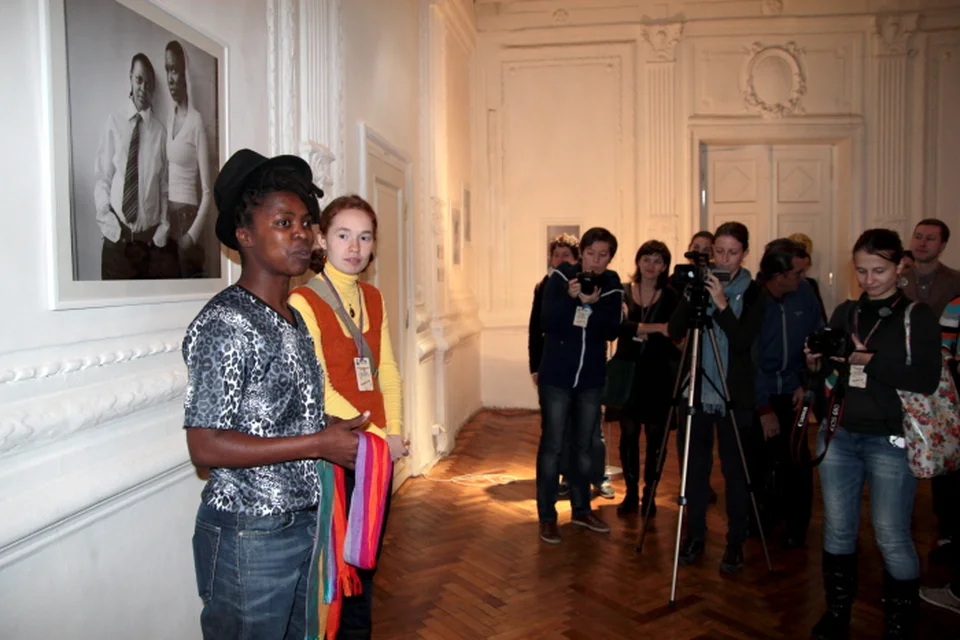
One portrait can introduce a stranger. A second portrait of the same person makes the viewer revise the terms of the introduction. Which of the details remembered from the first photograph belonged to a particular day? Which remained visible years later? At the Wits Institute for Social and Economic Research in Johannesburg, that act of return sits at the centre of Khululekani, an exhibition marking twenty years of Zanele Muholi’s Faces and Phases.
Presented with the Muholi Art Institute, the exhibition is scheduled from 8 September to 8 October. It returns the series to the city where Muholi began making its portraits in 2006. The project has grown into an archive of Black LGBTQIA+ lives in South Africa and beyond. Some of its early participants have sat for Muholi again, bringing different moments of the same life into view.
A person can outlive a caption
A photograph fixes an instant with great precision and leaves a great deal outside the frame. A viewer can study a face or the way someone presents themselves and still know very little about the years leading to that picture. When a second photograph appears, the temptation is to turn the differences into an explanation. One image can too easily be made to stand for a beginning and the other for an outcome.
The curators’ emphasis on return suggests a more patient approach. Each encounter creates another record without making the first one obsolete. The person in the earlier portrait did exist in that moment. The person in the later portrait is equally entitled to a present that exceeds what an earlier audience might have imagined. That is an important freedom in an archive concerned with people whose identities have often been described or restricted by others.
Return as a working method
A twentieth anniversary frequently invites a closing gesture, a definitive selection that lets the audience say what a career or a series amounted to. Faces and Phases remains in progress. The interval between portraits is part of its material, and the ability to return depends on relationships sustained beyond a single session. The exhibition’s location gives that idea a geographic dimension as well. Work that has travelled internationally is being considered in the city of its beginnings.
For someone visiting this month, the most revealing unit of attention may be a pair of encounters. Look at the first portrait long enough to notice what assumptions are already forming. Then allow a later image to disturb them. The point is not to guess a participant’s private history from the evidence of a face. It is to acknowledge that someone can return to a familiar frame and still have considerably more to say.