- Brave Beauties began in 2014 and includes transgender women and gender-nonconforming participants.
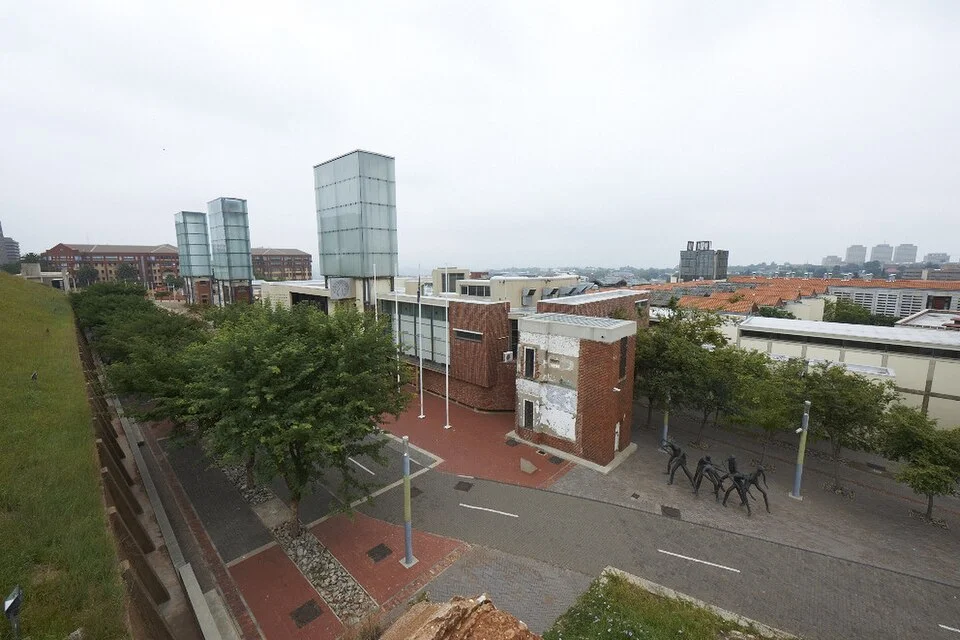
- The Johannesburg exhibition is scheduled for 20 August to 24 September at Constitution Hill’s Women’s Jail.
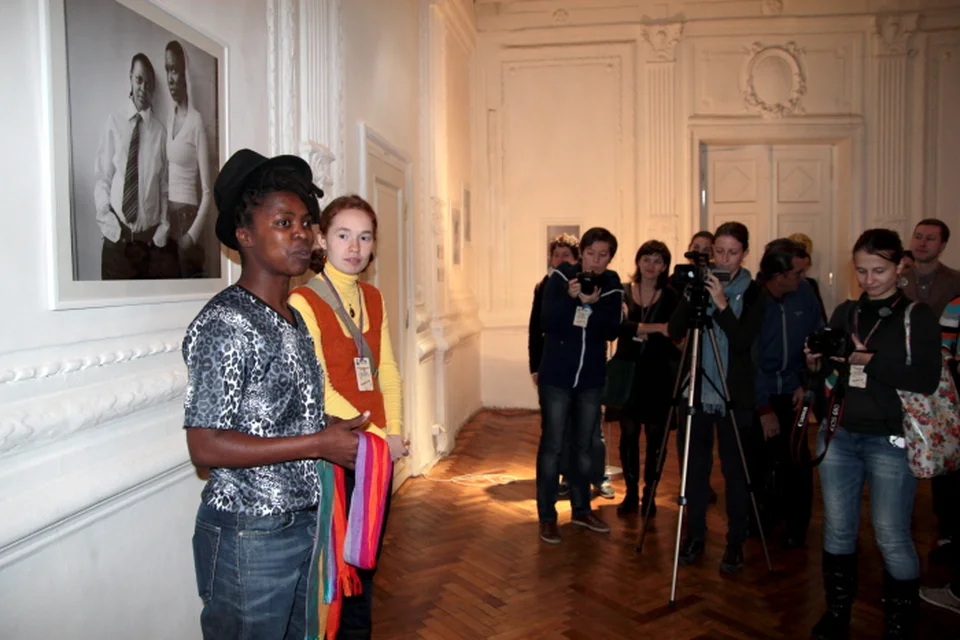
- Several portraits of curator Yaya Mavundla form part of Muholi’s ongoing series.
Inside this story 2 perspectives
When the portraits in Zanele Muholi’s Brave Beauties go on view at Johannesburg’s Constitution Hill, one of the women visitors can see in the work will also have helped determine how they encounter it. Yaya Mavundla, the artist and activist curating the exhibition, has participated in Muholi’s series and appears in several portraits. The exhibition at the Women’s Jail is scheduled to open on 20 August and run until 24 September.
That double role gives the standard gallery question of who chose the pictures an unusually tangible answer. Mavundla knows the work from both sides of its presentation. Her own image belongs to the archive she has been entrusted to bring before an audience. She is being asked to consider not only which individual pictures command attention, but how a group of people with different histories might be seen together.
What a series gives an individual
Muholi began Brave Beauties in 2014. The ongoing photographic essay documents transgender women and gender-nonconforming people in South Africa. Many participants have taken part in community beauty pageants, which bring music, performance and public self-presentation into the same space. For a photographer, a participant with that experience can bring established ideas about how to pose and how to meet an audience’s gaze.
The relationship changes the meaning of a portrait. A viewer may be tempted to read an expression as a spontaneous revelation of character. It can equally be a deliberate act of presentation by someone familiar with the conventions of fashion or the stage. Giving that possibility room restores a decision to the person in front of the camera. A series makes it harder to treat one chosen pose as a description of an entire community.
Which lives enter a public archive?
The Women’s Jail is a particularly charged place to ask that question. A former place of imprisonment carries a history of institutions classifying people and determining how they are recorded. Muholi’s work starts with people participating in a record of their own existence, and the Johannesburg exhibition gives a participant responsibility for shaping how that record is shown.
The dates span South Africa’s Women’s Month and Heritage Month. The link makes sense in everyday terms. A portrait made a dozen years ago is already a document that future family members, artists and researchers may consult. What gets named, preserved and returned to view influences what they will be able to know.
Visitors arriving after the opening will have their own response to the images. A question worth taking into the exhibition gives Mavundla’s role the attention it deserves: what might a curator notice in the relationship between two portraits when she also knows what it means to stand inside one?