- The Cape Town presentation of How to Live Together is scheduled from 26 November to 23 January 2027.
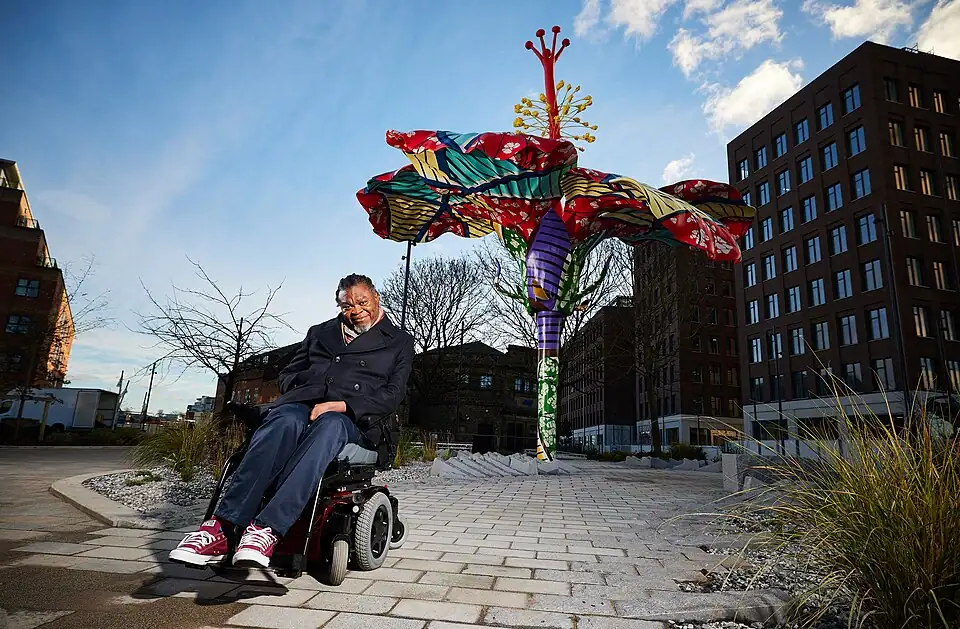
- Shonibare’s 2025 bronze sits in a series that explores the shape of fabric moved by wind.
- Works listed for the show include three numbered field notes by Nolan Oswald Dennis and Ravelle Pillay’s Garden.
Inside this story 2 perspectives
Wind is a curious material for a sculptor to promise an audience. It is invisible except for what it moves. In a work listed for Goodman Gallery’s 60th-anniversary exhibition in Cape Town, Yinka Shonibare asks bronze to do the moving. His Wind Sculpture in Bronze (SG) III, made in 2025, joins new commissions by Nolan Oswald Dennis and Ravelle Pillay in How to Live Together, scheduled to open on Thursday, 26 November.
The title makes a question out of what galleries do every day. Put work by two artists in one room and viewers will look for a relationship between them. Sometimes all they have in common is the gallery that put them there. Goodman has made that problem part of the premise of its birthday exhibition, which takes a different form in each of three cities. The Cape Town presentation runs through 23 January 2027.
A cloth that has travelled
Shonibare offers one way into that premise. The fabric patterns associated with his work have their own complicated itinerary. As Harvard Business School explains in its account of a different sculpture in the Wind series, Indonesian batik designs inspired cloth made on an industrial scale by the Dutch and sold in West Africa. Over time the fabric became bound up with African identity and independence. A single piece of cloth can carry all those histories even when the person looking at it recognises only one.
For the sculpture in Harvard’s collection, the artist worked from photographs of fabric with wind blowing into it. That earlier piece is made from different materials. What links it to the bronze in Cape Town is a sculptural puzzle a visitor can grasp without knowing the textile’s history. How can something rigid give the impression that, in another instant, its folds might fall differently?
Room for different kinds of time
The gallery drew its title from Roland Barthes’s 1977 lectures. Barthes examined an arrangement associated with monastic life on Mount Athos in which people belonged to a community while keeping individual rhythms. The idea has a practical implication for a gallery visitor. Someone can spend a long time with a sculpture, then move slowly through Dennis’s three numbered imbokodo field notes without having to read each artwork as a variation on the same theme.
Other entries in the Cape Town selection keep their own dates and titles. Leonardo Drew’s Number 387 is from 2023. Pillay’s Garden is from 2026. Kudzanai Chiurai is represented by an untitled work from this year. Sixty years is usually an invitation to look backwards. Here the individual works give visitors a more demanding pleasure than following a timeline. They can choose what to look at next and ask who, or what, made that connection.