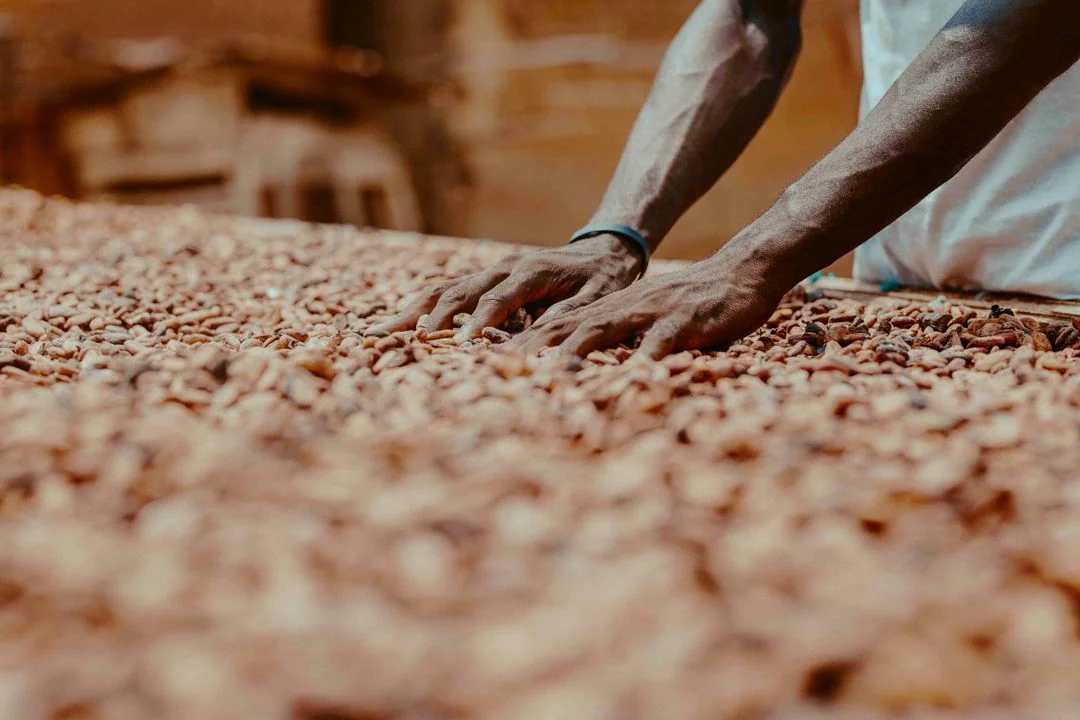
A Ghanaian farmer selling ten bags of cocoa at the new season’s price will collect GH¢630 more than those same bags would have earned a week earlier. Compare the sale with what the farmer could have received last October, though, and it brings in GH¢9,750 less. Both calculations describe the same harvest.
The Ghana Cocoa Board opened the 2026/27 season on 25 September with a producer price of GH¢2,650 per 64-kilogram bag, up from GH¢2,587. The change amounts to roughly 2.4%. That earlier rate dates to February, when Ghana cut the price from GH¢3,625 a bag after a fall in international cocoa prices left the buying system short of cash.
This season also gives farmers a new legal claim on export earnings. Under the Ghana Cocoa Board Act, their minimum share is 70% of the realised gross free-on-board price. In ordinary language, the reference point is what Ghana secures for the beans as they go aboard the export ship. The chocolate bar those beans might eventually become has a different price, set much further along the chain. The board puts the farmer’s share at 71.18% for the opening of this season.
For growers, the number on the buying scale is only half the household calculation. Ten saleable bags at the new rate bring in GH¢26,500 before labour and other farm costs. Nine bring in GH¢23,850. A single bag lost to disease in that example would cost more than four times the gain from the price increase on ten bags.
That arithmetic gives farmers a reason to follow a less prominent part of the announcement. The board says it will continue supplying free fertiliser and hybrid seedlings, alongside its pest and disease programme. The price increase is already in force. What growers take home will also depend on the crop they can bring to the scales.