- The project’s second phase is planned to run for three years.
- The team will connect geoscience measurements and models across disciplines.
- Induced seismicity and differences between geothermal fields are explicit research questions.
Inside this story 2 perspectives
The heat under a prospective geothermal site is only the beginning of an electricity project. Engineers also need to know whether fluid can circulate through hot rock in a useful and controllable way. The University of California, Santa Cruz, set out its role on 8 October in an American research initiative intended to bring those questions together. The Energy Department has selected the collaboration, called MAESTRO, to move into a second phase lasting three years.
The initiative is led by the University of California, Irvine. It includes five UC campuses and four national laboratories, as well as industry participants. It will use artificial intelligence to help interpret the subsurface. The most interesting part of the project may be deciding which comparisons the software can reasonably make. A fracture pattern measured at one site does not guarantee that fluid will move in the same way under a different set of stresses in another.
Why a geothermal field is difficult to read
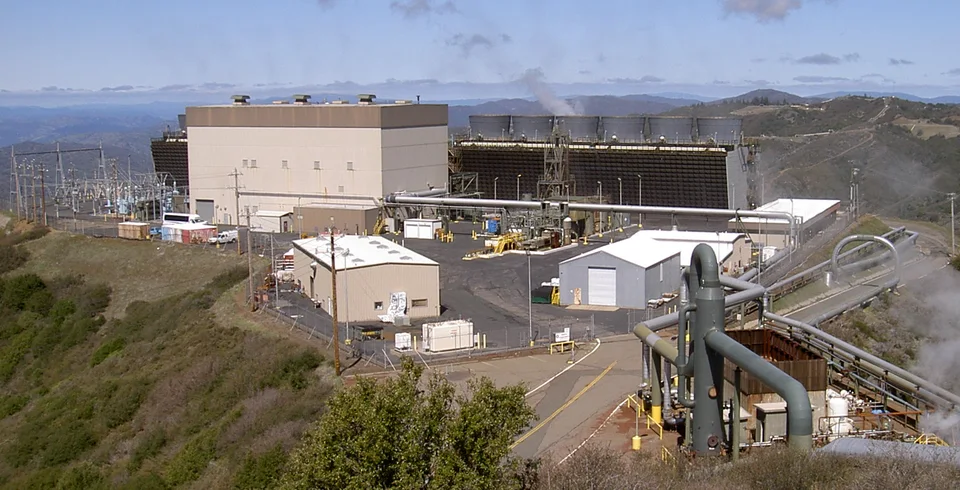
Enhanced geothermal systems seek to circulate fluid through deep rock, bringing heat to the surface where it can be used to generate electricity. The rock must allow circulation between the places where fluid enters and leaves. When natural pathways are insufficient, engineering can help establish them. A system that yields a usable flow in one formation might respond quite differently to the same intervention elsewhere.
Researchers must reconcile measurements from several fields of science. The shape and orientation of fractures help determine possible routes. Underground stresses influence how those fractures respond. Fluid and heat interact with the rock, while chemical changes can affect conditions along the route. A model that treats each factor in isolation may give a reasonable answer to a small question while missing an important consequence for the field as a whole.
Emily Brodsky, the Santa Cruz geoscientist leading that part of the collaboration, identified induced seismicity and the transfer of knowledge between fields as particular challenges. The first concerns ground movement associated with changes underground. The second concerns what can be learned from previous projects without assuming that every location behaves alike. Asking both questions together matters because advice that speeds up development is of limited use unless its limits are understood.
What would make the work useful outside the laboratory?
The team plans to make digital resources available openly and describes a future browser-based tool for exploring geothermal potential, field data and risk. Those are intended outputs. The selection for a new research phase establishes neither a working nationwide tool nor the performance of a completed power station.
A successful result would give an engineer a clearer explanation for looking more closely at a site, and a clearer account of what still requires local measurements. The most consequential answer such a system offers might occasionally be that the evidence from a previous field is a poor guide to the next one.