- Leah Mock worked with two colleagues in Paris.
- The new species belongs to the Eocene Green River Formation.
- A wing vein and details of the antennae helped distinguish it.
Inside this story 2 perspectives
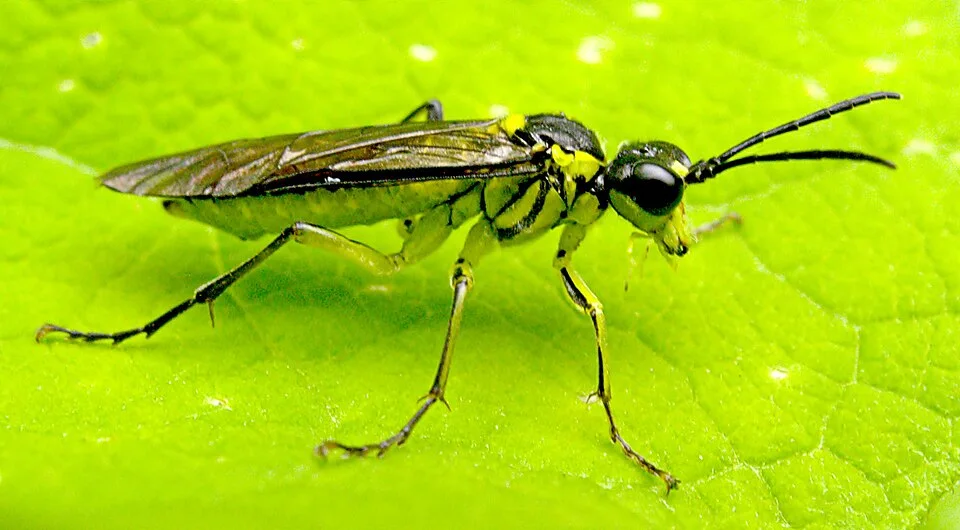
A sawfly preserved in Colorado rock was missing its legs. It did, however, have a short vertical vein in a wing. It also retained features of its antennae that could be made out under a microscope. For researchers trying to identify what kind of insect once lived beside an ancient lake, those tiny details turned out to be particularly informative.
Yale College student Leah Mock described the fossil with André Nel and Mathieu Boderau in the journal Mesozoic. The Yale Peabody Museum recounted the work in late October, and it reached a wider science readership on 5 November. The authors gave the species the name Anoplonyx rasnitsyni. The specimen came from the Eocene Green River Formation, a record of landscapes occupied by lakes about 50 million years ago.
A fossil with more than one discoverer
Credit for the research follows a longer route than might be apparent from the scientific name. Dick King found the specimen. Jim Barkley gave it to the museum. Mock had worked in a quarry in western Colorado that exposes the Green River Formation. It was in the Peabody's collection that she encountered the sawfly and began asking what it might be. The detailed description ultimately took three authors working across institutions.
Knowing a body part is missing and knowing how to use what remains are separate skills. An insect flattened into rock has lost much of the three-dimensional information that a modern entomologist can examine. In this case enough of the wing scaffolding had survived to allow comparison. The details of the antennae gave the researchers another feature to consider alongside it. A fossil can be incomplete and still retain exactly the evidence needed for a particular question.
What the first record means
Sawflies belong to the broad group of insects that also includes bees, wasps and ants. The paper identifies the specimen as the first fossil representative of its genus and the first record of its subfamily in this formation. Both parts of that description have limits. It does not tell us where the first sawfly ever lived or imply that the fossil is the direct ancestor of every related insect now alive.
It does give researchers one more securely described piece of an Eocene community. The Peabody holds more than 15,000 Green River Formation specimens, according to the museum. The opportunities in a collection of that size include questions a collector could not have anticipated at the moment of discovery. Keeping a specimen and the information that goes with it allows somebody else, years later, to ask a more precise question. In this instance, the shortest route back to a lake in ancient Colorado ran along a vein in an insect's wing.