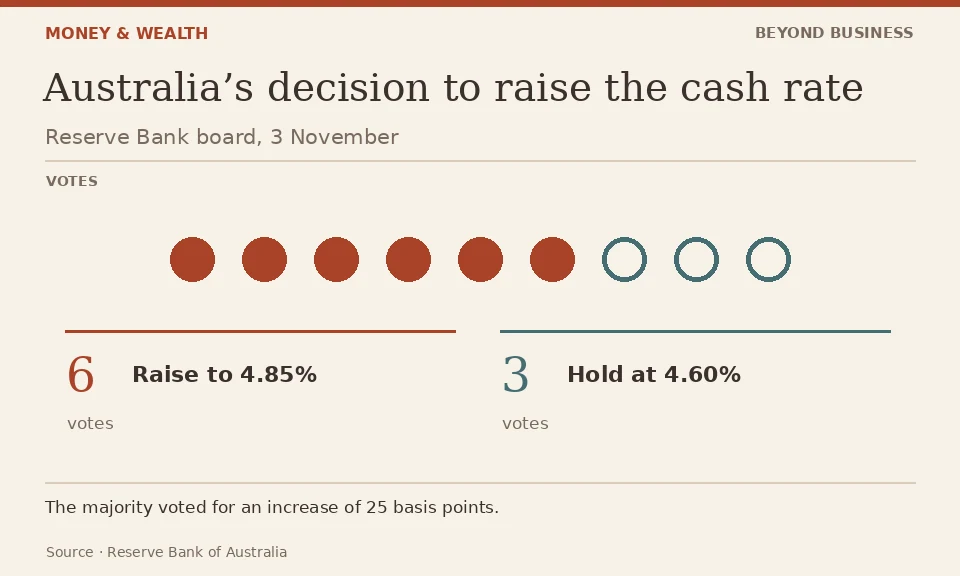
- The RBA raised its cash rate target by 0.25 percentage points to 4.85% on 3 November.
- Six board members supported the rise and three preferred to hold the target at 4.60%.
- A fixed portion normally holds its agreed rate for its term. A variable portion can change according to the lender’s terms.
Inside this story 2 perspectives
A borrower with an Australian home loan split into fixed and variable portions can have two different answers to the same question this week. The Reserve Bank of Australia raised its cash rate target by 0.25 percentage points on 3 November, taking it from 4.60% to 4.85%. Whether that increases interest immediately, and by how much, depends on the household’s contract and which part of the balance is exposed.
Six members of the monetary policy board supported the increase and three preferred to keep the target steady. The board cited broadly based inflation and a higher forecast for price growth. It also recognised weaker activity, falling house prices and rising unemployment. The target applies to the cash market. A homeowner’s own mortgage rate and the date on which it changes are set under the lender’s arrangements.
Start with the exposed balance
Take an illustrative A$400,000 mortgage split equally between a fixed portion and a variable one. Suppose the lender raises the variable rate by the full quarter percentage point and the relevant balance stays at A$200,000. Multiplying that amount by 0.0025 gives A$500 of additional simple interest over a year, or about A$42 a month on average. The fixed portion keeps the rate agreed for the remainder of its fixed term.
That example estimates interest on a constant balance. A principal-and-interest mortgage also pays down principal, and the amount of the regular repayment depends on the remaining term, rate and repayment schedule. A split loan of the same total size with three quarters on a variable rate would start its calculation with A$300,000. Getting the two portions right matters before reaching for a repayment calculator.
The second date on the calendar
The fixed portion has its own future decision point. When the fixed period ends, the rate offered then may differ from today’s variable rate and from the rate originally agreed. ASIC’s Moneysmart guidance notes that fixed, variable and split loans offer different combinations of certainty and flexibility. Limits on extra repayments or costs for ending a fixed arrangement early can be important when considering a change.
For a household comparing the November notice against its budget, four pieces of information do most of the work: each portion’s outstanding balance, its current interest rate, the lender’s effective date for any change and the end date of the fixed period. The RBA decision helps explain the setting. The lender’s notice and the loan schedule establish the actual amount and timing. A single headline increase can produce a much smaller immediate change for one household than for its neighbour.