- Zambia became independent on 24 October 1964.
- Its diplomatic mission announced that Ottawa City Hall would fly the flag for the 62nd anniversary.
- Zambia’s civic education material explains the colours and the eagle separately.
Inside this story 2 perspectives
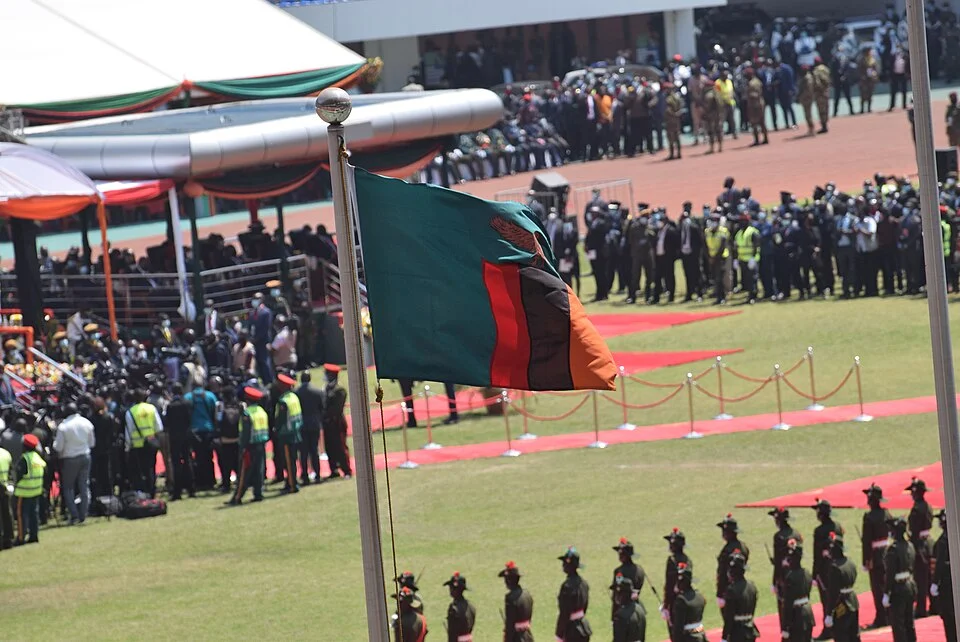
An orange eagle in flight, three vertical stripes and a broad field of green make the Zambian flag easy to distinguish at a distance. On 24 October those elements also explained why a flag could have two addresses in public life. Zambia marked 62 years since independence at home. In Canada, its diplomatic mission had announced that the national flag would be raised and flown at full mast at Ottawa City Hall for the anniversary.
A flag raised at a municipal building does something different from a celebration held inside an embassy. It puts a national date in the everyday surroundings of a city where many passers-by may know little about the country observing it. For Zambians living there, it marks a moment on a familiar calendar. For somebody encountering the design for the first time, the unusual arrangement of the shapes can be a starting point.
Where the eye lands
Much of the flag is green. The eagle and the block of red, black and orange stripes sit towards the fly, the edge away from the pole, rather than occupying the middle. Zambia’s education ministry explains green as a reference to the country’s vegetation and natural resources. Red recalls the blood shed in the struggle for independence. Black stands for the Zambian people, while orange refers to mineral wealth, particularly copper.
The eagle supplies another reading. In the ministry’s civic education material, its flight expresses the capacity of the people to rise above challenges. The lesson asks learners to draw the flag and explain its features. That is a fairly demanding exercise. Recognising a design when somebody else displays it requires less attention than remembering where the bird goes, which colours appear and what each is intended to represent.
A date behind the image
On 24 October 1964 the territory then known as Northern Rhodesia became the Republic of Zambia, with Kenneth Kaunda as its first president. The flag compresses references to the land, the people, the independence struggle and the economic importance of minerals into an object that can travel. Those references are specific enough to warrant explanation even when the object is instantly recognisable.
Ottawa publishes a calendar of national days as part of its municipal flag arrangements. The mission’s notice made a modest public promise about this particular date and place. It did not require the passer-by to know the history already. One look at the green field can lead to a question about the eagle, another about the copper-coloured stripe and, eventually, a date that people living thousands of kilometres apart have reason to remember.