- The joint meeting runs from 10 to 13 November in Namibia.
- Three transport corridors connect the two regions in the study.
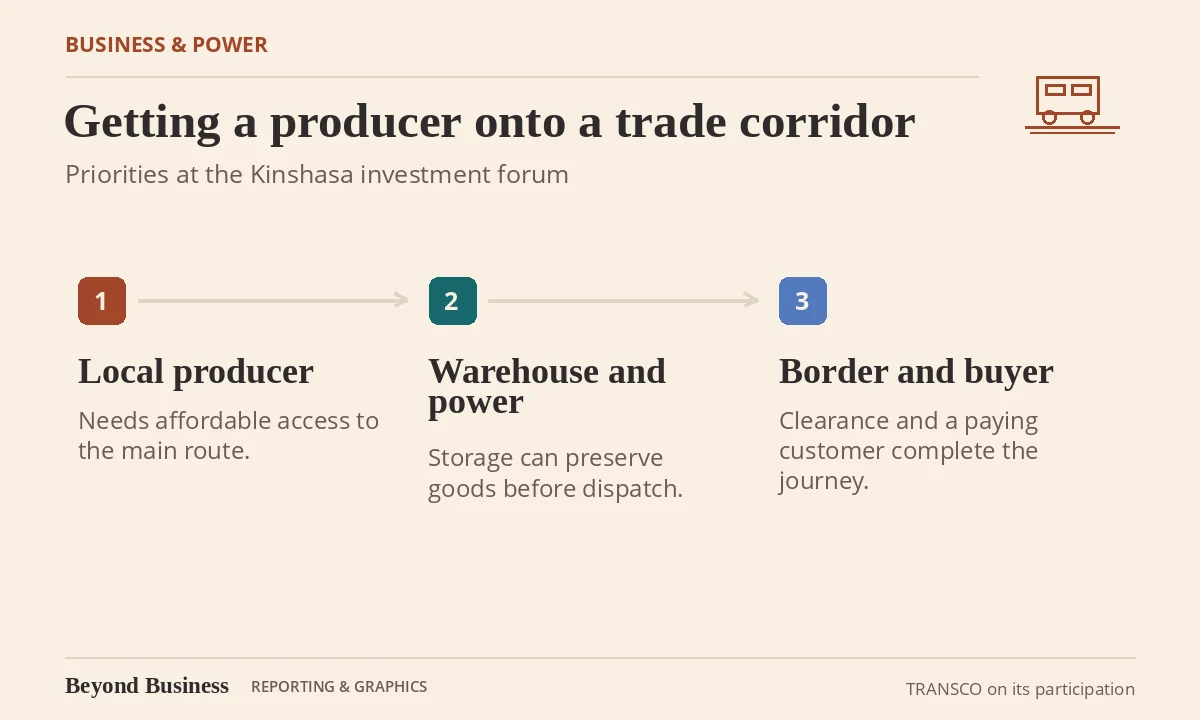
- A wholesaler making a trial order needs a route it can price and book.
Inside this story 2 perspectives
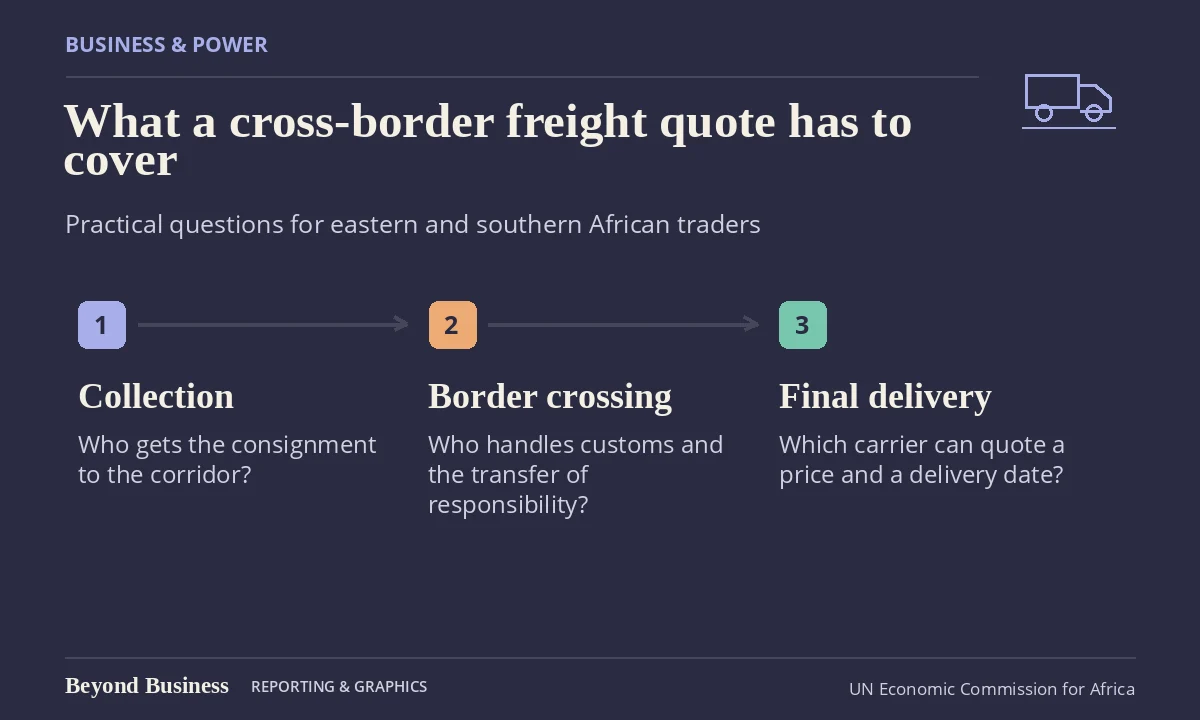
Try asking for a freight quotation that runs from an address in eastern Africa to a customer in southern Africa. The map makes the two regions look like neighbours. The quote has to answer considerably more questions. Who takes responsibility at the border? Does the customer pay one carrier or several? How much extra time should a supplier allow before promising a delivery date?
In Windhoek this week, Namibia and the United Nations Economic Commission for Africa have put some of those questions on the same agenda as power trading, investment and tourism. The intergovernmental meeting runs from 10 to 13 November. A paper prepared for it makes a striking observation. The regions share membership of four regional economic organisations, but their infrastructure connections across the boundary are concentrated in just three corridors.
The supplier who needs a second customer
The paper describes trade and investment moving mainly within each region. What crosses from one to the other is concentrated among a small number of countries, companies and products. The geography of a mineral shipment is one reason. A well-used route from a mine to a port can account for substantial trade in one direction without giving a smaller supplier in a different town an economical route to its customer.
Take a maker of replacement parts with an enquiry from beyond its usual market. A large order can justify the work of finding a customs agent, checking transport options and arranging payment. It is harder to justify the same work for a first, small order. The manufacturer may need that trial order to win the customer. A route that can carry a container is commercially different from a service on which somebody can book part of a container at a known price.
The return journey matters too
The distinction also helps explain why tourism appears on the Windhoek agenda alongside physical goods. A visitor may cross a border without any freight. A travel company still has to arrange payments, join up transport and tell a customer whose instructions to follow at each stage. A problem repeated on every crossing can matter more to that operator than the signing of another agreement.
The paper puts fifteen proposals before governments. They are recommendations for consideration. The people negotiating a consignment this week still need an answer from an agent or carrier. A telling measure of what the meeting achieves would be whether a company outside the handful already doing cross-regional business can win a second customer on the other side. The first shipment might be an experiment. A second one, priced in advance and delivered on time, would suggest the route has become part of that company’s business.