- World Sight Day falls on 8 October in 2026.
- WHO Africa says only around 30% of people in the region who need spectacles receive correction that restores good vision.
- The SPECS 2030 initiative focuses on access to appropriate, affordable refractive-error services.
Inside this story 2 perspectives
A school can count the children who stood in front of a vision chart. A clinic can count the spectacles it dispensed. A family has a further question: can the child now see what they need to see? The three measures describe different stages of care. Only the last gets close to whether the intervention worked for the person who received it.
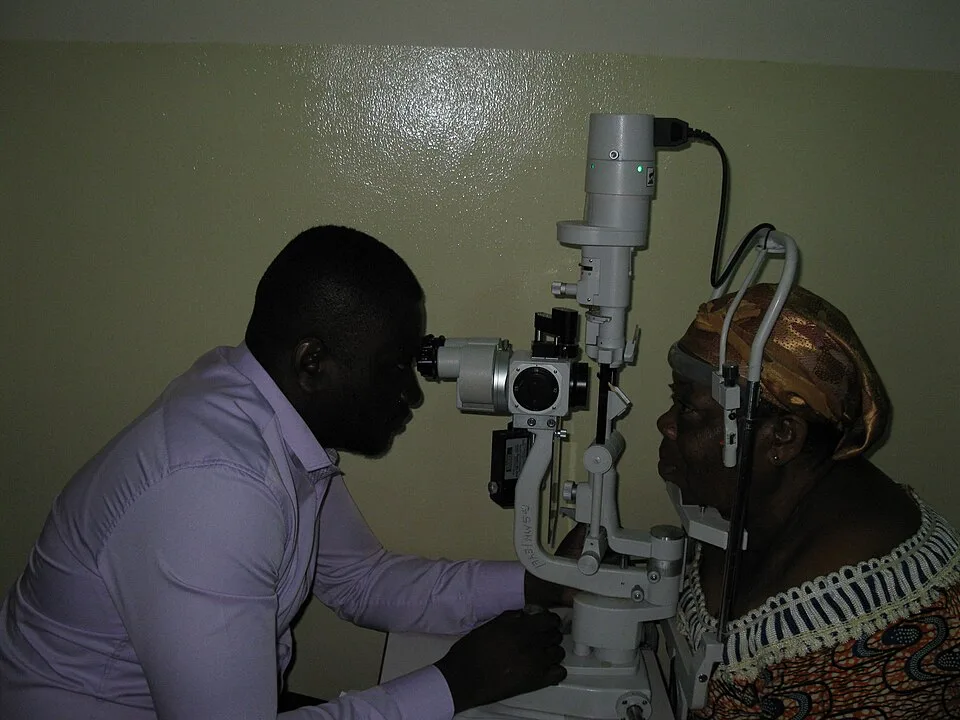
On World Sight Day, 8 October, the World Health Organization’s Regional Office for Africa highlighted that distinction. It estimates that only around thirty per cent of people in the region who need spectacles receive correction that restores good vision. The figure describes an estimated regional gap. Access and outcomes can differ substantially between countries and between communities within any one country.
What happens between screening and seeing well
A screening programme can identify people who may need a fuller assessment. It does not itself establish the complete cause of a visual difficulty or ensure that somebody can reach the next service. A referral can require time away from work or school, a journey, an appointment and a way to meet the cost. A prescription or recommendation can still leave a gap if the appropriate spectacles are unavailable or unaffordable.
The distinction becomes particularly important when judging a new programme. A count of spectacles handed out tells organisers something useful about the scale of distribution. It does not establish that everybody who needed them was reached, that the correction was suitable or that a person can use it for the tasks that brought them to care. Counting cases and assessing outcomes are complementary jobs.
A question for the next appointment
For a family following up after a screening, it can help to ask where the assessment takes place, what information should be brought along and who explains the result. If spectacles are supplied, the provider can explain what improvement to expect, what to do if a difficulty persists and how to return for follow-up. The appropriate next step depends on the person and the assessment.
WHO’s SPECS 2030 initiative links this everyday sequence to larger decisions about the workforce, the location of services, affordability, public information and monitoring. A place with few trained providers faces a different immediate problem from one where appointments exist but the cost prevents people collecting their spectacles. A national total alone may make those barriers hard to distinguish.
The issue reaches beyond the school chart. The regional director also describes adults trying to earn a living and older people trying to retain independence. For each of them an eye-care programme begins with access to a service. A useful measure of its success continues as far as the task the person needed to see.