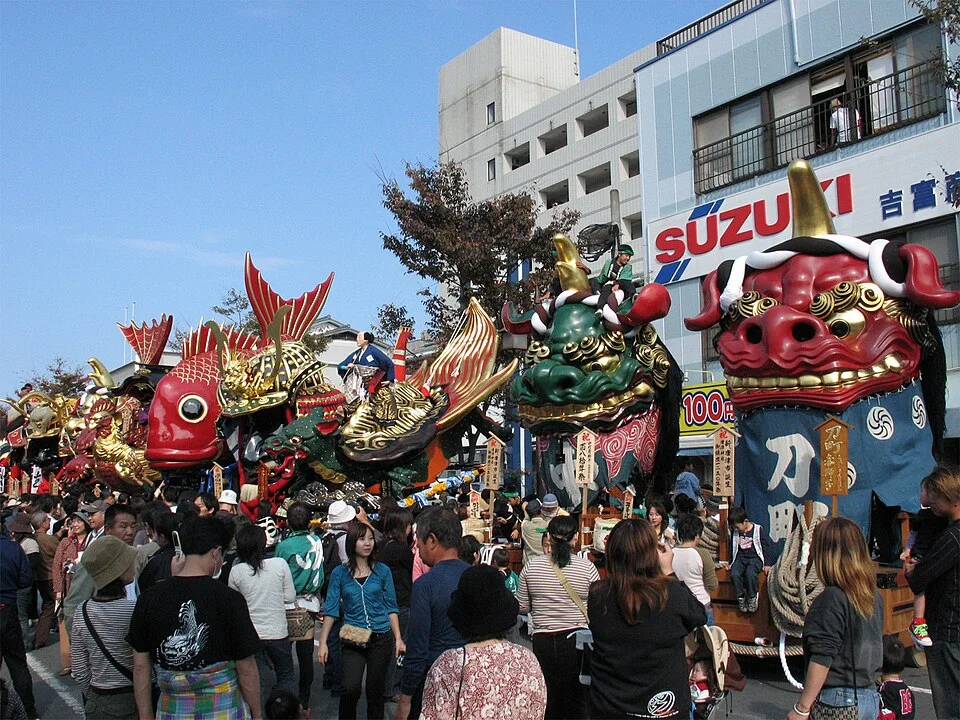
- Ten of the autumn festival’s eleven yatai are due on display, with Gyojintai under repair.
- The lantern procession is scheduled for 9 October, the first evening.
- Rain can change the outdoor programme and the floats may be viewable in their storehouses.
Inside this story 2 perspectives
Anyone arriving in Takayama this week with a guidebook promising eleven festival floats has a small correction to make. The city says Gyojintai is being repaired, leaving ten yatai due on public display at the autumn Hachiman Matsuri on 9 and 10 October. That absent float is a reminder of what visitors are coming to see. These objects belong to a living tradition that requires maintenance as well as people willing to bring them into the street.
The festival is associated with Sakurayama Hachimangu Shrine. Its two days share ceremonial and display activities, but the programme is not identical. A traveller choosing between them should decide first whether to watch the floats at rest, see selected ones moving through the streets or stay for the lantern-lit procession. Booking either day at random leaves that decision to chance.
For the carving, give the floats time to stand still
A stationary yatai offers the easiest opportunity to compare the ornament on one float with that on another. The city specifically draws attention to differences between their decorations. Seeing them together gives the eye time to move between the carved details, the structure that holds them up and the scale of the whole object. The experience changes when people take responsibility for getting that object round a corner.
The first afternoon includes a separate parade with four yatai. At the shrine, the Hotei-tai float is the platform for a marionette performance. The city describes six to eight operators working the strings. Someone who sees only the figure’s gestures may miss the cooperation below. Watching for the transitions between movements gives the audience a chance to appreciate how many people are needed to make one puppet appear to act independently.
The evening that occurs only once
The yoimatsuri, or evening festival, is scheduled for 9 October. Around a hundred lanterns on each participating float change what is visible as the procession moves through the city. The second day offers daylight activities without another lantern procession. For someone catching a train or travelling with people who prefer an earlier finish, that difference is as significant as any individual performance.
Outdoor events depend on the weather. The city directs people to its updates and notes that, depending on conditions, it may be possible to see floats where they are stored. A rainy visit can therefore change the kind of encounter available. It does not make an advertised parade certain to go ahead. At a festival built around cared-for objects such as these, the maintenance keeping one float out of sight this year and the caution protecting the others are part of the same story.