- The researchers tracked a liquid crystal’s electrical response and watched its molecules turn.
- An optimised voltage pattern cut dissipation by more than 60% against a simple linear pattern.
- Testing the method on materials used in memory is a proposed next step.
Inside this story 2 perspectives
A device that gets warm has lost energy as heat, but its temperature alone cannot tell an engineer exactly where that energy went. Some of the heat may already have escaped to the surroundings. The rise may be too small to measure accurately. In a computer with billions of transistors, watching the temperature of the whole device tells little about a particular switching event.
A team from Stanford University and SLAC National Accelerator Laboratory approached the problem with a much simpler object. In a report published by SLAC on 8 September, researchers described tracking a liquid crystal as its molecules changed orientation under an applied voltage. They then varied the way the voltage changed over time. The best pattern they found cut energy dissipation by more than 60% compared with a simple linear pattern in their model system.
An electrical record of a physical change
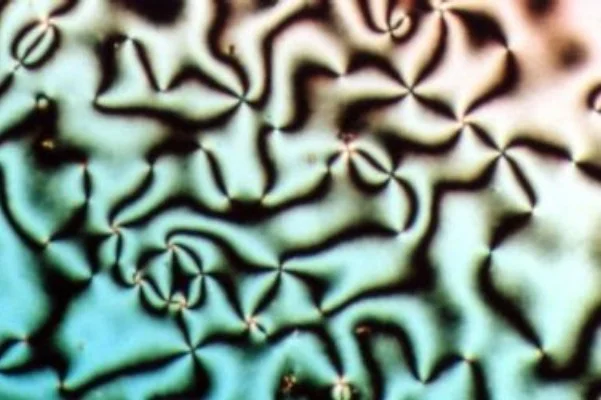
The molecules in the liquid crystal are shaped rather like rods. As voltage changes, groups of them rotate, sometimes adopting different orientations in different parts of the material. A polarised optical microscope lets the researchers watch that movement. At the same time, precise electrical measurements record the current flowing in response to the changing voltage. The pictures and electrical traces can then be matched to the same stages of the change.
This combination lets the researchers follow how much electrical energy the system can store as it changes. They could vary the voltage, then bring it back down slowly until the system returned to its starting condition. Comparing the energy supplied and recovered over that process gave them a way to quantify the amount dissipated. The experiment did not depend on trying to read an exceptionally small increase on a thermometer.
Two routes between the same states
Imagine two control signals with the same starting and ending voltages. One increases steadily. Another spends more time in part of the range and less time elsewhere. The molecules have to respond while the signal changes. In the experimental system, the timing affected the energy lost along the way. The researchers searched for a better driving pattern and compared its performance with the linear reference.
The eventual ambition includes materials used in computer memory, where a change of state can represent information. A working memory device has requirements the liquid-crystal experiment was never intended to meet. It must operate at a useful speed and fit into a larger circuit, among other things. Testing the method there is a next step. For now, the team has shown that in one carefully measured system, how it gets from one state to the next can matter nearly as much as choosing the states themselves.