- The Caoling–Shibi festival programme runs from 4 to 6 September in Yunlin County.
- The tourism authority describes a recreation area that renewed previously planted bamboo stands around an old trail.
- The published programme separates the guided excursions from workshops with limited places.
Inside this story 2 perspectives
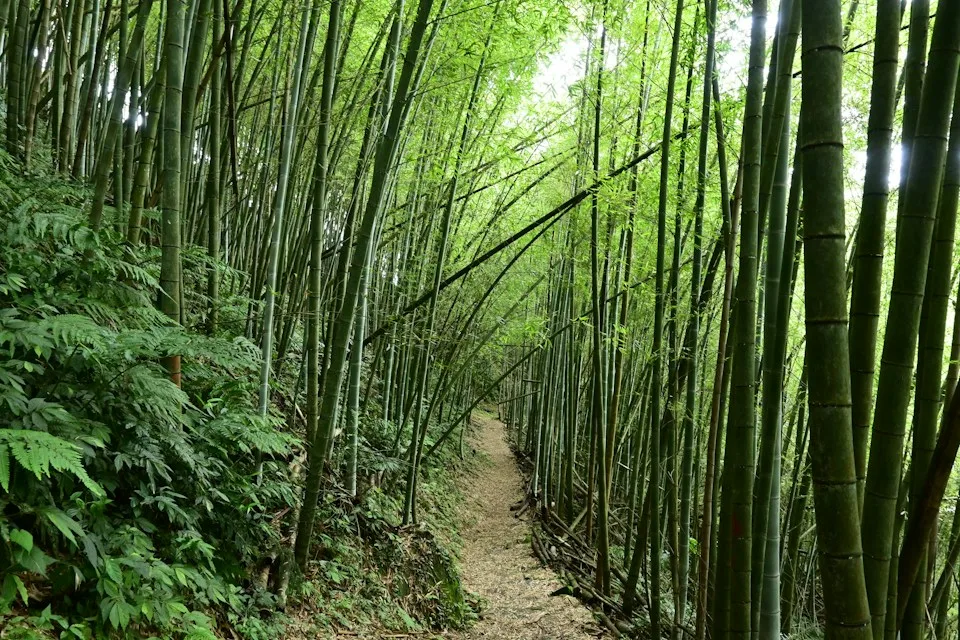
Bamboo can look like the most self-evidently natural thing in a landscape. At Caoling–Shibi in Taiwan’s Yunlin County, that first impression leaves out an important human detail. The national tourism authority describes part of the recreation area around the Muma Historical Trail as a revival of formerly planted bamboo stands that had fallen out of use. A walk there is also a walk through the afterlife of a working landscape.
The Caoling–Shibi Forest Therapy Festival is scheduled from Friday 4 to Sunday 6 September. For visitors looking over the programme before travelling, the important choice concerns scale. There are organised excursions of a day or more, performances in the bamboo forest and small workshops that occupy just part of an hour or a morning. Their timetables and booking arrangements are distinct.
Give the old trail some time
The tourism authority describes bamboo installations as part of the park. That offers visitors at least two different ways of seeing the same material. In one direction bamboo is a living stand through which a path passes. Elsewhere someone has cut, arranged or joined it into a structure for people to encounter. A useful question for a walk is where each of those human interventions becomes visible.
Yunlin’s advance programme lists a one-day outing on Friday and a two-day outing over Saturday and Sunday. The advertised festival rates were NT$999 and NT$2,800 respectively. These are organised excursions. The price of either package should not be read as the price of every possible visit to the forest. Anyone planning around a guided outing can check the booking page for the precise itinerary and remaining space.
One hour has a different shape
The site’s own advance guide gives a good example of the smaller commitments on offer. A Friday session scheduled from ten to eleven in the morning pairs an essential-oil activity with making a diffuser stone. The programme lists a NT$100 materials charge and 16 places. A visitor hoping to fit it between other activities has a much more useful set of facts than a generic promise of a weekend in nature.
A festival can load a calendar with enough choices to make even a forest walk feel hurried. Here, it is possible to select one appointment and give the surrounding landscape the rest of the time. The sound of many narrow leaves moving together, the regular spacing of a planted stand or the point at which a structure begins to feel handmade can be reasons to pause without adding another stop to the itinerary.
For a visitor, the enduring part of the weekend may be the distinction between finding a forest and learning how people have helped shape it. The old trail and its renewed bamboo stands make room for both experiences.