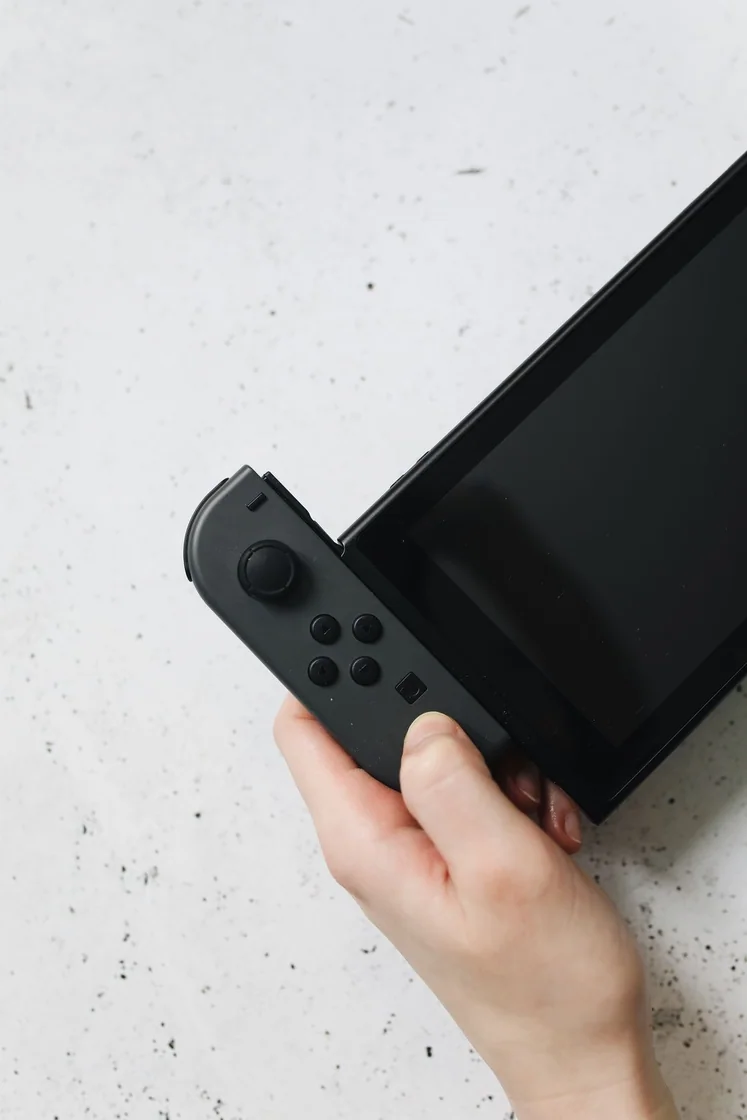
- Nintendo reported net sales of ¥517.8 billion and operating profit of ¥142.5 billion.
- It recorded approximately US$300 million of tariff refunds as a reduction in its cost of sales.
- Hardware represented a smaller share of platform sales than in the Switch 2 launch quarter a year earlier.
Inside this story 2 perspectives
Nintendo’s income statement offers a question worth asking of any entertainment business: does profit rise because customers are spending more, or because the company keeps more of what they spend? For the three months ended 30 June, Nintendo reported ¥517.8 billion in net sales, down 9.5% from a year earlier. Operating profit reached ¥142.5 billion, up 150.5%. There was no corresponding surge at the top of the account.
One reason sits in the cost of sales. Nintendo recorded roughly US$300 million in connection with refunds of US tariffs. It said the company had borne most of the original costs itself. Recording the refund reduced the costs recognised against sales. It did not mean that customers had bought another US$300 million of games or consoles in the quarter.
The first anniversary changes the comparison
There was also a commercial shift that matters well beyond the refund. The comparable quarter included the launch of Nintendo Switch 2 in June 2025. A console launch puts an unusually large quantity of hardware into a short sales period. One year later, the audience that already owns the machine can buy software without buying a second console.
Hardware represented 55.3% of dedicated platform sales this quarter, against 78.8% in the equivalent period a year before, according to the company’s presentation. A change of that size can materially alter gross margin, because selling a physical system and selling a game are different economic activities. Nintendo reported gross margin of 54.3%, up 22 percentage points year on year. The company identified the software mix and lower costs among the factors behind the improvement.
Counting machines and counting income
By the end of June, cumulative Switch 2 sales reached 23.68 million hardware units. That figure describes the number of machines sold into the market over the life of the system. It does not tell an investor how much each owner spent on games that quarter, whether hardware was sold at a particular margin or how many machines were in active use. The measures are useful together precisely because each leaves something out.
A second distinction applies to the company’s characters. Income tied to intellectual property and related activities rose to ¥34.8 billion from ¥16.7 billion. The category includes more than films, covering items such as royalties, smart-device content and merchandise at official stores. Attributing the entire increase to one movie would claim more than that figure establishes.
The next set of accounts will give investors a different combination of software releases, hardware comparisons and costs. For this quarter, the cleanest reading keeps the questions separate. What did Nintendo’s customers buy? How much of the price survived the cost of producing it? And how much of that cost reflected a refund that cannot be assumed to arrive again?