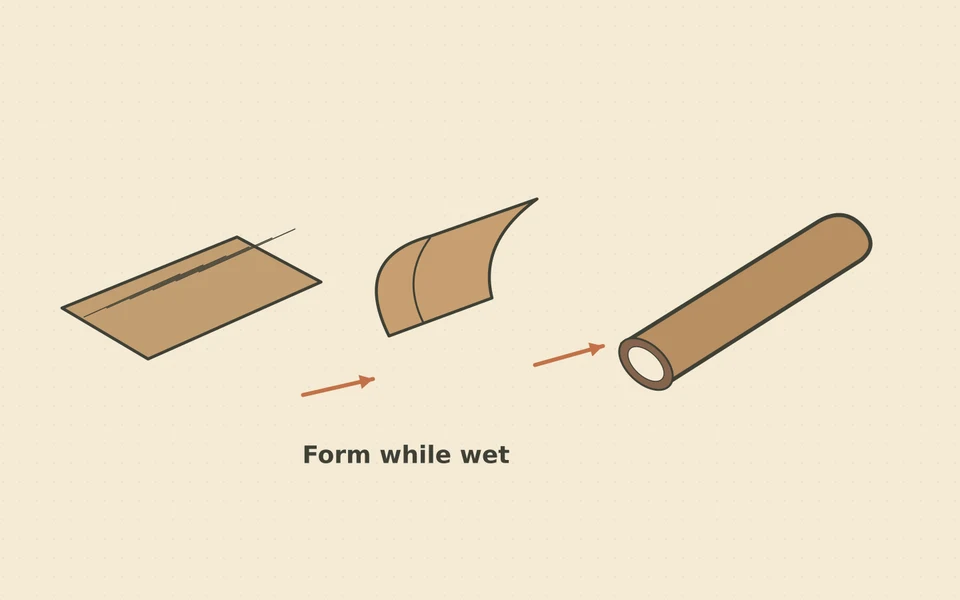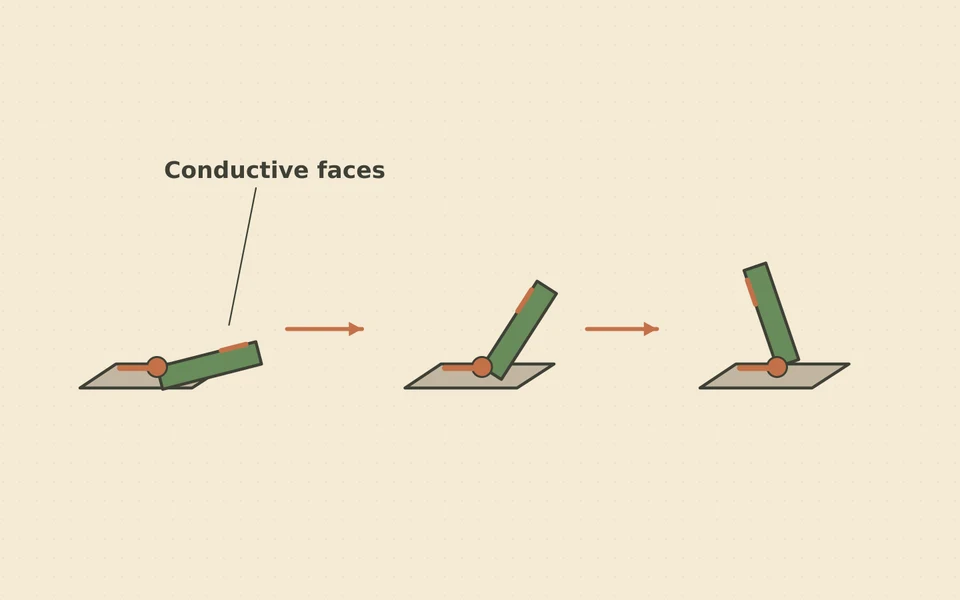
- A single block can assume three states, with more possibilities when blocks are connected.
- Conductive surfaces meet in different combinations as the geometry changes.
- The team demonstrated a game interface and reconfigurable furniture and documented limits on detection speed.
Inside this story 2 perspectives
To steer the car in a prototype game, the player grips a controller shaped like a steering wheel. To wash the windscreen, the same object collapses into something closer to a sponge. To inflate a tyre, the player squeezes it like a pump. In each position, the system can read the shape it has taken. The trick is that folding the controller changes its electrical connections as well as its geometry.
MIT reported the work on 27 August. The researchers call their system Bifur-circuits. Its building blocks clip together to make objects large enough to handle and, in one demonstration, large enough to serve as furniture. A single block has three possible states. In one arrangement, attaching a second block at right angles gives the pair five possible configurations.
The contact is part of the joint
Picture a fold that brings two inside edges together. Conductive material on those edges can complete an electrical path when they touch. Fold the block differently and another pair of edges can meet. Each arrangement produces a distinct connection that the electronics can recognise. The person playing the game does not have to unplug a wire and plug it in somewhere else to make the new function work.
The way blocks join matters too. The team describes a small closed loop that assumes nine configurations while the connectors themselves stay in one orientation. Five are straight and symmetrical and four are curved. Change the connectors' orientation and the same collection of parts offers further possibilities. The designer can choose what a given electrical state should mean for the application, whether it represents a wheel to steer with or an object to squeeze.
What the furniture could tell
A second demonstration took the idea beyond a handheld object. The researchers mapped one arrangement to a tea table and another to a reading bench with a space for storage. The system could distinguish the shapes. That is a narrower accomplishment than designing furniture that decides to rearrange itself, and one that a designer can test directly by changing a shape and reading the result.
There is a cost to giving a system many possibilities. The team found that the time required to detect a state grew with the complexity of the computation and the resistance in the printed material. A device with three carefully selected functions can require far less electronics than one expected to identify every possible arrangement. The game gives the trade-off a tangible consequence. A player changing from driving to inflating a tyre wants the controller to recognise that particular movement quickly.