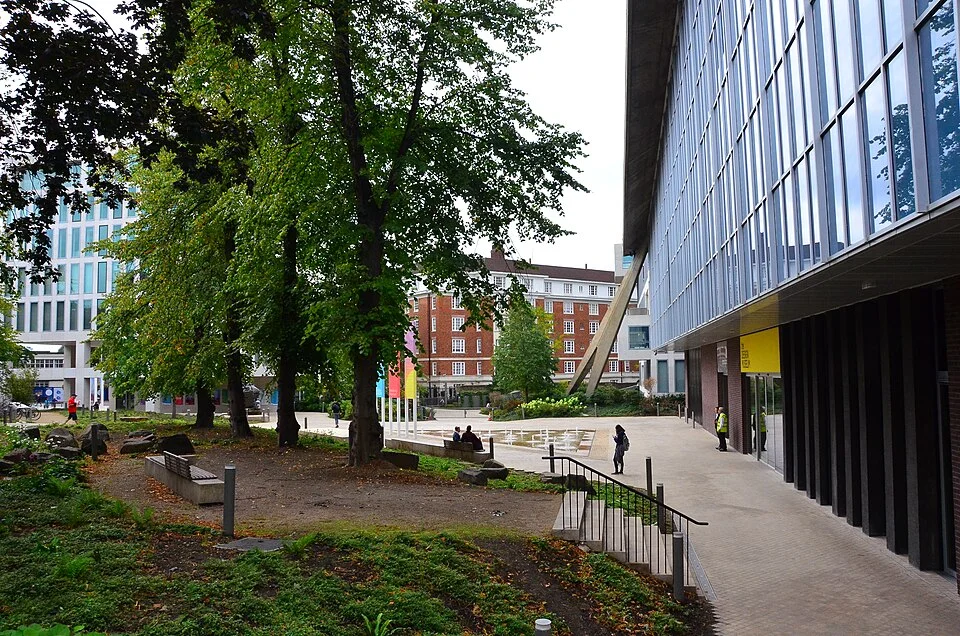
- LAIKA’s Wildwood exhibition opens to the public at the Design Museum on 15 October.
- The show follows a stop-motion film through puppet fabrication, costume, miniature construction and photography.
- The museum lists an additional free display on its mezzanine.
Inside this story 2 perspectives
One of the materials used to give a puppet’s skirt the right weight in Wildwood was horsehair. Vanity Fair described that detail at the London preview of the Design Museum’s new LAIKA exhibition. It is a small clue to a considerable difficulty. Reduce a character to a fraction of human size and the fabric in its clothes does not automatically agree to behave like full-sized cloth.
The exhibition opens on 15 October and follows the making of Wildwood, the Oregon studio’s stop-motion adaptation of the book written by Colin Meloy and illustrated by Carson Ellis. In the film, a movement that appears to pass in an instant can depend on many separate decisions about where a puppet, a garment or a prop should be positioned for the next frame.
How to make something seem almost still
A flying figure or a chase may look like the most difficult thing to animate. Brad Schiff, LAIKA’s head of animation, told Vanity Fair that shots in which characters barely move can be especially demanding. A small turn of the head can look hesitant, distracted or attentive depending on its timing. If a sleeve jumps prominently from one frame to the next, all that careful acting can disappear behind an accident of cloth.
Seen in an exhibition case, a puppet offers a different kind of close-up from the one available in the cinema. A visitor can look at where a garment hangs, what its edges do and which parts of a figure need to move independently. The final image will fold those decisions into an apparently continuous performance. The physical object preserves some of the evidence of how many people contribute to that effect.
The scale of one screen image
Director Travis Knight discussed the lengthy development of the film at the preview. Vanity Fair reports that its production involved more than 130 sets and more than 140,000 puppet masks. The numbers suggest two quite different kinds of work. A world requires a succession of places for a character to inhabit, and a face may need a succession of fine changes even while the character stays in one place.
The museum traces the route from visual research through fabrication, rapid prototyping, animation and cinematography. That sequence gives a visitor a way to follow one feature through the production. An illustrator can establish a silhouette. A fabricator has to decide how to make it hold together. An animator then discovers how it behaves under a light, in a shot and over time.
The main exhibition is in the museum’s second-floor gallery, with an additional free display on the mezzanine. It runs until 10 January. The distinctive pleasure of seeing the design work before watching a film is that a small movement on screen may subsequently register as a remarkable piece of tailoring.