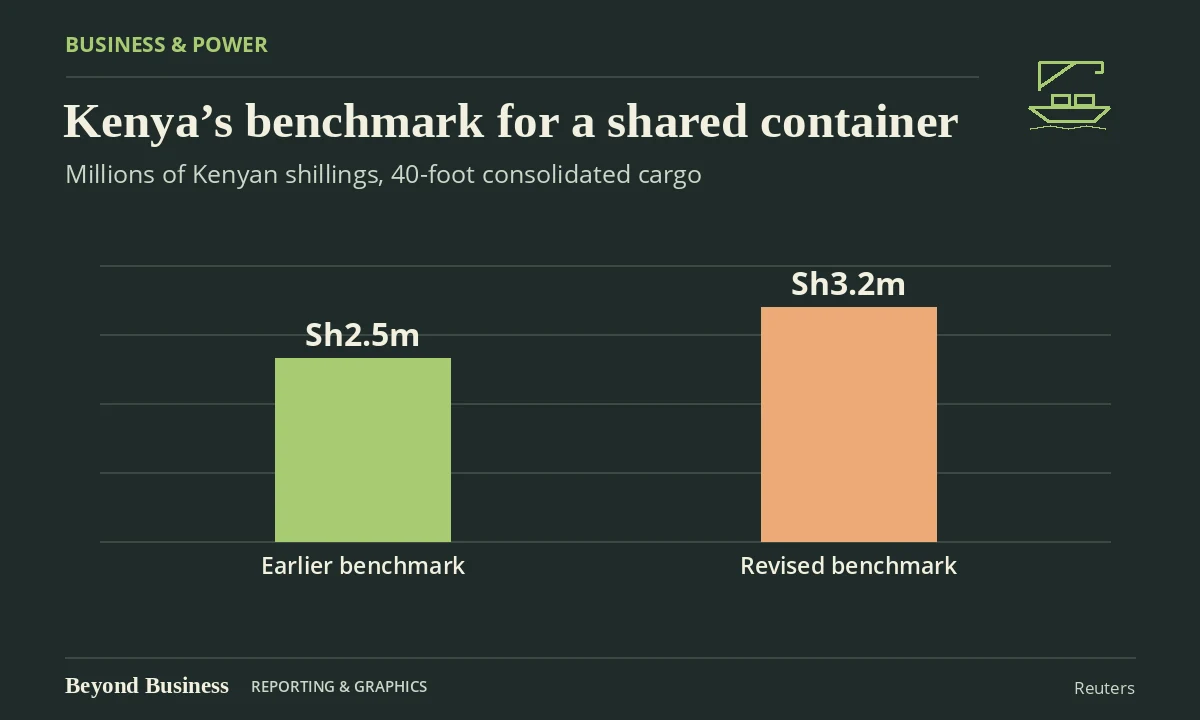
- Kenya raised the benchmark for a 40-foot container of consolidated general cargo from Sh2.5 million to Sh3.2 million.
- The revenue authority describes the figure as a reference for simplified clearance.
- Traders can seek individual assessment. Splitting a shipment also changes who has to organise the paperwork.
Inside this story 2 perspectives
A 40-foot container can hold the stock of many Nairobi shopkeepers. Importers with small orders have a reason to travel together. Each needs only a fraction of the space, and a consolidator can bring their consignments through the port in one shipment. This week, the figure used to clear that shared load helped bring trading to a halt in part of the Kenyan capital.
On Friday, 28 August, a Reuters witness saw police use tear gas to disperse protesting traders. Hundreds of businesses closed in central Nairobi. At issue was the rise from Sh2.5 million to Sh3.2 million in the minimum customs benchmark for a container carrying consolidated general cargo. Traders told Reuters they feared higher clearance costs. The revenue authority said undervaluation hurt businesses that declared their imports accurately, as well as Kenyan manufacturers.
How a shared container is assessed
The new reference figure is Sh700,000 higher, an increase of 28%. Applying that percentage to every shopkeeper’s previous tax bill would give a misleading result. In a clarification on 27 August, the Kenya Revenue Authority described the benchmark as a tool for deciding which shared containers could pass through its simplified system with limited intervention. The tax actually due depends on the goods, their customs value and how they are classified.
The distinction matters in a mixed load. One shop might order an inexpensive, bulky item while another orders a smaller consignment worth much more. An equal split between the two would reflect neither the space they used nor the value of their purchases. A rate quoted by a shipping agent may also cover services that do not appear on a customs assessment. Before comparing two quotations a trader needs to know what each amount includes.
What it takes to go separately
The authority said importers could request verification based on the contents of the container or separate their goods for individual declarations. Kenya already has designated places for breaking up consolidated loads and handing the individual consignments to their owners. An older KRA notice describes that physical operation and the obligation to supply accurate details to customs.
An individual assessment offers a trader a clearer line from invoice to assessed tax. It also requires the information for that particular consignment to be available when needed. If an agent manages documents for several buyers, the cost of retrieving an invoice, correcting a product description or waiting for a parcel can matter alongside the tax itself.
Friday’s closures showed why the distinction between a reference amount and an invoice has political weight. Customs can explain what triggers an inspection. A trader still has to ask an agent for a delivered price, plan how long working capital will be tied up and decide whether the stock will sell at the resulting price.