- Guji coffee from Faysel Abdosh’s September auction fetched about $2,376 per kilogram.
- The auction results identify the highest-priced lot as three kilograms and show a range of prices across 16 entries.
- Ethiopia’s coffee authority announced a plan for proceeds to support construction of a health centre in Guji.
Inside this story 2 perspectives
Three kilograms is a quantity a person could comfortably carry. At an online specialty coffee auction on 14 September, a lot of that size from Ethiopia’s Guji area commanded $2,376.50 per kilogram. The Ethiopian Ministry of Agriculture reported the result the following day, rounding the figure to $2,376 and describing it as a national record. The lot’s modest size is as important to understanding the sale as its spectacular unit price.
The coffee was marketed under producer Faysel Abdosh’s signature label and sold through the M-Cultivo auction platform. The results recorded by Roast to Cup identify the successful bidder as RoasteryStudio. At the listed price and weight, that one lot came to $7,129.50. The calculation is straightforward. Extending the same price to a truckload of coffee, let alone to an entire region’s harvest, would be another matter entirely.
The other bids tell a story
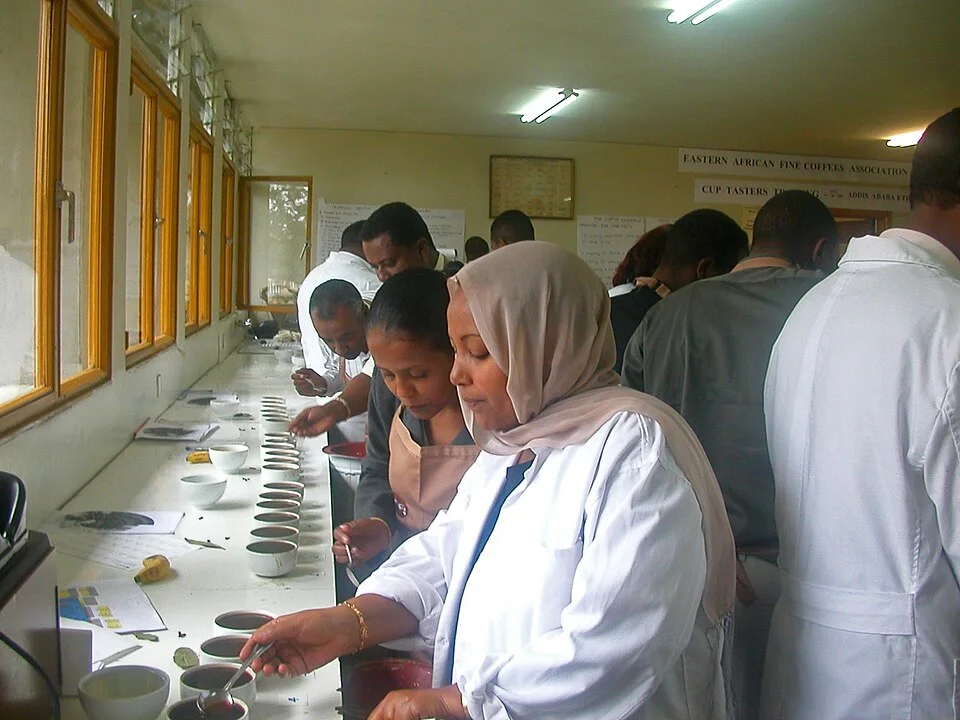
The auction comprised 16 lots, with information on variety, processing and weight made available to buyers. The top bid was for a lot described as hydro dual fermentation. Elsewhere in the catalogue, a ten-kilogram washed lot sold at $588.50 per kilogram and a five-kilogram natural lot at $1,350. The same auction, seller and day yielded very different valuations. The figures do not isolate whether processing, variety, scarcity, taste or a particular buyer’s interest accounted for each difference.
For a roaster, a small lot can do a different job from a regular wholesale purchase. A buyer can offer a limited tasting and explain exactly which coffee went into it. A café trying to serve the same house blend every morning needs dependable volume as well as a price its customers will pay repeatedly. Both are coffee businesses, but the highest bid at one sale is a poor basis for setting the next café order.
Where the proceeds are meant to go
The coffee authority said proceeds would be directed through a foundation towards construction of a health centre in Denbi Udo, in Guji’s Shakiso district. That commitment adds a local public purpose to the sale. An auction result records a buyer and a price. A completed health centre would require separate evidence about funding, construction and operation. The announcement establishes the intention at this stage.
There is still practical value in a record result for other Ethiopian producers. A named lot, a catalogue and a published price make it possible for overseas buyers to find the seller and ask about the next harvest. The next commercial question is quieter than the record bid but more relevant to farmer income over time. Can some of those buyers come back for larger, repeat orders at prices that reward the work that goes into the beans?