- DFC’s Africa chief told Reuters on 9 October that the agency expects to make more equity investments.
- The agency cites an investment of up to $155 million in WIOCC, a provider of digital infrastructure.
- No new mining investment was named in the interview, and the agency expects other financing instruments to remain more common.
Inside this story 2 perspectives
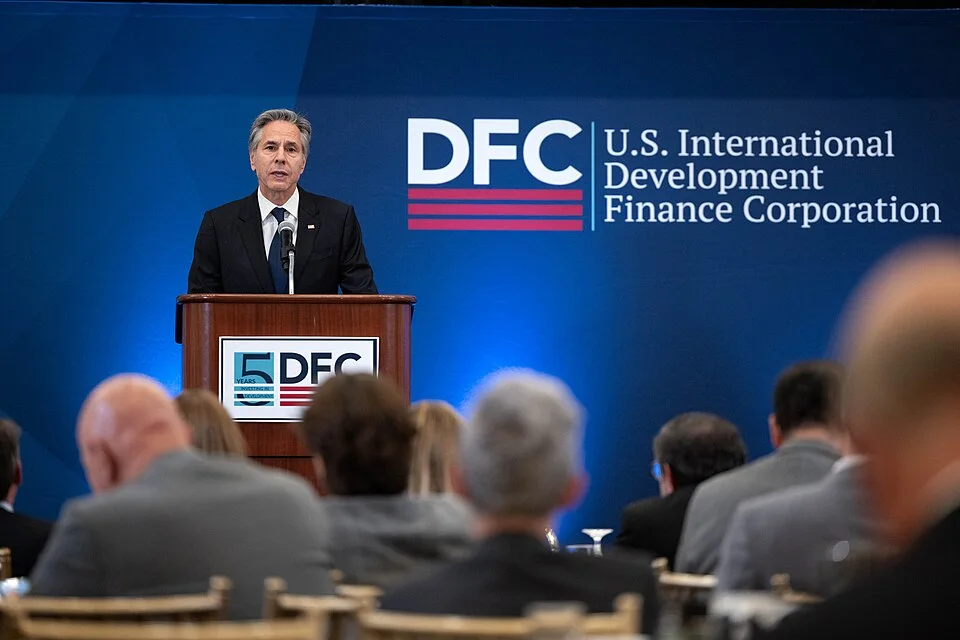
A public lender can back a company by giving it a loan, guaranteeing somebody else’s loan or purchasing a stake in the business. The distinction determines who gets paid first if things go wrong and who benefits if the business becomes more valuable. On 9 October Vibhuti Jain, the Africa head of the US International Development Finance Corporation, told Reuters the agency expects to use the third option more often.
Jain said African investments, including projects involving critical minerals, were in the agency’s equity pipeline. She did not identify new companies or disclose terms. Nor did she suggest that taking ownership stakes would become the dominant form of support. Debt, credit guarantees and political risk insurance are expected to remain the more common instruments. The shift she described is one of choice on individual projects.
One network, several investors
WIOCC, a digital infrastructure provider, illustrates the choice. DFC describes an equity investment of up to $155 million in WIOCC Holding Company Limited. Reuters reported that the agency had announced the commitment in September. The ceiling matters. It describes the maximum size of the commitment, rather than proof that the entire amount has changed hands or that a particular asset has already been built.
WIOCC separately announced a $300 million shareholder subscription agreement with Africa Finance Corporation and Vision Invest in September. It identified data centres, terrestrial fibre and subsea connections as priorities. These are different parts of the same journey. An international cable can bring traffic to a coast, while terrestrial networks connect it to users and data centres provide places to host computing equipment. Investment in one link cannot answer every question about the other two.
Who takes the downside?
A lender normally expects agreed interest and repayment on a schedule. An equity investor holds part of the company and looks to its performance for returns. If a network takes longer than expected to attract paying customers, that uncertainty matters in different ways to creditors and shareholders. Conversely, a successful expansion may increase the value of a shareholding beyond the interest a lender would receive. Actual rights, including influence over decisions, depend on the negotiated terms.
Jain put DFC’s total African investment commitments above $14 billion, and the agency told Reuters that more than $3 billion of commitments were in critical minerals. These figures cover commitments and instruments across a portfolio. They cannot be read as the amount the agency intends to buy in mining-company shares. For any future minerals project, the revealing details will be the instrument, the investment amount and the rights attached. The October interview establishes an appetite for equity. Those details will have to come with each transaction.