- Researchers followed young Pacific littleneck clams for 90 days.
- Crushed shells changed the chemistry of water in spaces between sand particles.
- The findings concern a local habitat and an existing coastal practice.
Inside this story 1 perspectives
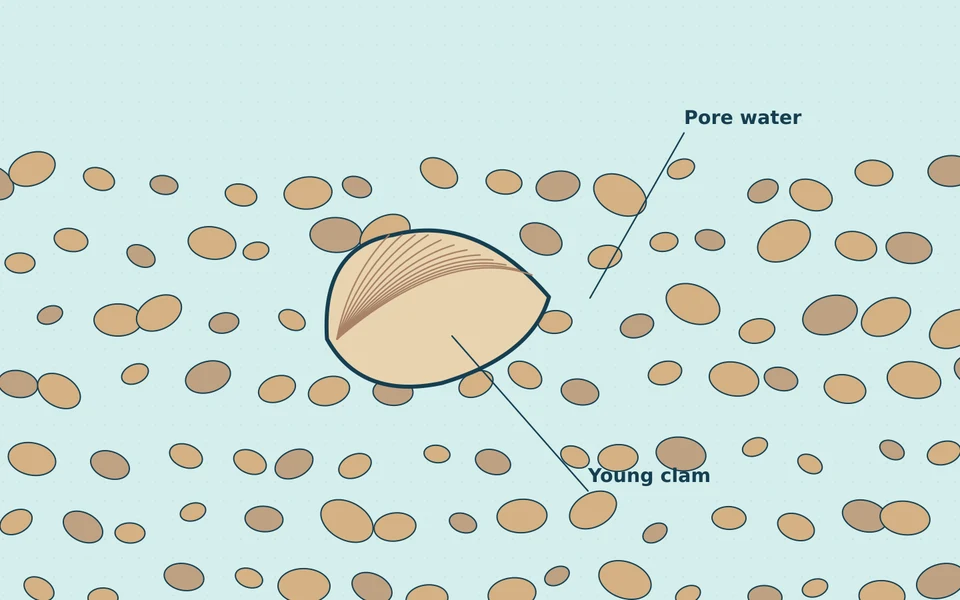
A human visitor looking at a clam bed sees the water above the beach. A young clam buried in the sand lives in another part of the same environment, the water held in small spaces between grains. On 29 October researchers at the University of California, Davis, described an experiment that makes this distinction important. Adding fragments of shell to sediment changed the chemistry of the water immediately around young Pacific littleneck clams and was associated with larger shells over a period of 90 days.
The research helps explain an existing practice. Indigenous communities have long incorporated shell fragments into coastal habitats. The university points to Indigenous knowledge of the benefits for shell-making animals, and to intertidal structures in the Pacific Northwest that expand suitable habitat. A laboratory can investigate how one part of such a system works. It does not establish that the people who have managed these places for generations needed a laboratory to recognise the result.
Two bodies of water on one beach
The researchers at the Bodega Marine Laboratory compared young clams under different water and sediment conditions. Some lived in ordinary sediment and others in sediment containing broken shell. The experiments also compared water under control conditions with water made more acidic. Following more than one combination allowed the team to ask whether the fragments could influence the clams’ immediate surroundings even when conditions in the water above them differed.
The study, published in Biogeosciences, found the fragments altered the chemistry of the water between sand grains. Young clams in shell-rich sediment developed larger shells on average. The research also examined how the animals responded to their environment and found evidence that the fragments softened the effect of acidification. Together the observations connect the material in the bed, the water the animals actually encounter and a physical result that can be measured.
The geographical scale is important. Rising concentrations of carbon dioxide affect ocean chemistry on a much larger scale. Finding that material in a particular sediment can buffer local conditions is not the same as reversing that larger change. The effect here concerns the habitat occupied by the juvenile clams, over the period studied and under the experiment’s conditions. A coast with different currents, sediments or inhabitants may raise further questions.
The authors’ discussion of Indigenous knowledge also points to a choice about how future work is organised. The people who know a particular stretch of coast may have observations about water movement, shell material and clam beds that change what researchers choose to measure. One contribution of this study is to show exactly where to look for a mechanism. Sometimes the important body of water is the one a person looking across the beach can barely see.