- Ramaphosa put average truck crossing time at roughly fourteen hours.
- Bilateral trade reached R81 billion in 2025, according to the South African president.
- A proposed joint venture needs customers and finance before it can change export patterns.
Inside this story 2 perspectives
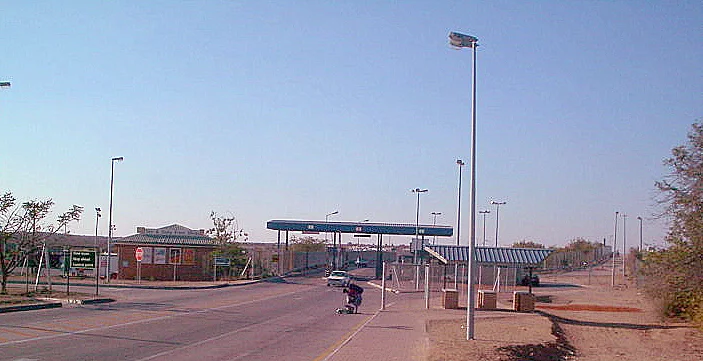
A truck can get across the Limpopo faster and still carry a larger share of the earnings in one direction. On Friday in Midrand, South African President Cyril Ramaphosa reported that average truck crossing time at Beitbridge, the main commercial crossing with Zimbabwe, had fallen to roughly fourteen hours. At the same business forum he put South African exports to its neighbour at about eight times the value of goods travelling the other way.
The two numbers give the business community different jobs. A logistics operator can benefit from a faster border whichever country manufactured the cargo. A Zimbabwean processor seeking to sell finished goods into South Africa needs an order, equipment to fill it and enough working capital to wait for payment. Faster clearance helps with one part of that transaction.
What a shorter crossing buys
Ramaphosa cited new traffic lanes that separate commercial vehicles, buses and private cars as one improvement at a crossing where lorries could previously wait for several days. Fourteen hours is an average. For a business guaranteeing delivery on a particular morning, the spread between quick and slow crossings matters too. Two routes with the same average can require quite different amounts of spare time in a delivery schedule.
The commercial relationship is already substantial. The president put two-way trade in 2025 at R81 billion. He described shipments heading north that included vehicles and industrial equipment. In the other direction were chromium ore, semi-finished steel and raw tobacco, among other goods. A headline total adds those shipments together. It cannot tell a business owner in either country where the next stage of production takes place or which local supplier could compete for it.
Who gets the processing order
Ramaphosa called for firms on both sides to explore joint ventures and pointed to the Musina-Makhado Special Economic Zone as a possible location for activities including milling and packaging. Consider a mill serving buyers on both sides of the border. Its commercial case would turn on the supply of grain, electricity and machinery, the price buyers will pay for flour and an arrangement for distributing it. Reliable transport improves each calculation without settling any of them.
The governments do have a joint technical committee covering trade, infrastructure and industry. The fourth session of their bilateral commission, held in Pretoria before the Midrand forum, also produced agreements in areas including agriculture. Business owners evaluating the industrial proposals will have more to go on once they can identify an investor, a buyer and a product. A contract to supply that product would put a different kind of cargo on the bridge and a different set of wages behind it.