- COP31 passed its scheduled Friday finish with major issues unresolved.
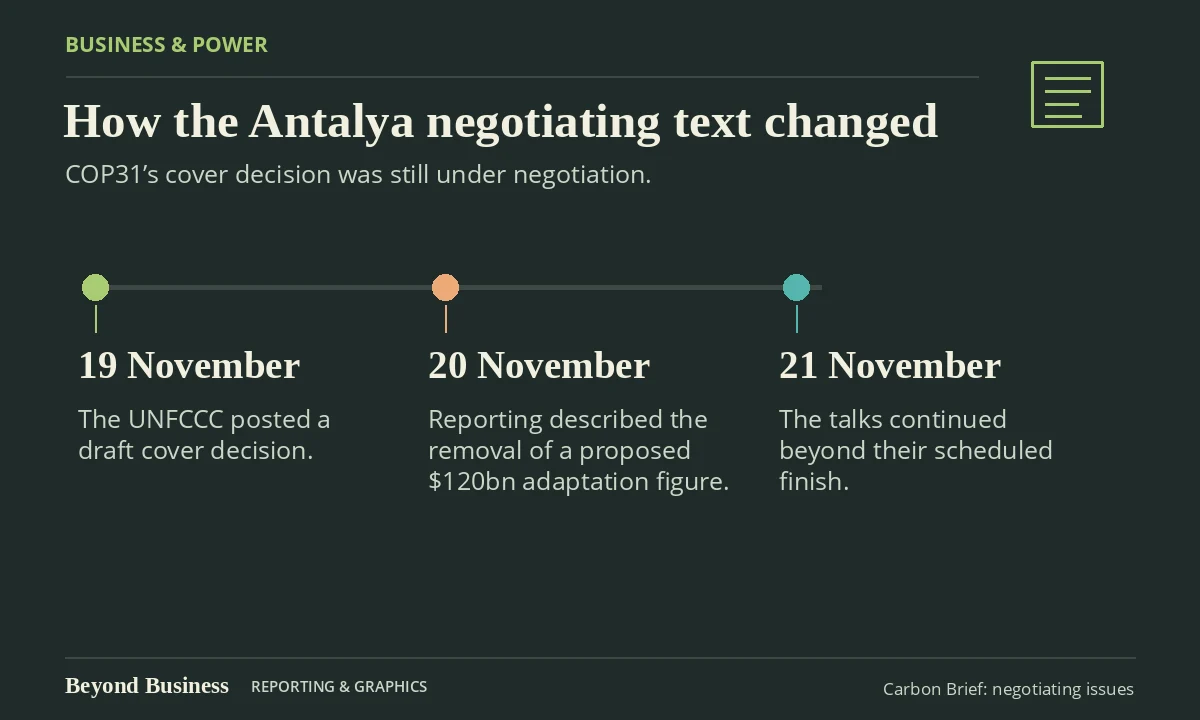
- The 19 November cover text is a negotiating draft, not an adopted agreement.
- Assess climate finance by its baseline, terms, access and delivery, as well as its headline amount.
Inside this story 3 perspectives
COP31 went beyond its scheduled Friday finish in Antalya, Türkiye, with countries still divided over fossil fuels and climate finance. Reuters reported the move into overtime on 20 November. For readers following the summit on Saturday morning, the essential distinction is between a negotiating draft and an adopted outcome.
That distinction has practical consequences. Governments, investors and communities cannot spend a proposed funding target or build an energy system on language that may yet change. The final terms, implementation arrangements and actual money all matter.
What the documents show
The UN climate secretariat’s published cover-decision draft is dated 19 November at 14:10 and explicitly marked as draft text. It recognises the importance of energy access, climate resilience and support for developing countries. It also encourages governments to connect their climate commitments with implementation and investment plans. These are proposals under discussion, not a newly completed international agreement.
The presidency’s separate Thursday work update lists finance, adaptation, mitigation and just-transition issues among the matters still requiring agreement. This is a broad negotiation, rather than a single vote on a headline target.
Carbon Brief’s reporting on 20 November describes the removal of explicit fossil-fuel references and a proposed $120 billion adaptation-finance figure from the second cover draft. It also reports divisions over the baseline for a goal to triple adaptation finance. The baseline is consequential: a multiple tells readers little unless the starting amount and deadline are clear.
Why African readers should follow the details
Our reading is that the commercial and public-interest questions belong together. A power project needs an investable structure; a community exposed to flooding needs protection that works. The money, institutions and performance measures may be different, even when both appear under the broad heading of climate action.
A useful way to assess the eventual outcome is to ask who is expected to provide finance, who can access it and through which mechanism. Then ask whether the proposed support is a grant, a loan or another instrument, and what requirements attach to it. A large aggregate number cannot answer those questions on its own.
For companies, the same discipline applies to announcements made around the summit. A statement of intent is not a signed financing agreement, and a signed agreement is not completed infrastructure. Reporting those stages accurately helps readers judge progress without dismissing early work or overstating delivery.
What to watch next
The immediate question is whether the final text resolves the disagreements identified in the published drafts. Beyond that comes the harder test: whether governments and financial institutions turn negotiated commitments into programmes that can be used.
This edition does not declare a final COP31 deal. The documents and reporting reviewed show negotiations still in progress. For African businesses and citizens, the meaningful result will be measured in accessible support, credible energy plans and protection for livelihoods, not simply in the ceremony that closes the conference.