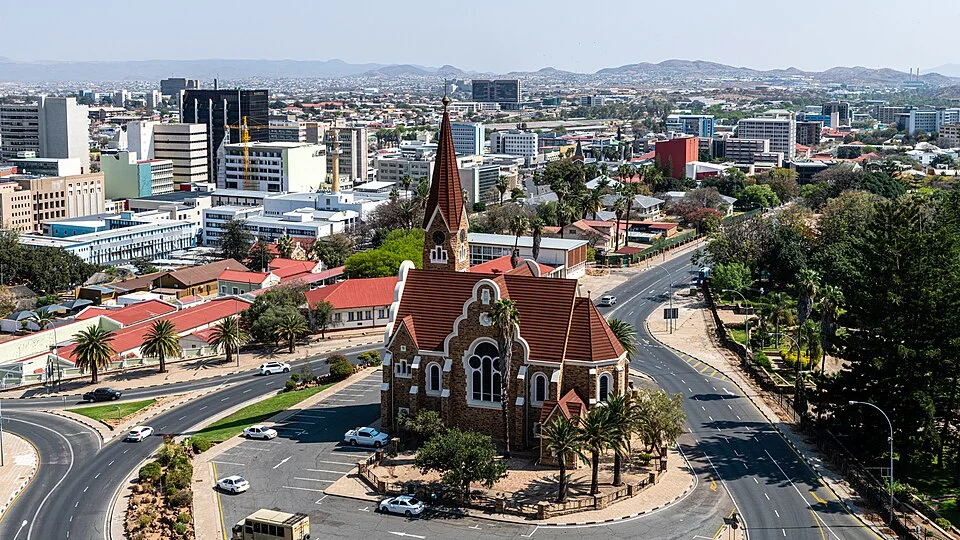
- Windhoek’s Doek Literary Festival ran from 30 September to 3 October.
- Ayesha Harruna Attah’s workshop considered which historical research belongs in a novel.
- Siphiwe Gloria Ndlovu’s session examined how to turn unruly research notes into a manuscript and when to let a draft rest.
Inside this story 2 perspectives
There is a moment in writing historical fiction when finding one more source is easier than writing the next sentence. Windhoek's Doek Literary Festival gave that difficulty two appointments on its final morning, Saturday 3 October. At nine, Ayesha Harruna Attah's workshop considered how writers conduct historical research and choose the parts that belong in a manuscript. At ten, Siphiwe Gloria Ndlovu's session turned to the unruly notes themselves, the work of drafting and the point at which a story needs time away from its author.
Both sessions were scheduled at the Goethe-Institut, in different classrooms. Each was free, with reservations required. The subjects make an interesting pair even for a reader who never made it through the door. One question is what to look for in a record. Another is what to do when several notebooks of discoveries still refuse to become a chapter. Expertise in the first task can make the second harder by giving the writer so much to choose from.
The things a reader never sees
The festival's four days began on 30 September under the theme History Is Handmade. Across the programme there were poetry readings, music, craft sessions, vinyl listening and an exhibition. Organiser Doek Arts Trust and partner Bank Windhoek also advertised an Arabic calligraphy workshop, a first for the festival. A hand shaping a letter makes the physical work of telling immediately visible. A novelist who cuts pages of explanation can spend a comparable amount of effort leaving hardly a trace on the printed page.
That quiet labour was also present in the rest of Saturday's programme. Bongani Kona's session dealt with building an anthology from multiple themes, voices and styles. Frankie Murrey's considered what to include in a short story collection and what to leave out. A series of good pieces needs another set of choices before it reads like a book. Which voice comes first, and what can a reader hear differently because of the piece that follows?
Leave an interval between drafts
Later workshops approached revision from the direction of poetry. Justin Boening considered how to assemble and revise a chapbook. Michael Kelleher's programme description made space, silence and time away from a piece into tools for editing across genres. Those sessions sit neatly alongside the morning's history workshops. A piece of research that seemed indispensable on the day it was found may look quite different on returning to a manuscript.
For the audience, a finished novel can make its choices seem inevitable. The timetable in Windhoek put some of those choices back on view. Gathering material, ordering voices and allowing a draft to sit are separate acts of attention. They are all part of how a story that draws on the past acquires a shape of its own.