- The crews and boats were presented at the Salute on 3 September.
- The historical procession and races are scheduled for Sunday 6 September.
- Routes differ by category, with children’s races starting at different points along the canal.
Inside this story 2 perspectives
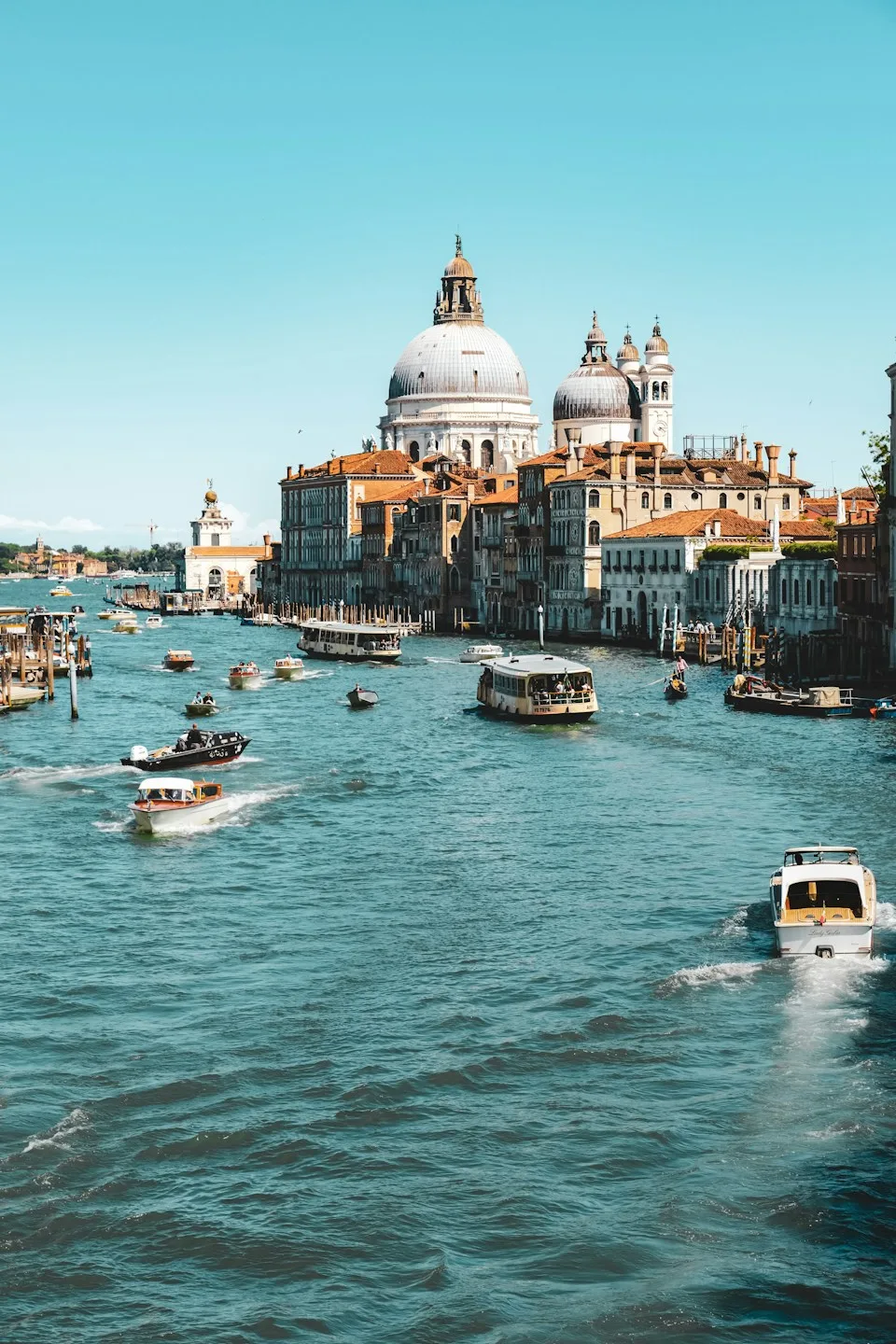
Before Venice gives its Grand Canal to an afternoon of competitive rowing, it gives the boats a quieter appointment. On Thursday a procession travelled from the Erbaria at Rialto to the Salute, where crews were introduced and the racing gondolini blessed. The municipal account records a floral offering by rowers Romina Catanzaro and Ivo Redolfi Tezzat at the close of the ceremony.
The races themselves are scheduled for Sunday 6 September. Visitors trying to make sense of the Regata Storica could do worse than start with the distinction Thursday makes clear. These are named crews in particular kinds of boats. The picturesque procession is one part of the programme. The different competitive events that follow require a closer look at the timetable and, sometimes, a different patch of canal.
Follow the route as well as the boat
Sunday’s opening procession is scheduled for 3.10pm. Its costumed boats recall the reception Venice gave Caterina Cornaro in 1489 after she gave up the throne of Cyprus in favour of the city. The route takes in St Mark’s Basin, the Grand Canal and Rialto, continues towards the railway station and returns to Ca’ Foscari. Watching that entire procession pass is one way to spend the afternoon, even before the first score needs settling.
The children’s programme has its own geography. Three age groups row to Ca’ Foscari from different points on the canal. The under-tens start from Rialto, the under-twelves from San Stae and the older children from Punta della Dogana. A viewing spot near one start therefore tells only part of the story. Further along the programme, some of the senior races turn by San Marcuola before heading back down the canal.
Reading the afternoon by its oars
The organisers list events for young women in two-oared mascarete and young men in two-oared pupparini. There are also six-oared caorline, women’s mascarete and the men’s gondolini. Even a spectator unfamiliar with the local boat names can start by counting the rowers and watching how the crew moves the boat. An eight-oared university challenge adds another rhythm to the afternoon.
For a visitor there is value in choosing which of these experiences to follow. A place with a clear look at the costumed procession may give a limited view of a short children’s race. Near a turning point there is an additional piece of technique to watch as the boats change direction. The blessing offers yet another perspective. For one evening the crews approached the same destination without racing one another, giving the city time to recognise the people who would soon be trying to cross a line first.