- TUT’s invitation-only opening on Wednesday precedes public visiting hours on Thursday and Friday.
- The show brings work by architecture and industrial design students together in Pretoria West.
- Following one familiar action through a design can reveal what a drawing shows and what it leaves unresolved.
Inside this story 2 perspectives
A door looks perfectly serviceable in a drawing until you imagine arriving with a shopping bag in each hand. Which way does it swing? Is there somewhere to put a bag down? Where does the handle meet your hand? These are good questions to take into the year-end exhibition of architecture and industrial design at Tshwane University of Technology in Pretoria.
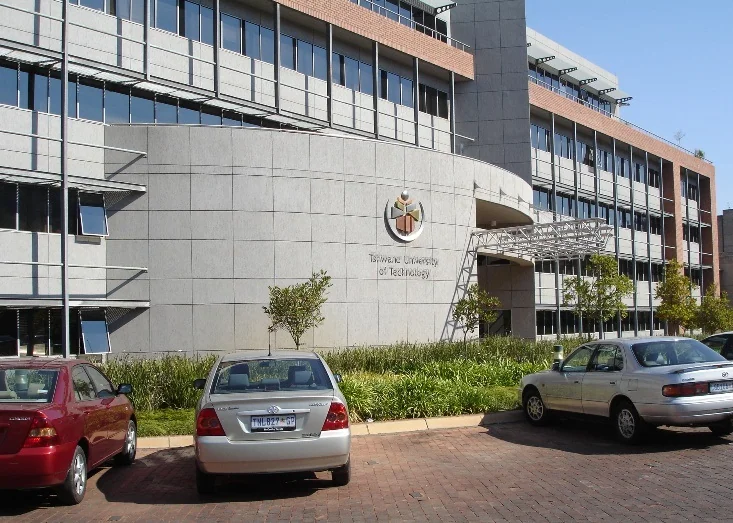
The department’s invitation-only opening and Corobrik Awards are scheduled for 17:00 on Wednesday, 25 November. The public can visit Building 11 on the Pretoria West campus from 08:00 to 17:00 on Thursday, 26 November, and from 08:00 to noon on Friday, 27 November. The entrance address given by the South African Institute of Architects is Staatsartillerie Road.
Start at the front door
TUT brings architecture and industrial design together in one department. Its architecture students learn to communicate through freehand and technical drawing, models, photography, video and digital design. Its industrial designers consider a product’s form, the way it works and the person who will use it. A shared exhibition gives visitors a rare chance to move between those ways of thinking in one room.
Try choosing one everyday action as a guide. Following the route from a street to a seat, for instance, makes the conventions of an architectural drawing easier to read. Look for the point where a person first sees the entrance. Follow the passage they would take after coming inside. A handsome view of the building may give little clue about that journey. A simple plan can reveal where someone carrying bags would need to turn around.
A model lets you change your own viewpoint. Look along the model at the height of an imagined pedestrian, then stand up and look down again. The first view favours entrances and edges. The second reveals relationships between rooms that a person on the ground might never see at once.
A question for the maker
At the scale of a product, consider a different moment in the same journey. Someone sets down a parcel, pulls out a chair or finds a light switch for the first time. Look for the detail that tells them what to do. If the designer is there, ask which part changed after they tried an earlier version. It is a more revealing question than asking whether the finished form matches the first sketch.
The department teaches students to weigh appearance alongside function, technology and sustainability. Visitors can bring knowledge of their own daily routines to that exercise. A person who has negotiated a narrow hallway with a pram or tried to grip a polished handle with wet hands already has something specific to say about design. A university show offers a place to put that experience to work while the next generation of designers can still change its mind.