- Researchers tracked the responses of sunflower seedlings to blue light arriving from different directions.
- Two opposing sources of equal strength cancelled each other’s directional influence in a three-light experiment.
- A further predicted difference between peak physical illumination and growth direction remains to be tested directly.
Inside this story 2 perspectives
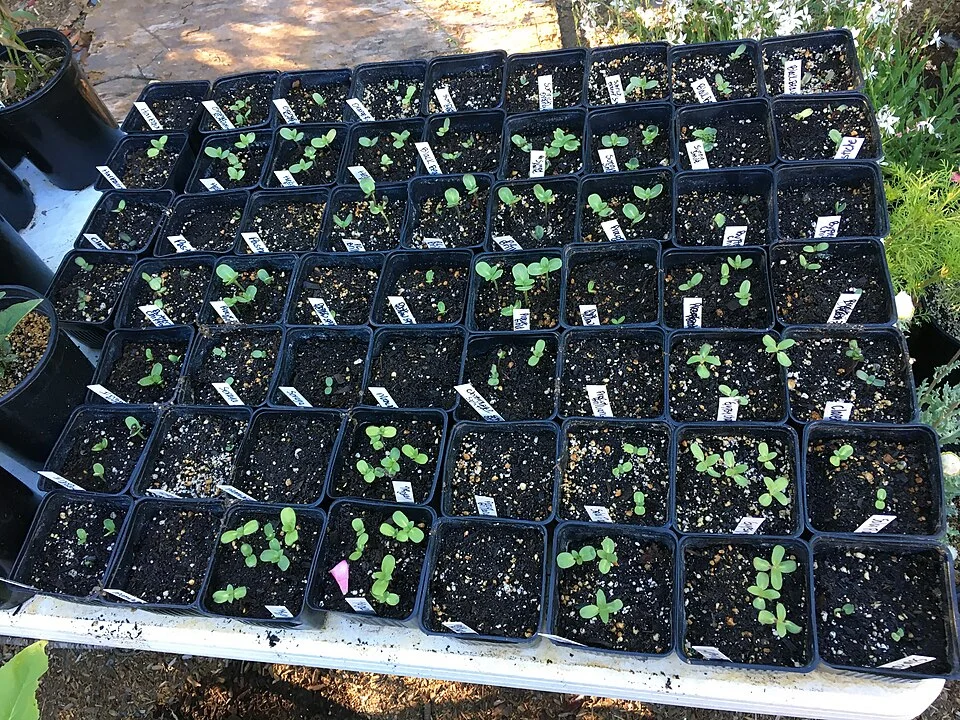
On a windowsill, a young shoot bending towards daylight makes an ordinary sight. In a laboratory with lamps on three sides, deciding which way counts as towards the light becomes harder. In an experiment with sunflower seedlings, two equally strong blue lights faced each other. A third, weaker light shone at right angles to them. The plants bent towards the weaker source.
The research from Tel Aviv University, published in the Proceedings of the National Academy of Sciences in September and highlighted again on Monday, asks how a stem combines what its different sides sense. The result makes sense once the calculation is expressed as a set of directions. The two strong lights pulled the growth response in opposite directions. With their influences balanced, the weaker light supplied the remaining directional cue.
A stem takes many readings
A plant has light-sensitive tissue spread around its stem. Each part encounters light from its own position on a curved surface. Translating the incoming light into a biological signal adds another complication. Doubling the light intensity at a particular point need not double the response there. The local responses are combined after that conversion has taken place.
The researchers observed seedlings under blue light arriving from different positions and recorded their movements for more than twenty hours. With two opposing lights of unequal strength, the plants generally bent towards the stronger one. The amount of bending, however, did not simply track the arithmetic difference between the lamps. By modelling how signals form around the stem, the team could account for the direction and strength of the overall response under different arrangements.
Where the word illusion comes in
The three-lamp result was observed. A different claim in the study concerns a prediction. In some arrangements, the geometry and the nonlinear response mean that a plant’s growth could point slightly away from the direction of greatest physical illumination. That small displacement is a candidate for direct experimental testing. It would be a mistake to treat a prediction about that angle as another measurement from the three-lamp setup.
Calling the predicted effect a perceptual distortion gives it a familiar name. Its meaning here is quite precise. There is a direction calculated from the physical light and another calculated from signals in the tissue. Comparing them tells researchers something about the rules that connect illumination to growth. There is no need to imagine a seedling seeing the lamps as a person would. The striking part is how much can be worked out from a plant that does just one visible thing over many hours. Its bend records the collective result of signals from around the stem.