- The district administration scheduled the inaugural festival in Tangail for 4–6 September.
- Local reporting describes confectioners from twelve upazilas and a display of sarees from Pathrail weavers.
- Porabari’s chomchom holds geographical indication recognition in Bangladesh.
Inside this story 2 perspectives
A sweet from Porabari and a saree from Pathrail have arrived at the same festival in Tangail. A visitor to Shaheed Smriti Municipal Park could easily take home one of each. Reading the two place names first makes that a different kind of purchase. The inaugural Tangail Sweet Festival, organised by the district administration for 4 to 6 September, brings together products whose names carry the histories of particular communities within the Bangladeshi district.
Porabarir chomchom is the obvious starting point at the sweet counter. The confection has a syrupy interior and is associated with an outer layer of thickened milk. Its reputation extends beyond Tangail, and it has received geographical indication recognition in Bangladesh. But a festival devoted to the district has other names to offer. Among the sweets reported at the opening was Kalidas shondesh from Jamurki. Local reporting describes participants from the district’s twelve upazilas, or subdistricts.
Let the name lead the tasting
The most interesting question at a stall may be where the maker learned the work. A sweet associated with a village can be prepared and sold elsewhere. A family may have moved across the district while continuing to make it. The name on the display and the working history of the person behind it are two separate pieces of information. A visitor who asks about both can come away with more than the name of a favourite sweet.
Chomchom also illustrates a difference familiar to anyone who has taken food home from a trip. The first taste is influenced by when and where it was bought, while the reputation may travel great distances. A product known at weddings and family celebrations can reach a visitor already wrapped in other people’s memories. A second stall and a second conversation are worth making time for before deciding which version represents the district.
The textile beside the sweet
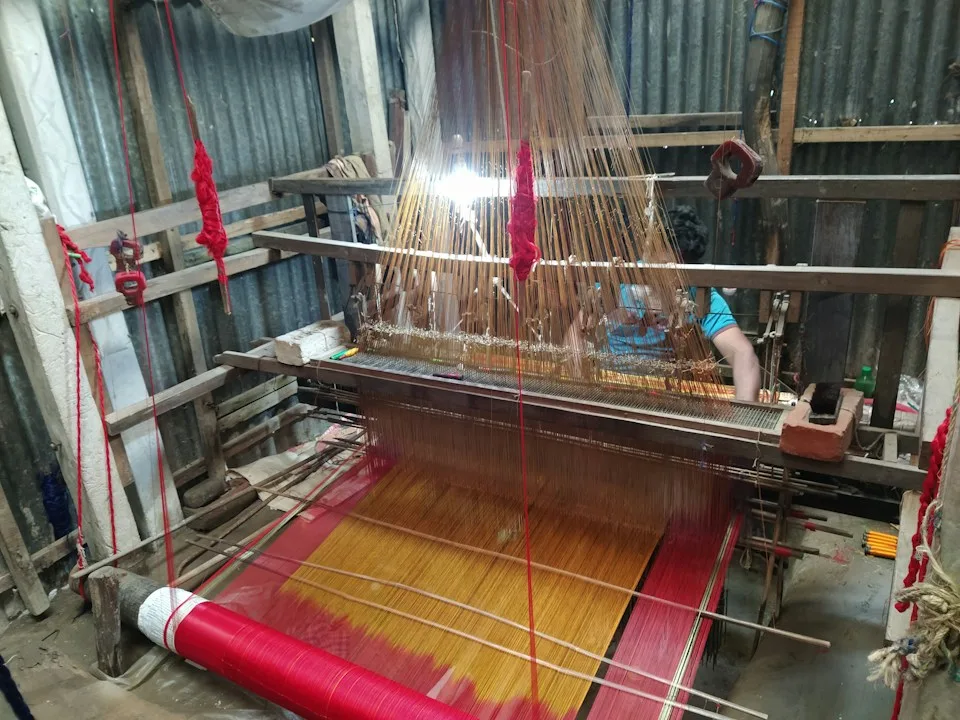
The festival includes a display of Tangail sarees made by Pathrail weavers. Textile work gives the visitor another way to read a place through the people who make things there. A cloth can be unfolded and examined slowly, and its pattern can travel intact for years. A sweet changes when it is carried, stored and shared. Both rely on knowledge passed between people, although a traveller experiences them on quite different timescales.
At the opening, State Minister for Fisheries and Livestock Sultan Salauddin Tuku spoke of steps to take Tangail’s chomchom into export markets. That ambition will have to address the practical problem of taking a perishable sweet beyond its place of origin. This weekend offered the reverse journey, a chance to bring customers to the makers and ask how the sweets, and the cloth beside them, came to bear those names.