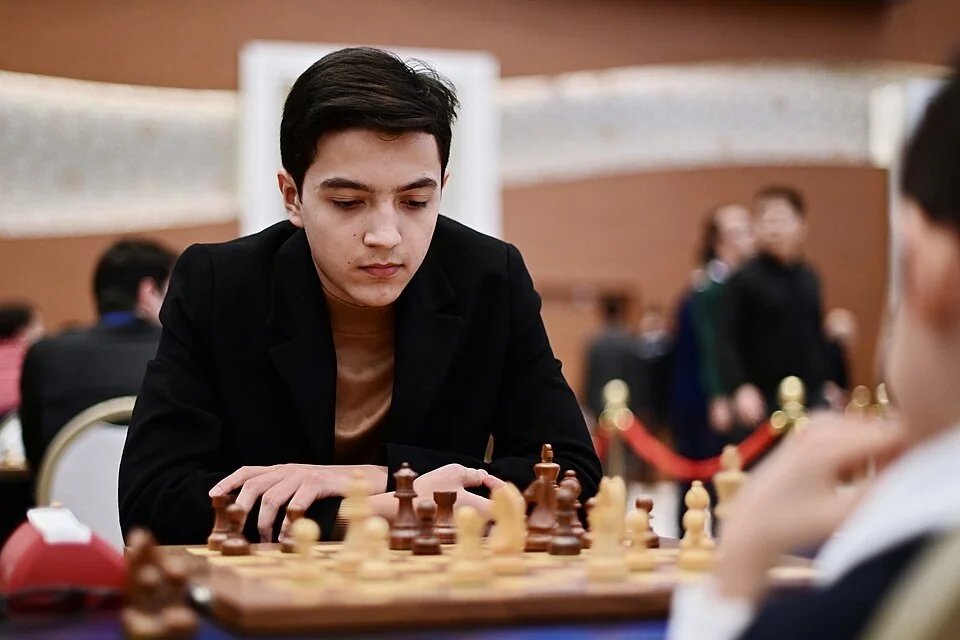
- Uzbekistan beat Ukraine 2½–1½ in the final round to win the Open title.
- Madaminov won on board four as the other three games ended in draws.
- Each team win earns two match points, however wide the margin on the boards.
Inside this story 2 perspectives
A reader looking for the game that secured Uzbekistan’s Chess Olympiad victory on home soil might go first to board one. The decisive result on 27 September came three boards further down. Reserve player Mukhiddin Madaminov won on board four against Ukraine. His three teammates drew. Put all four scores together and Uzbekistan had won the match 2½–1½ and the Open title in Samarkand, four years after taking gold in Chennai.
You can learn a great deal about team chess from that short scoreline without knowing a single opening. There are two sets of points in play. First come the individual games. A player earns one point for a win, half a point for a draw and zero for a loss. Add the points earned by each team across the four boards. That tells you which side won the match. Then a separate scoring system determines what to enter in the tournament standings.
The difference between half a point and two
In the Samarkand final, the three draws gave Uzbekistan and Ukraine a point and a half each. Madaminov’s win supplied the extra point on the Uzbek side. Under the International Chess Federation’s regulations, a team that wins a match receives two match points. A tied match is worth one to each side. A defeat earns none. Uzbekistan therefore gained the same two match points it had earned against Armenia the previous day with a much wider 3½–½ win.
For someone starting to follow a club team, here is a small exercise. Set aside one of Uzbekistan’s draws in that final and imagine Ukraine winning that board instead. The half-point Uzbekistan earned now belongs to Ukraine along with the half-point Ukraine already had. The four boards would finish 2–2. Making one different result out of four changes the team standings award from two match points for Uzbekistan to one apiece.
What the reserve contributed
Madaminov finished the Olympiad unbeaten with 5½ points from seven games. That is his individual total from the rounds in which he played. It would make little sense to compare it directly with the 18 match points Uzbekistan held going into the final round. One number describes the work of an individual player. The other records ten rounds of four-player team results.
The Women’s final offers another example to practise on. China beat Vietnam 3–1, with Zhu Jiner winning on board one and Lu Miaoyi winning on board three. It was a bigger margin than Uzbekistan’s over Ukraine, and it earned China exactly the same two match points. A newcomer following a live team competition can keep four short lines on a page, one for each board, and a fifth for the match. The line beside the least familiar player’s name can be the one that decides what goes on the fifth.