Inside this story 3 perspectives
About 800 pupils from Wynberg Boys’ High School came to the opening night of Rugby’s Greatest Rivalry in Cape Town. They had a reason few of the other 47,130 spectators could claim. The young man kicking for the Stormers against New Zealand had gone to their school. Twice, Yaqeen Ahmed brought the scores level. The All Blacks eventually won 38–21, but a list of international Test results will never tell those children’s part of the story. That is what came back to rugby in 2026.
“Rugby’s Greatest Rivalry” is the name South Africa and New Zealand have given their new touring series. The rivalry itself is more than a century old. The Springboks and All Blacks first played each other in 1921. Between them they have won seven of the first ten men’s Rugby World Cups. What changed in 2026 was the amount of time they gave each other. Four Tests between the national sides counted towards the trophy. In four other matches, the Stormers, Sharks, Bulls and Lions got a crack at the tourists in their own jerseys.
The fullback who was left at home
When Scotland and England played the first rugby international in Edinburgh in 1871, they put 20 men on each side. International rugby in the southern hemisphere grew up on tour. New Zealand’s first representative team crossed to New South Wales in 1884 and won all eight matches there, eight years before the country had a national rugby union. South Africa played its first Test in Port Elizabeth in 1891 against a touring British side. Long before a World Cup existed, the visitors coming to town were how supporters saw their local game measured against the world.
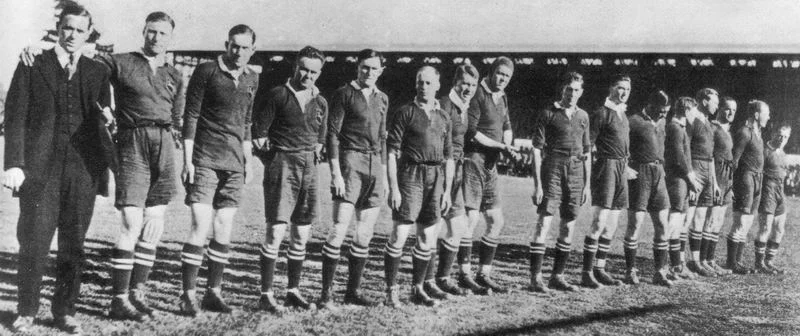
The three-Test series in New Zealand in 1921 finished level. So did the first All Blacks tour of South Africa in 1928. Missing from that second meeting was George Nēpia, one of New Zealand’s great fullbacks. The New Zealand union excluded Māori players from its South African touring teams until 1970. For decades, racial segregation in the host country helped determine who could pull on a black jersey for this fixture.
In 1981, people who wanted sporting ties with apartheid South Africa severed walked onto the field in Hamilton and the Springboks’ match was called off. Fourteen years later, Nelson Mandela wore captain Francois Pienaar’s number six jersey at Ellis Park. South Africa contained Jonah Lomu, the New Zealand wing who had torn through England in the semi-final. With the score tied in extra time, Joel Stransky dropped the goal that won the 1995 World Cup final 15–12. Within one generation, the same opponents had put two very different South Africas in front of the world.
New Zealand earned its own landmark a year later, winning a Test series on South African soil for the first time. The sides kept meeting after 1996. In the 2023 World Cup final in France, four Handré Pollard penalties were just enough for Siya Kolisi’s Springboks to win 12–11. What supporters had waited thirty years to see again was a full All Blacks tour of South Africa, with room on the fixture list for the local teams as well.
What to watch in the Cape Town highlights
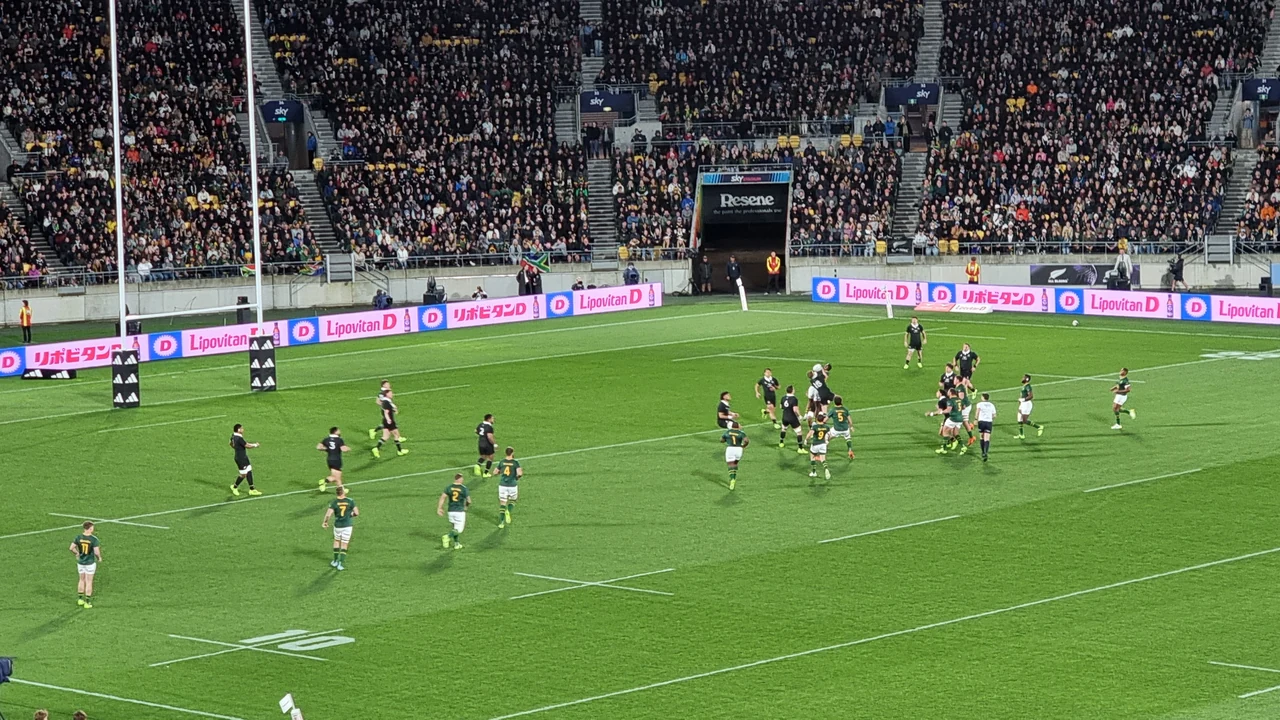
In the second Test of 2026, watch the two captains. Kolisi gets over the line for South Africa. Late in the game, Ardie Savea scores for New Zealand and brings a draw back within reach. Keep an eye, too, on Cheslin Kolbe. The wing made his name beating defenders with his feet. Here those feet delivered all seven of his kicks at goal, worth 18 points in a 33–26 win. Beside him, Pieter-Steph du Toit played the full match to mark his hundredth Springbok cap.
A series gives those performances a second life. New Zealand had beaten South Africa 33–16 in Johannesburg a week earlier. Cape Town made it one Test apiece. The Springboks then won in Soweto and sealed the series 3–1 in Baltimore. A supporter who watched all four saw two teams trying to solve each other, with the answer changing from Saturday to Saturday.
What a tour sells that a single fixture cannot
For a broadcaster, the renewal of that argument has value. Someone who watched the Boks lose at Ellis Park had a reason to come back for Cape Town. New Zealand Rugby reported that the tour reached more than 1.5 million viewers on Sky Sport and Three in New Zealand, despite the early-hours kick-offs. Sponsor adidas could meet supporters in person at player signing sessions. One buys time with an audience, the other a few memorable minutes with a player.
A host city has a different test of success. A restaurant gains more from a visiting family staying for the weekend than from a resident moving a usual dinner booking to match night. Cape Town Tourism said it would need to know how many supporters travelled, how long they stayed and where they spent before it could put a value on the tour. In Baltimore, 68,173 people came to an American football stadium for the deciding rugby Test. The attendance showed the two unions how many seats this fixture could fill in a new market. For the return tour in New Zealand in 2030, the more interesting question is how many of those people will want to follow it there.
Watch the film · Rugby’s Greatest Rivalry in 29 seconds