- Sepomex issued 300,000 stamps on 28 August, the feast of San Agustín.
- Puebla’s heritage declaration places the traditional season from late July to early September.
- Local varieties of orchard fruit and fresh walnuts are central to its regional character.
Inside this story 1 perspectives
A postage stamp can travel in any season. The plate of food it depicts has a considerably shorter calendar. On 28 August, the feast of San Agustín, Mexico's postal service issued 300,000 stamps honouring chile en nogada in Puebla. At the church dedicated to the saint in the city's historic centre, the day's programme included a sale of the dish to support the temple. Diners could mark the occasion in person, and letter writers could send its image elsewhere.
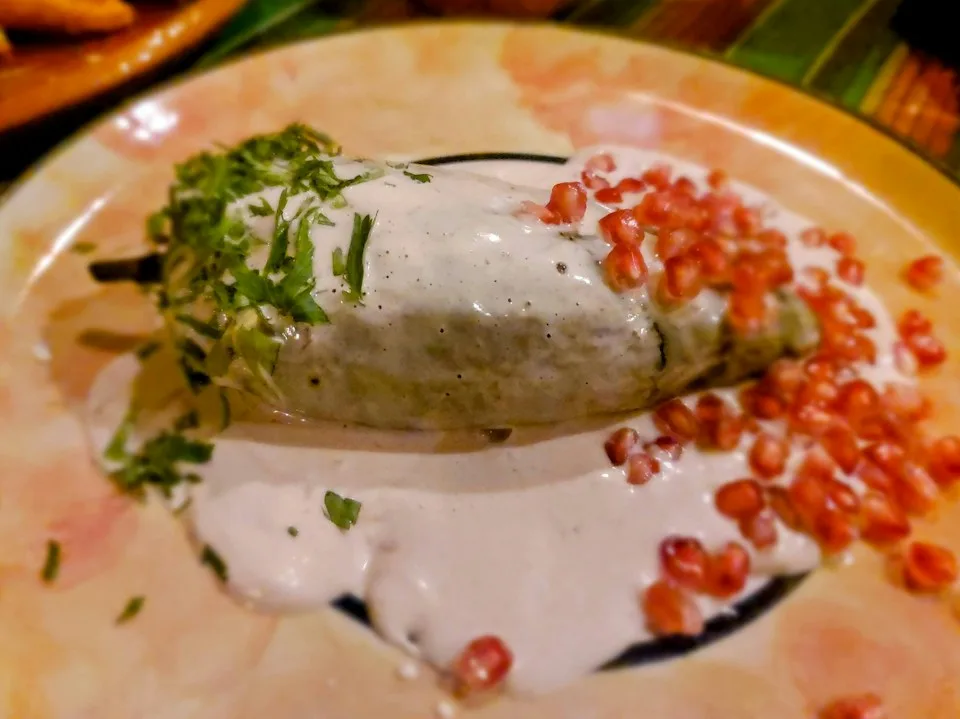
A poblano pepper holds a filling of meat and fruit. A pale walnut sauce covers the pepper, with pomegranate seeds and parsley scattered on top. The finished colours recall the Mexican flag. The more revealing question for anyone ordering the dish in Puebla is why it belongs to this particular stretch of the year.
The state's own heritage declaration locates the season between the second half of July and the first half of September. Locally grown fruits ripen while fresh walnuts are available. The document identifies communities near the foothills of Iztaccíhuatl and Popocatépetl among the sources of those ingredients. A harvest schedule thus reaches all the way to the appearance of a plate on a restaurant table.
What a cook puts into the pepper
The 2024 state declaration describes regional varieties of pear, apple and peach alongside pork or beef, garlic and onion in the filling. Walnuts and milk go into the sauce. In the Puebla preparation it records, the pepper is roasted, cleaned and filled, dipped in flour and beaten egg, then fried before the sauce is added. A local bread called torta de agua may accompany it. The decree also recognises that individual cooks bring their own seasoning and that there is no single uniform recipe.
The small details explain what a state can mean when it protects the preparation of a dish as intangible heritage. A photograph preserves its colours. A written list preserves ingredients. Neither tells a younger cook how to judge a particular peach or adjust the filling when one orchard's fruit tastes different from last year's. The measures set out by Puebla include workshops, a recipe collection and opportunities for experienced cooks to pass on what they know.
The link to growers is visible outside the capital. Tetela de Ocampo's August fair paired the regional peach harvest with chile en nogada. Town officials identified locally grown walnuts, pomegranates, pears and apples among the ingredients. Their account provides a second way to read the postal tribute. The emblem on the stamp is a finished dish, but the first people with a hand in its flavour were at work in an orchard well before anyone set a table.