- The Pretoria event covers five kilometres.
- Volunteers time finishers and give them position tokens.
- Barcode scanning matches each recorded participant to a finish position.
Inside this story 2 perspectives
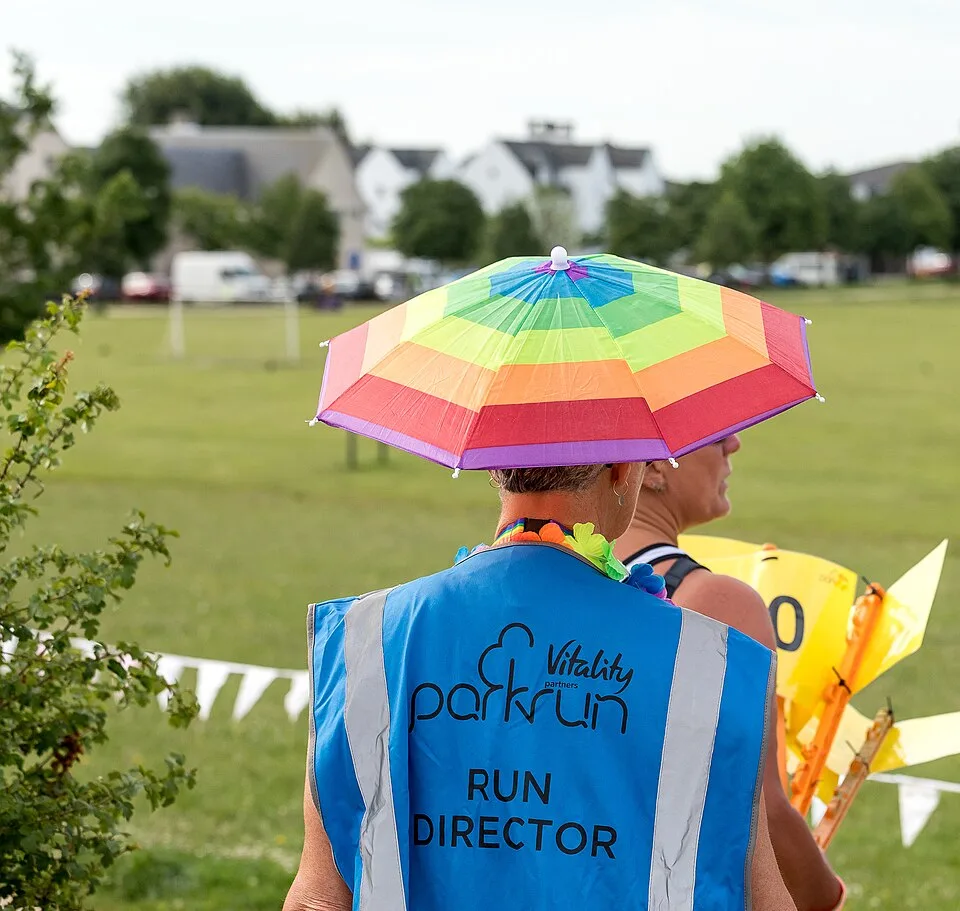
The job a volunteer wanted at Pretoria's Voortrekker Monument parkrun on Saturday involved handing out small numbered tokens. In his account of 7 November, published in Yeti's Race Reports, he explains that he had done it four times before and wanted a fifth turn. Alet arranged to keep time. The pair had found a way to help at a nearby event that fitted the rest of their weekend.
There is a reason to pause over that division of labour. A stopwatch can record the moment someone crosses a line. It has no idea whose moment that was. A numbered token can tell the runner where they finished. By itself it cannot supply a time or identify the person holding it. The event gets a usable result because people agree to do a few modest things in a particular order.
The next person needs your piece
The Voortrekker Monument event is a free, timed five kilometres, organised by volunteers. At the finish, positions and times belong to one sequence. Farther along, parkrun's scanning procedure links a participant's own barcode to the position token. The scanner can handle finishers after they have caught their breath. The timekeeper can concentrate on the line instead of asking each person to spell a surname.
The simplicity is deliberate. If one finisher steps out of the sequence before collecting a token, the next person can acquire the wrong position. The error may reach people who crossed the line perfectly clearly. This is what makes explaining a tiny instruction worthwhile. Telling someone why a token matters is often more persuasive than assuming that, after five kilometres, they have the leisure to infer it.
The volunteer's idea of progress
The volunteer's own goal supplies a different measure of progress. He could have chosen to run and taken home another time. He picked a role he had already done because becoming more practised at it mattered to him. There is a distinction between agreeing to help in principle and returning to a familiar position often enough to notice where it usually gets difficult.
It is a useful question for a team that relies on Saturday helpers, school-event parents or colleagues doing occasional cover. Where does one person's job actually end? The answer might be the moment an object changes hands, the instant a second person acknowledges a message or the point at which two records can be matched. A job description that stops a few seconds earlier leaves someone else to guess. On a Pretoria morning the answer could fit in a palm. Hand over the right token in order, and the runner and the people behind them keep their place.