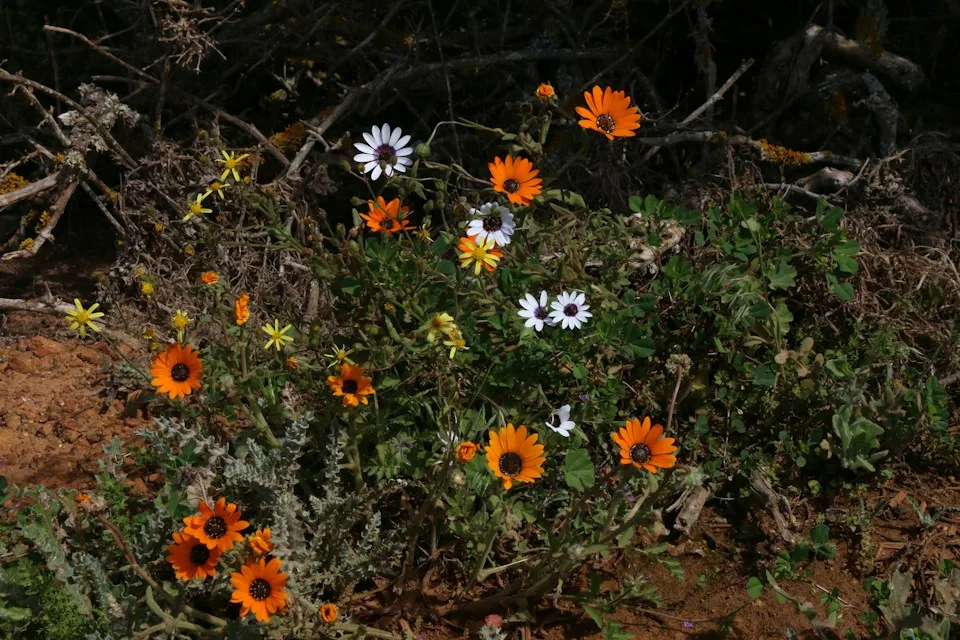
- The 19 August update described a patchy bloom within the national park.
- The park’s anticipated peak is conditional on local weather.
- Marked trails and a circular drive provide alternatives to a single viewing site.
Inside this story 2 perspectives
A photograph of Namaqualand in flower can look like a promise. The same orange runs from the roadside towards the horizon, and the caption usually gives a place and a season. But a visitor cannot book that view in the way they can book a room. A 19 August update from TravelComments reported that Namaqua National Park’s flower display remained patchy, with Namaqualand daisies visible in some parts and fewer blooms elsewhere.
That report belongs beside the park authority’s own July observations. On 29 July, South African National Parks described the first pockets of colour and said it expected a peak between mid-August and mid-September if conditions were favourable. A seasonal forecast covers a broad window. It supplies neither a flowering appointment for one field nor a guarantee that neighbouring valleys will look alike.
Date the picture before you plan the route
Namaqualand covers a wider area than the national park. A spectacular photograph identified only as “Namaqualand” could come from a different place from the one a traveller has booked. Asking for the location, the day the picture was taken and the conditions at the time is more informative than counting how many people have shared it.
The weather on the day also changes what can be seen. SANParks recommends looking on a sunny day when temperatures reach about 18°C or higher, because many flowers open most fully in warm sunshine. A field can look subdued through a vehicle window on a cold, cloudy morning and become more rewarding later. The flowers have not travelled. The conditions for seeing them have changed.
The early park list includes Cape marigolds, Namaqualand daisies, several vygies and small oxalis flowers among other species. Each makes different demands on the eye. A passenger scanning for an unbroken carpet of orange can overlook a patch of smaller flowers entirely. For a photographer, a legal stop at a viewpoint and a closer look from a marked path may produce a better picture than spending another hour driving in search of a bigger field.
Let the park set the pace
SANParks lists a circular spring drive with viewpoints as well as the Skilpad and Korhaan walking trails. Those options allow a traveller to build a useful day even when one section has less colour than expected. A route can include time to ask staff what they have seen most recently and to choose a walk suited to the conditions and the people in the group.
The difference between a poor season and a disappointing visit is partly about expectations. A visit booked around a single borrowed photograph gives the weather little room to cooperate. One built around a landscape, several possible stops and a few named flowers leaves more opportunities for the park to surprise. The season is under way. The precise composition of the photograph remains up to the day.