- Kyoto’s Gozan Okuribi is held each year on 16 August to send off ancestral spirits at the close of Obon.
- The fires are lit in sequence from 8pm, with the schedule subject to conditions.
- Visitors should use authorised viewing areas and follow local instructions about hills and riverbanks.
Inside this story 2 perspectives
A mountain on the edge of Kyoto will carry a single, enormous character in fire on the evening of 16 August. Around the city, further lights will appear in succession. From street level the shapes are legible precisely because of the distance between the viewer and the people tending them. Getting closer would defeat much of the point.
Gozan Okuribi belongs to the closing of Obon, the period when ancestral spirits are traditionally believed to return home. The fires send those visitors on their way again. It is a public experience in a city that attracts travellers from around the world, but it also marks a farewell within families. That distinction is worth knowing before choosing somewhere to stand on Sunday night.
One city, several sightlines
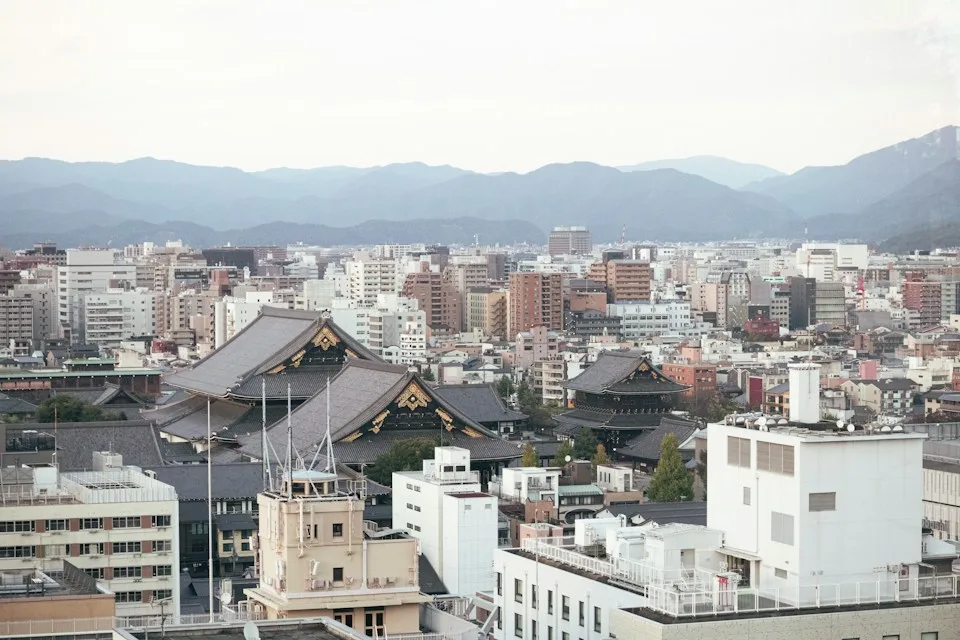
The first figure, Daimonji, is scheduled to be lit at 8pm. Other groups of fires follow at intervals of about five minutes. The forms include a boat and a shrine gate as well as characters. The schedule is subject to weather. From any one place in the city, buildings, hills and the direction of the view determine which shapes can be seen.
It is tempting to treat an evening like this as a checklist. The published map suggests a more satisfying approach. Work out which figure is visible from an authorised area you can reach comfortably. Establish how to get back afterwards. Leave time to arrive before the first light. Watching one shape emerge and change can make more sense than spending the evening walking through crowds in pursuit of all of them.
The city’s August notice says visitors must stay off the hills used for the ceremony. It also warns that entry to riverbanks may be prohibited when water levels are high and advises against entering dark riverbanks at night. A familiar photograph taken from near a river is no assurance that its precise viewpoint is open or suitable this year. Local instructions on the evening take precedence.
What a camera can leave out
For the people tending a fire, making the shape visible is the product of collective work. For people watching from home, it can mark the end of a visit they understand in religious or family terms. A camera records the moment at which the whole character becomes visible. It cannot show whose absence gives that character meaning.
Kyoto’s tourism office also lists a broadcast option. That gives anyone who cannot comfortably reach a public viewpoint another means of seeing the sequence. Whether seen on screen or from the city below, these fires are meant to be looked at across a distance. Giving the hillside to the people responsible for it is part of attending well.