- West Bengal’s official holiday calendar lists Maha Panchami on Friday 16 October.
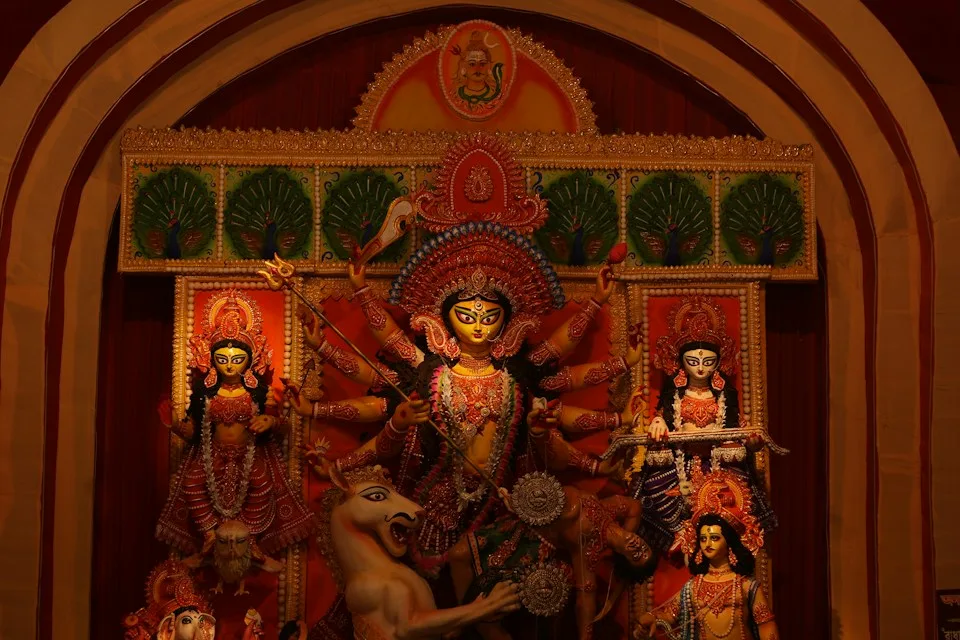
- Temporary pandals bring worship, sculpture, light and neighbourhood organisation into one space.
- The accessibility initiative covers communication and volunteer training alongside physical access and emergency arrangements.
Inside this story 2 perspectives
In Kolkata, one of the best questions to ask before visiting a Durga Puja pandal is what happens after the group has seen the image of the goddess. Can everyone reach the exit? Is there a quieter place to pause? Would a volunteer know where to meet someone who needs help? On Friday 16 October, marked as Maha Panchami in West Bengal's official holiday calendar, those are questions a family can put to the organisers of the particular pavilion they hope to visit.
The temporary pandals are places of worship as well as major works of design. In a themed puja, sculptors, artists and lighting specialists can build a setting around a central idea. Part of the pleasure for visitors is that neighbours can take the same festival and give it quite different visual forms. Part of the challenge is that an unfamiliar route, lighting change or queue may make one pavilion easier to enjoy than the next.
Ask what the journey actually involves
This year West Bengal, the United Nations in India and UNESCO have continued work with puja committees on accessibility. The initiative covers physical design, communication, inclusive programming, emergency arrangements, volunteer training and attitudes. UNESCO identifies uneven ground, steps, crowded spaces, low lighting and loud sound among the barriers people can face. A broad statement that a festival welcomes everyone leaves many of those practical questions unanswered.
A visitor planning with a wheelchair user might ask about the surface between the nearest drop-off point and the entrance. Someone who finds high sound levels overwhelming may want to know whether the route includes a quieter period or a place to step away. An older visitor may be most concerned about where to sit while the group waits. The best person to choose which questions matter is the person who will be making the journey.
Leave enough time for the art
The guidelines have been developed with disability organisations and were piloted at selected pandals in Kolkata and Delhi in 2025. They offer a basis for conversation, but the arrangements in any one temporary structure still need checking. Knowing how to contact a committee or identify its volunteers can be more useful than a long list of distant pavilions.
A single visit with enough time to look can be more satisfying than a procession of rushed stops. Decide together which pavilion holds the most interest, ask how the approach and exit work, and agree where to regroup if some people want a longer look. A festival of temporary art invites a city to see familiar streets differently. The outing works best when each visitor can spend their attention on what the artists and the neighbourhood have made.