- Researchers examined ancient leaf-wax molecules alongside dated sediment and archaeological remains.
- Parts of the old landscape combined vegetation and water conditions with no close modern South African equivalent.
- The association with more heavily reworked tools suggests one possible response to changing resources.
Inside this story 2 perspectives
A stone flake can survive long after the plants around it have disappeared. At Florisbad in the South African interior, researchers have recovered a much less conspicuous survivor from the same broad landscape. Molecules from the wax that once coated leaves remain in buried sediment. They provide a way to ask how the surroundings of early humans changed and how people might have responded.
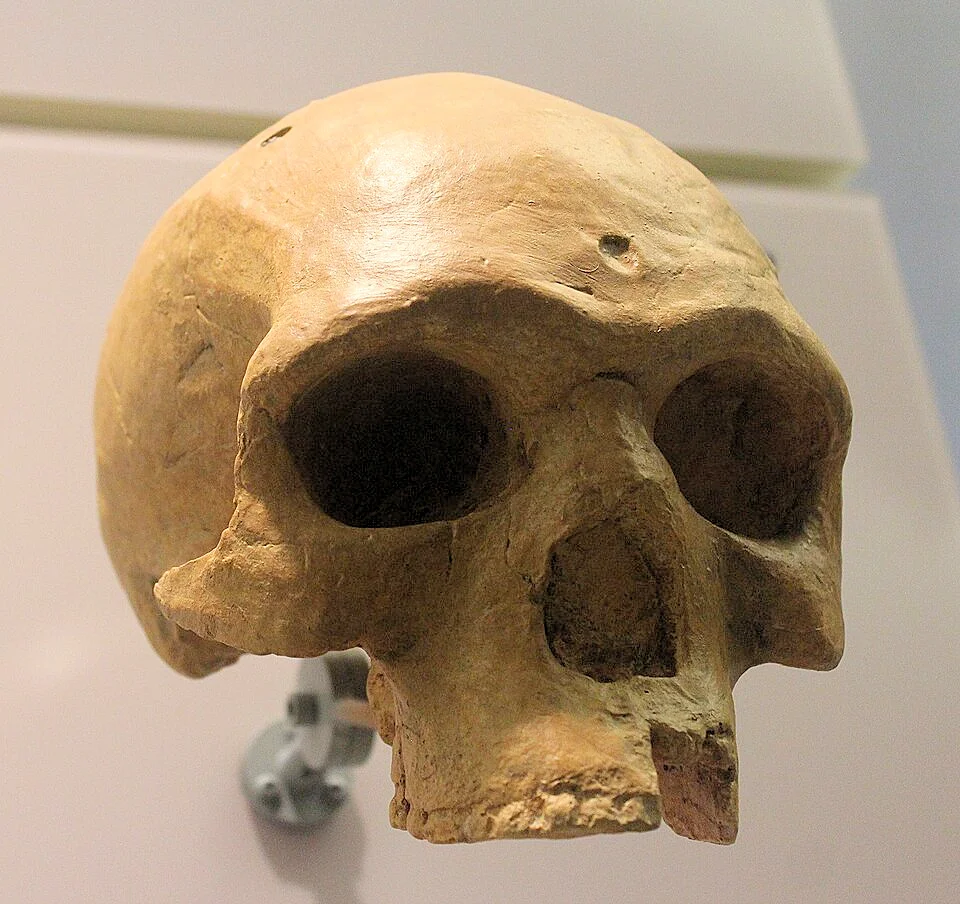
A study led by Michaela Ecker and colleagues, published on 30 October and reported by Phys.org on 3 November, draws on evidence from Florisbad and nearby Lombard’s Drift. The sites preserve records from different periods. At Florisbad, new dates for some sediment layers place them around 200,000 years ago. The site also yielded a partial human skull in 1932, making the dating and the surrounding environmental record particularly important.
The central interior today contains extensive dry grasslands. The team's reconstruction includes a greater presence of shrubs and plants suited to more temperate conditions at certain times in the past, alongside abundant fresh water. Rainfall appears to have been spread more evenly through the year. Combining those features produces a landscape without a close equivalent among the main ecosystems of present-day South Africa.
How a vanished leaf gives evidence
The researchers examined compounds called n-alkanes in the sediments. The relative abundances of forms of carbon and hydrogen in those compounds preserve information about vegetation and water conditions. In a separate step, luminescence dating of sand grains helped establish when particular layers were deposited. These methods answer different questions. One helps reconstruct the setting, while the other places it on a timescale.
Archaeological objects and animal remains can then be compared with the environmental evidence. At Florisbad, the team identified an association between the reconstructed productivity of the landscape and the extent to which people reworked stone tools. In some periods, people appear to have put more effort into keeping existing tools useful.
A possible answer to a practical problem
When food was harder to find or obtain, a tool that could be used repeatedly may have been worth carrying and maintaining. Under more favourable conditions, a simpler flake could have met an immediate need. The researchers present that as a possible explanation for the pattern. A piece of stone cannot tell us what its owner ate on the day they decided to keep it.
The significance lies partly in the way the pieces of evidence fit together. Studying an artefact alone can show that someone altered it. Bringing the surrounding sediment and animal remains into the account makes it possible to ask what that extra work might have achieved in that particular place. A chemical trace left by a long-vanished leaf has given the question a more precise setting.