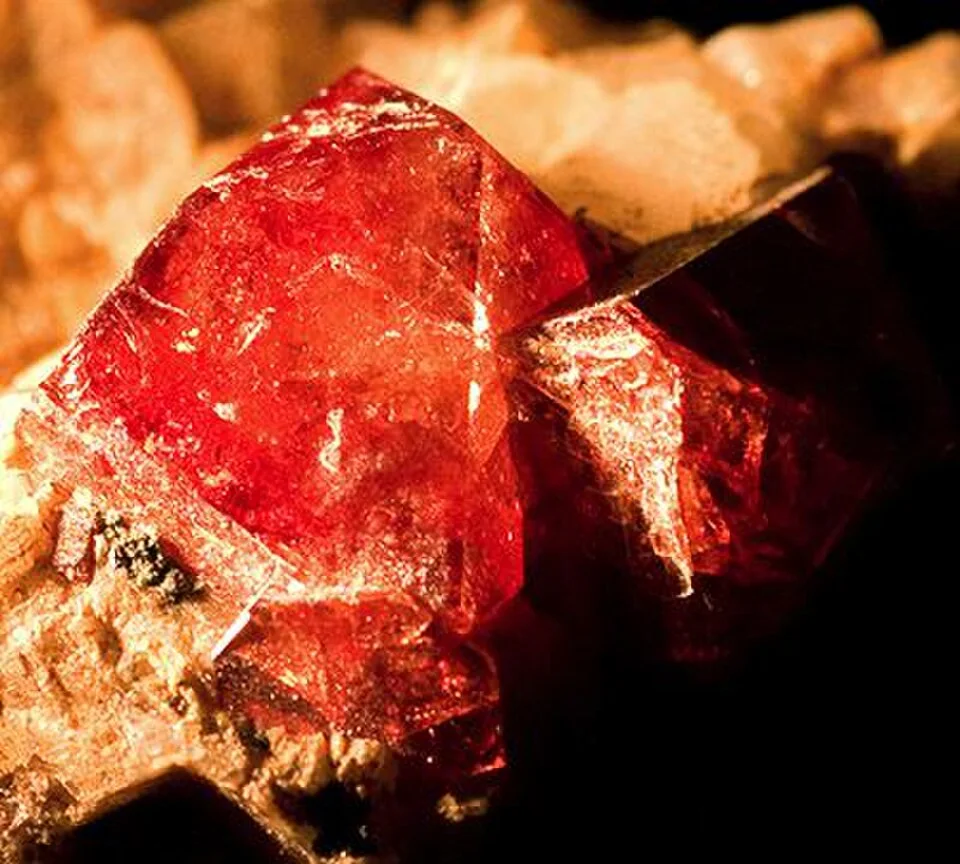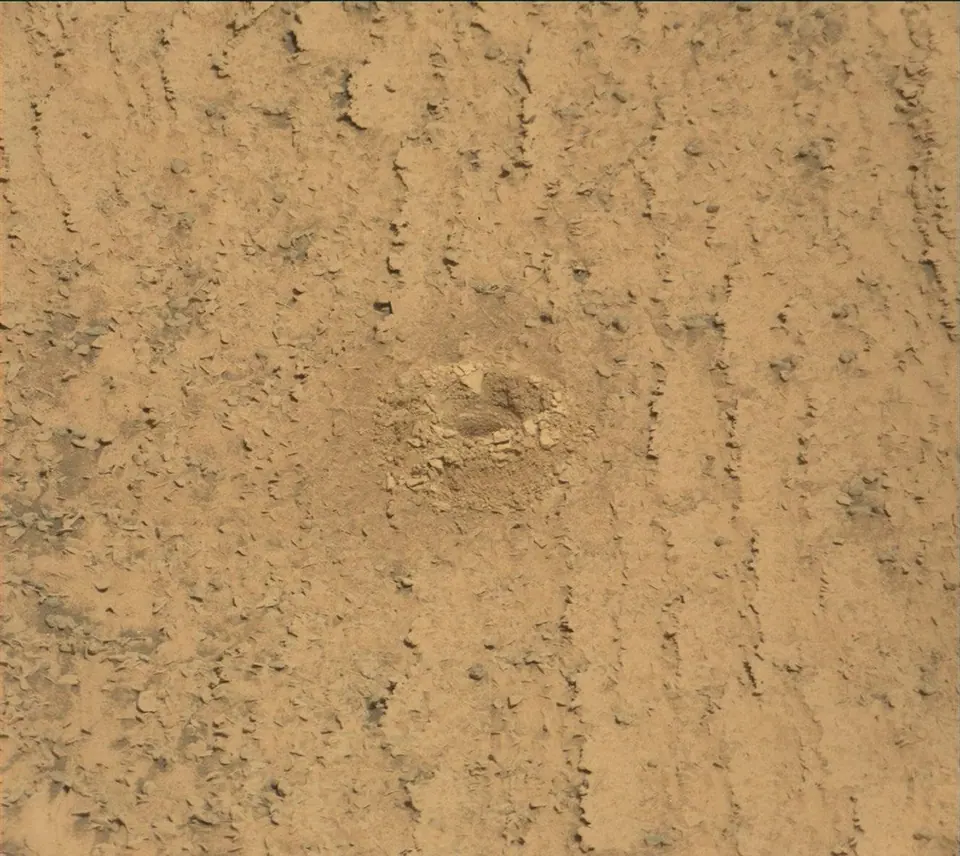
- Nazca became Curiosity’s 49th drill hole after the team returned to rocks bearing disc-shaped features.
- The rover tested its footing and the target before drilling, and sent powdered material to CheMin for mineral analysis.
- The rock’s original texture, drill tailings and mineral evidence address different parts of its history.
Inside this story 3 perspectives
Laid out together, the 49 holes that NASA’s Curiosity rover has drilled into Martian rock look like a collection of small, round stamps. NASA published the image on 20 November. The youngest mark, made at a target called Nazca, began with a much less orderly sight: discs set into a rock that might have been crystals. The team needed a way to look past their outlines.
A photograph held the shape of those discs. A sample could provide a different kind of evidence, because minerals keep a record of the materials and conditions under which they formed. Curiosity’s mast camera photographed the Nazca drill site on 20 October. The new gallery puts that spot alongside the other places where the rover has put rock through an onboard laboratory.
Before the bit goes in
The team returned to an area where it had already seen disc-shaped features and found a block with plenty of them. A good view alone did not qualify it for drilling. The rover first had to be steady on its wheels. Its arm then pressed the bit against the target to test how the rock and the arm responded to the load.
Before drilling, instruments examined the block’s surface and chemistry. The team photographed details close up. That sequence preserves information which the drill itself changes. Once a patch of rock has been reduced to powder, its grains no longer show how the visible features fitted together in their original setting.
Powder and a pattern of X-rays
At Nazca some of the sample went to CheMin, the rover’s mineralogy instrument. When X-rays strike powdered material, its crystalline minerals produce characteristic patterns. NASA uses two familiar examples to explain the distinction. Gypsum and anhydrite both contain calcium and sulphur, but gypsum contains water in its crystal structure. CheMin can tell the minerals apart. Those two are examples of what the instrument can distinguish, rather than reported findings from Nazca.
The newly exposed surface offered another opportunity. Curiosity used its ChemCam instrument on the loose material left by the drill and on the wall of the hole. Those observations help the team compare what it saw on the original weathered face with material exposed only moments earlier.
Putting one hole back on the mountain
By its 17 November planning update, the team was moving on from work at Nazca and another target, Basque Lakes, and continuing up Mount Sharp. It encountered ridged polygons resembling patterns seen lower down. A similar outline can develop in different ways, including shrinkage or cycles of heating and cooling. Comparing shapes, the rocks around them and the minerals in selected samples gives scientists more than a resemblance to work with.
The gallery records 49 deliberate choices along one rover’s route across Gale Crater. It cannot stand in for a random sample of Mars. For each hole, scientists can return to a particular rock, its setting and the question that made the team stop there.